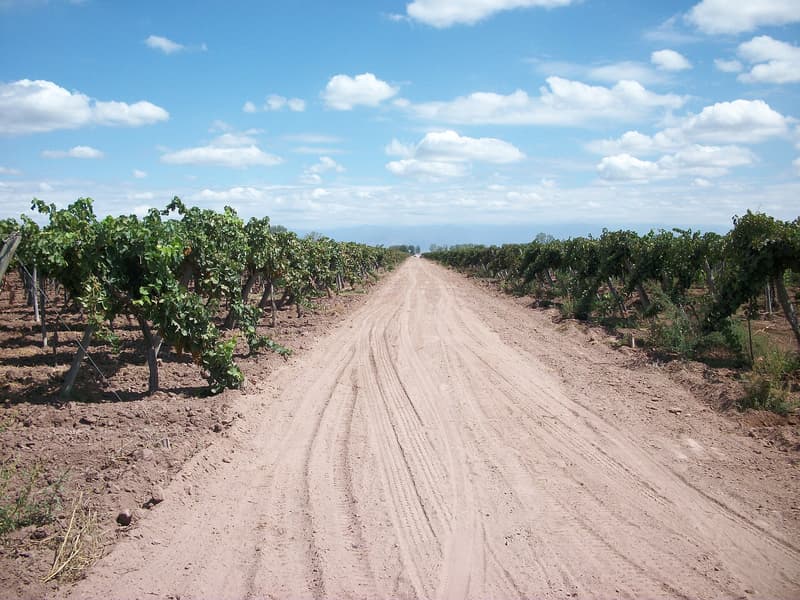
Wine Routes of Spain reaches 40 with Condado de Huelva and León
ACEVIN's board certified both routes on 30 September. The club publishes the map and the grapes, but not yet how many wineries and hotels have signed up to either of them.

Wine Routes of Spain, the wine tourism club run by the Spanish Association of Wine Cities (ACEVIN), has certified two new members, Condado de Huelva in Andalusia and León in Castile and León, taking the network to 40 destinations.
ACEVIN's board approved both certifications on 30 September, according to Spanish agency and trade coverage of 5 and 6 October. None of that coverage says how many wineries, hotels and restaurants have signed up to each route, the figure a traveller asks for first.
What is published is the map. The Condado de Huelva route covers 15 municipalities inside the denomination of the same name, between Doñana and the Río Tinto, with Niebla, Moguer and El Rocío as its best-known stops. The main grape is zalema, a white variety, alongside listán del Condado, moscatel and Pedro Ximénez. The local curiosity is Vino Naranja del Condado de Huelva, a wine aromatised with orange peel.
Forty certified routes is a round number; the list of wineries behind the two new ones is still missing.
What the Wine Routes of Spain badge requires
Membership is not honorary. A route has to meet the club's product manual, with criteria on quality, sustainability and cooperation between town halls and private businesses, and it is audited periodically to keep the certificate. Huelva's audit, which looked at management, signage and visitor service, was completed in June, Vinetur reported at the time; the board vote three months later made it official.
With the two additions Wine Routes of Spain covers more than 800 municipalities and about 2,600 businesses, nearly 800 of them wineries, and receives over three million visitors a year, according to ACEVIN, which gives no year for that count. “When the product club was created, the word enoturismo itself barely existed,” its president, Rosa Melchor, said.
The club's own demand survey, published on 25 September and covering the second half of 2025 and the first half of 2026, puts average spending at €345.87 per person per day and the average stay at 2.54 days.
León brings prieto picudo and cave cellars
León's route is the larger of the two: 80 municipalities across the south of León province and the north-east of Valladolid, 3,317 square kilometres in six districts. Its wines come from prieto picudo, a red grape, and the white albarín, and its landmark is the cave cellar dug into the ground. The Camino de Santiago and the Vía de la Plata both cross the territory, so the route starts with foot traffic it did not have to attract.
The association has also just named Montilla Spanish Wine City 2027, another Andalusian result.
For Wine Routes of Spain the next checkpoint is the audit calendar. For travellers it is simpler: whether either newcomer publishes a list of who is actually on the route.