What to eat in Tel Aviv: 9 dishes and where to find them
Hummus by 8am, sabich by noon, market fish by night: what to eat in Tel Aviv, from Jaffa's port to Carmel Market's stalls and the city's new wine bars.
What to eat in Tel Aviv comes down to two speeds: hummus, sabich and market produce eaten fast and cheap before noon, and a newer wave of serious kitchens and wine bars that has put the city on international rankings for the first time. Do not leave without hummus eaten warm and a walk through Carmel or Levinsky Market with no fixed plan.
Tel Aviv's food is Levantine at its base and Mediterranean by geography, but what fills the plate came from waves of Jewish immigration that reshaped the city one kitchen at a time. Communities arrived from Yemen, Iraq, Syria and Libya, later from Bulgaria, Romania and Russia, each bringing a hummus method, a pastry or a way with fried dough that stuck. Jaffa, the Arab port city Tel Aviv grew up beside and later absorbed, adds its own layer of Palestinian and Levantine cooking, especially around fish and mezze, plus centuries as a working harbour that still lands the catch some kitchens cook that day.
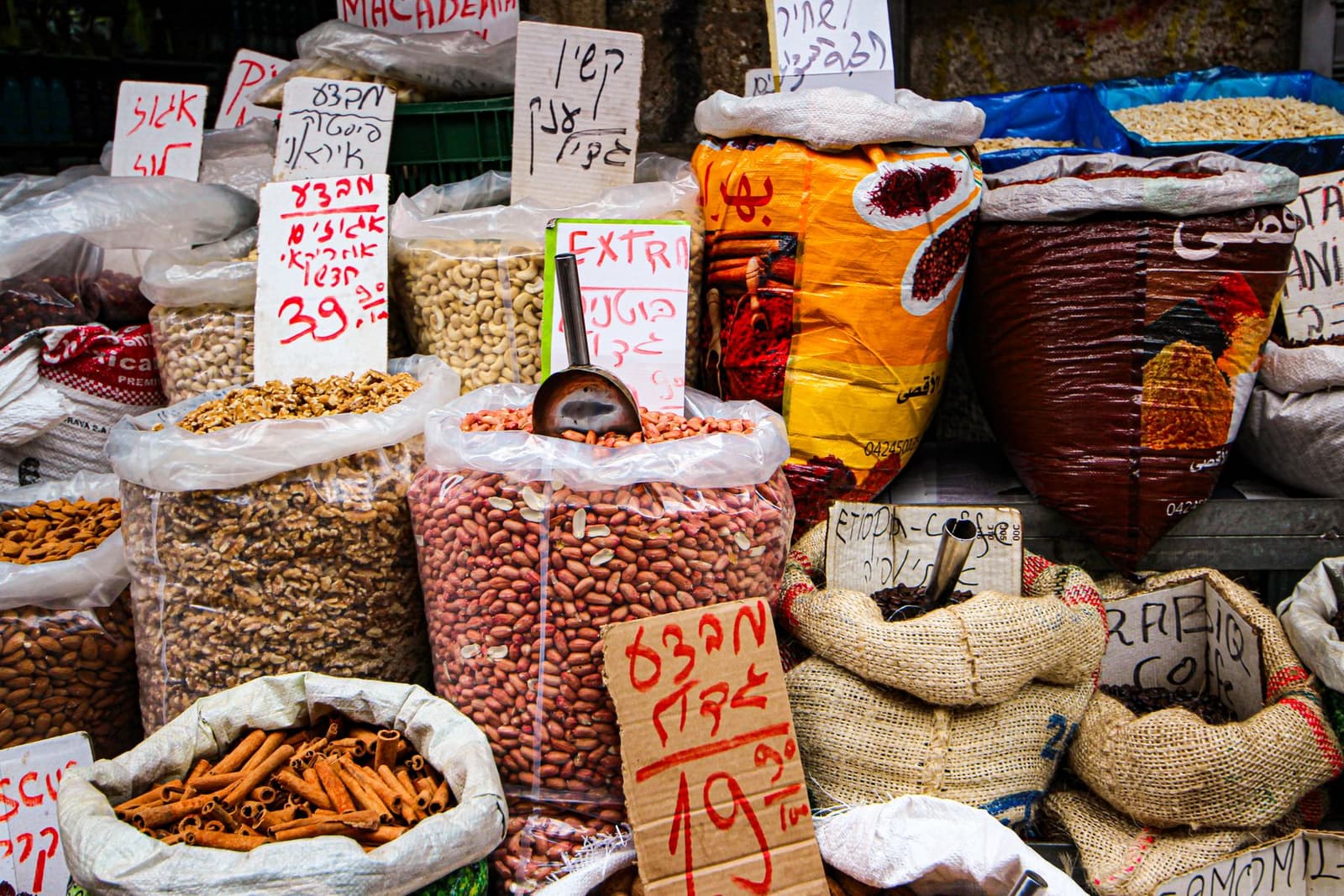
Markets anchor the system. Carmel Market and Levinsky Market are where Tel Aviv still buys produce, spices and pickles, a street-level trading culture that shapes what to eat in Istanbul's bazaars too, and both have spawned the small restaurants that make up half of what to eat in Tel Aviv. On top sits a newer layer: Pastel and ALENA both placed on La Liste's 2026 global top 1,000, chef Gal Ben Moshe at Pastel having run a Michelin-starred kitchen in Berlin, and the Michelin Guide itself arrived in the city in 2023.
A city with fifteen immigrant kitchens folded into one never settles for a single signature dish.
Hummus at Abu Hassan, Jaffa
Abu Hassan is the answer most locals give when asked what to eat in Tel Aviv first, running on HaDolphin Street in Jaffa for more than fifty years with barely a change of format. It serves two things: hummus and ful, the stewed fava beans, plus a combination of both called msabaha, spooned warm and loose with olive oil and whole chickpeas on top.
No menu, barely a sign, metal tables, raw onion and pickles on the side, a plate for about 25-30 ILS. The kitchen closes once the day's hummus runs out, usually by early afternoon, which is why regulars come at opening.
Sabich at Sabich Tchernichovsky, Neve Tzedek
Sabich is Tel Aviv's clearest food memory of Iraqi Jewish immigration: fried eggplant, hard-boiled egg, potato, tahini, amba (pickled mango sauce) and salad packed into pita, built as a Shabbat-morning dish from ingredients that could sit overnight without a stove.
Sabich Tchernichovsky, on Allenby Street at the edge of Neve Tzedek, is the version most often cited as the city's benchmark, with a lunch line most days. A full sandwich runs about 25-32 ILS. Ask for the amba on the side, not mixed in, if you want to control the heat; it is sharper than most first-timers expect.
Falafel at Falafel HaKosem, city center
Falafel HaKosem opened as a stall in 2001 at King George and Shlomo HaMelech streets and has grown into the reference point for what falafel should be here: cracked open hot, deep green inside from parsley and coriander, never dry or heavy with oil.
Balls go into pita or onto a plate with a self-serve salad and pickle bar, tahini included, for around 22-28 ILS. It is standing-room only, the same corner-stall economics that shape what to eat in Naples, and the line runs long from noon into early afternoon.
Shakshuka at Dr. Shakshuka, Jaffa Flea Market
Dr. Shakshuka sits beside the Jaffa Flea Market, steps from the clock tower, cooking Tripolitan-Libyan food that founder Bino Gabso learned from his father. This shakshuka is looser and more heavily spiced with cumin and paprika than the gentler versions served elsewhere in the city, and comes plain, with merguez, or with mushrooms.
A plate with bread runs about 45-60 ILS. Take the outdoor courtyard tables when weather allows; it is the livelier of the restaurant's two rooms.
Burekas at Burekas Penso, Levinsky Market
Burekas Penso has sold Turkish-style bourekas from the same corner of Levinsky Market since a Turkish-Jewish family opened it in the 1950s, and a fourth-generation baker now runs the counter. The pastry is flakier and more buttery than the Balkan and North African versions sold around it, filled with potato, cheese or spinach.
Served café-style with a boiled egg and pickle, for about 20-28 ILS, a stall economy not far from what to eat in Marrakech's medina. Go before 11am; the ovens are usually done by early afternoon.
Fish and small plates at HaBasta, Carmel Market
HaBasta keeps no fixed menu. It buys directly from the stalls around it each morning and chalks up the day's dishes, which only works because it sits on a side street off Carmel Market itself. Expect small plates built from whatever came in that day, a ceviche, a grilled amberjack, labaneh with pomegranate, alongside natural wine by the glass.
There is no real reservations system most nights, so arrive early or expect a wait in summer. Dinner for two with wine runs about 300-450 ILS.
Grilled fish at HaDayagim, Jaffa Port
HaDayagim, the Fisherman's Restaurant, sits on Jaffa Port and is run by working fishermen who supply much of what lands on the tables. The format: whole fish grilled or fried and sold by weight, small salads that arrive before you order, and a wine list built to go with fish.
Ask what came in that morning instead of reading the menu; the kitchen will steer you toward what is actually fresh. Dinner for two with drinks runs about 350-450 ILS.
Babka at Lehamim Bakery, Carmel Market
Lehamim, founded in 2002 by baker Uri Sheft after training in Copenhagen, brought European bread technique into a market that mostly ran on flatbread and burekas. Its Carmel Market branch still sells out of babka most afternoons, twisted and baked until the sugar edges caramelize.
A loaf costs about 35-45 ILS; rugelach and a dense, seeded sourdough are sold alongside it. Come mid-morning for the full choice of what came out of the oven that day.
Contemporary Israeli cooking at Dvora, city center
Dvora, chef Eyal Shani's restaurant inside a boutique hotel on Ben Yehuda Street, is the other half of what to eat in Tel Aviv now: an ingredient-forward kitchen still recognisably Israeli, built around open charcoal and a menu of whole vegetables, grilled fish and slow-cooked meat.
It is fully kosher, unusual among the city's higher-end kitchens, and a rare option for observant visitors wanting a tasting-menu-level meal. Dinner for two runs about 500-700 ILS before wine; the small room books out days ahead on weekends.
Markets, neighbourhoods and when to go
Knowing what to eat in Tel Aviv is only half the job; knowing where and when matters just as much.
- Carmel Market (Shuk HaCarmel): produce, spices and small restaurants from Magen David Square toward the Carmelit terminal; busiest 9am-4pm, shorter hours Friday, closed Saturday.
- Levinsky Market: spices, dried fruit and Persian, Turkish and Balkan groceries around Levinsky Street, edging into Florentine; quieter than Carmel, best in the morning.
- Jaffa (Yafo): the old city, the flea market (Shuk HaPishpeshim) and the working port, for seafood and Libyan-Tripolitan cooking; port restaurants run into the evening.
- Neve Tzedek and the city center: the sabich-and-falafel corridor along Allenby and King George streets, walkable from Carmel Market.
- Kerem HaTeimanim (the Yemenite Quarter): narrow streets behind Carmel Market, home to some of the city's oldest hummus kitchens, plus HaBasta.
Eating in Tel Aviv: FAQ
Is Tel Aviv expensive to eat in? Street food and market meals stay cheap, a hummus plate or falafel rarely tops 30 ILS, but a wine-bar or tasting-menu dinner can cost as much as a similar meal in London or Paris.
Is the food very spicy? Generally no. Most cooking leans on herbs, lemon and tahini rather than heat, though the shakshuka at Dr. Shakshuka runs hotter than the citywide average.
Is most food kosher? Many restaurants keep kosher and close from Friday afternoon through Saturday for Shabbat, including bakeries like Lehamim; others, especially Jaffa's seafood restaurants, stay open through the weekend and are not kosher.
Do I need reservations? Casual spots like Abu Hassan, HaKosem and the market stalls take no bookings and run on queues. Wine bars, HaBasta and Dvora fill up on weekends, so book a few days ahead.
Where to book first
HaBasta, HaCarmel Street 4, Tel Aviv. Dvora, Ben Yehuda Street 87, Tel Aviv. HaDayagim, Jaffa Port, Tel Aviv-Yafo.