What to eat in Tbilisi: 10 dishes and where to find them
Ten real addresses for khachapuri, khinkali, mtsvadi and qvevri wine across Tbilisi, each with a neighbourhood, a price in lari and no filler.
What to eat in Tbilisi starts with a question of dough versus filling: ten real addresses below cover khachapuri, khinkali, mtsvadi and qvevri wine, with 2026 prices in lari and no filler.
Georgia sits at the crossroads of the Black Sea and the Caucasus, and Tbilisi's kitchens show it: wheat and cheese from the mountains, walnuts and pomegranate from the south, wine fermented underground since roughly 6,000 BC, a method UNESCO recognised in 2013. The city's own crossroads run east too — Istanbul's dumpling houses serve a cousin of khinkali, manti, folded smaller and drowned in yoghurt instead of broth.
The supra, Georgia's long-form feast, still sets the rhythm: cold dishes first, bread and cheese throughout, hot mtsvadi and khinkali later, wine poured by a toastmaster who decides when the meal actually ends. This is what to eat in Tbilisi with one afternoon and one appetite: bread and cheese first, then the rest.
Tbilisi still eats by the round of khinkali, not the seven-course menu.
What to eat in Tbilisi first: khachapuri Imeruli at Machakhela
Khachapuri Imeruli is the everyday version: a round bread stuffed with tart, salty imeruli cheese, sealed shut and baked until the crust cracks. It is the khachapuri Georgians actually eat on a Tuesday.
Machakhela, a chain with a branch on Agmashenebeli Avenue 106 as well as several others across the city, bakes it fresh through the day for roughly GEL 8-12. The dough comes thin enough to fold, the cheese pull long enough to photograph, and a queue at lunchtime is normal, not a warning sign.
Khachapuri Adjaruli, the boat with an egg
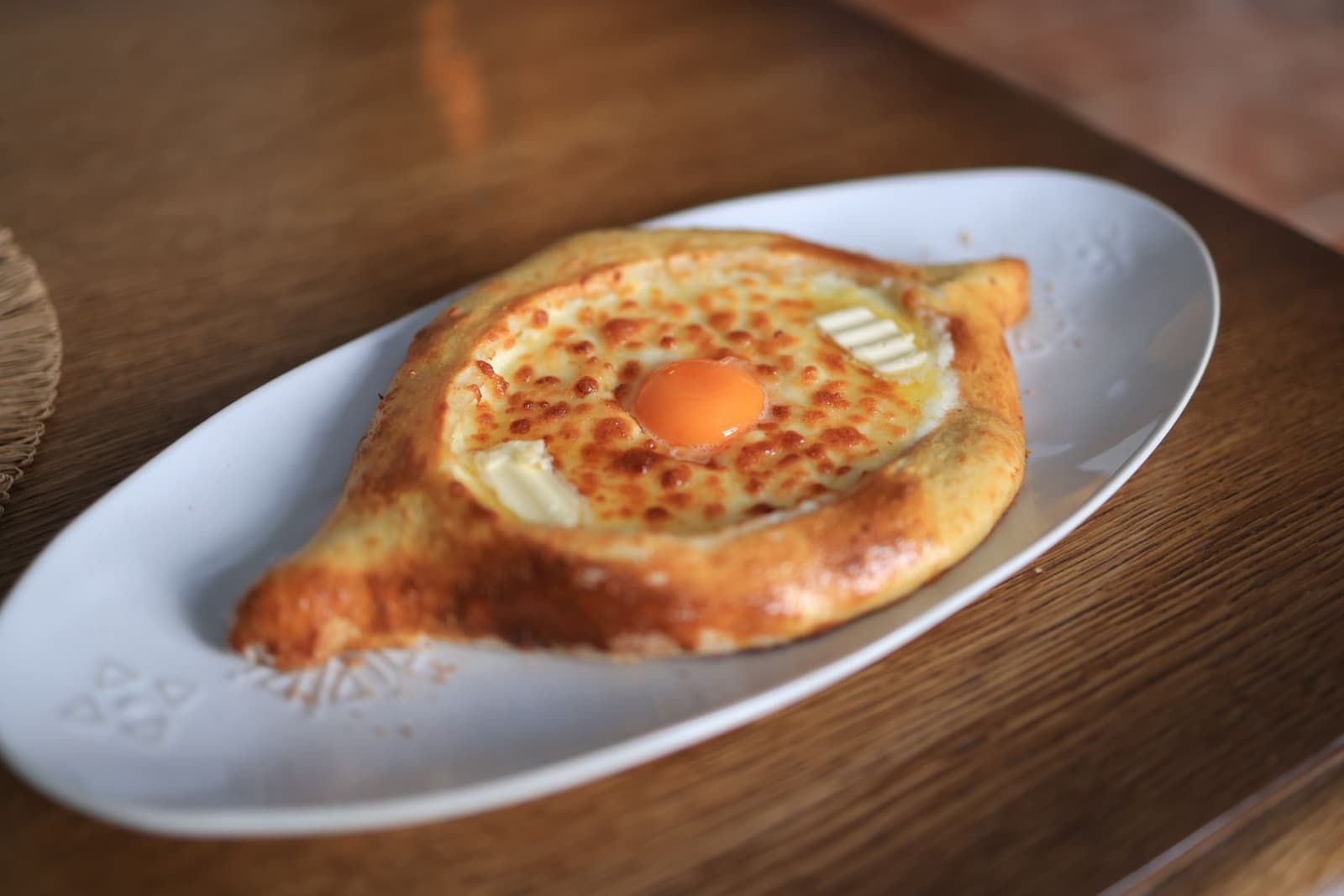
Adjaruli khachapuri travelled from Batumi's coast to every menu in the capital: an open boat of dough filled with cheese, topped with butter and a raw egg yolk that cooks in the bread's residual heat.
Retro, at 1 Davit Gamrekeli Street, bakes its version in a brick oven and serves a Big Adjaruli for about GEL 20, big enough for two, or the five-yolk Titanik for a full table. Stir the yolk and butter into the cheese before tearing off the crust — that is the order locals use, not decoration.
Khinkali at a no-frills dumpling house
Khinkali are boiled dumplings pinched into a topknot, filled with spiced meat and its own broth. The rule is simple: pick it up by the knot, bite a corner, drink the broth, eat the rest, leave the knot on the plate.
Zakhar Zakharych, near Sanapiro on the right bank of the Mtkvari in Old Tbilisi, hand-pinches them to order and serves through the day and past midnight. A plate of a dozen costs a few lari each, and the dining room fills with locals more than tourists, which is the point.
Khinkali reinvented in Sololaki
Amo Rame took the same dumpling and rebuilt the fillings around vegetables: a nadughi soft-cheese version plaited at the top, and a potato khinkali seasoned enough to work without meat at all.
The original room, on Sololaki's Giorgi Leonidze Street, is small and usually full by 8pm; a second address, Amo Rame Bani, opened near Marjanishvili metro for the overflow. Order a mixed plate rather than committing to one filling.
Mtsvadi off the charcoal
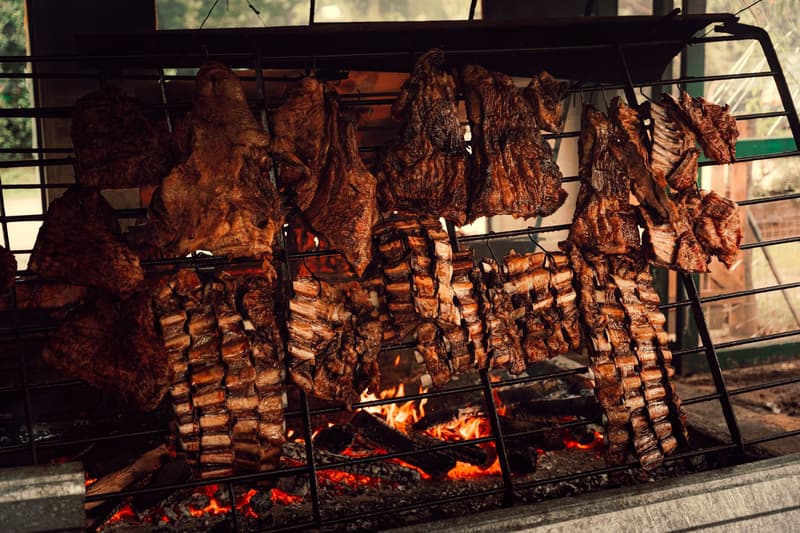
Mtsvadi is pork or beef threaded onto a skewer and grilled directly over hardwood coals, no marinade beyond salt and the smoke itself. It is the dish that shows up at every family gathering, cooked outdoors whenever there is a garden to do it in.
Shavi Lomi, at 28 Zurab Kvlividze Street in Sololaki, plates it inside a converted house full of mismatched furniture and puts a modern edge on the rest of the menu around it. A full dinner with wine runs GEL 70-120 per person.
Lobio and kharcho under Rustaveli Theatre
Lobio is a clay-pot bean stew, often smoked, served with cornbread and pickles; kharcho is a walnut-thickened beef and rice soup that shows the same pantry — beans, walnuts, spice — from a different angle.
Salobie Bia, tucked into the basement of the Rustaveli Theatre on Rustaveli Avenue, has served both since long before either dish had a tourist audience, and still charges bodegón prices for a full bowl.
Badrijani nigvzit and a full supra
Badrijani nigvzit is fried eggplant rolled around a walnut-and-garlic paste, topped with pomegranate seeds — the cold starter that disappears from a Georgian table first, before the hot dishes even land.
Ethno Tsiskvili, on Akaki Beliashvili Street by the Mtkvari, plates it as part of a full supra spread with nightly folk music and dance from 8pm, the version of the meal built for a table of eight rather than two.
Kubdari and mountain bread in Abanotubani
Kubdari is Svaneti's answer to khachapuri: a bread stuffed with spiced, fatty meat instead of cheese, sealed and baked the same way. It travelled down from the mountains along with khinkali's own regional cousins, mtiuluri and mokheuri.
Kade, at 11 Vakhtang Gorgasali Street in Abanotubani, under the sulphur bath domes, keeps that mountain menu alongside its own khinkali and khachapuri, baked in view of the dining room.
Natural wine in qvevri, Old Town style
Qvevri wine ferments and ages in a buried clay vessel, skins and stems included, for months at a stretch — the method that gives Georgian amber wine its colour and its tannin, long before "orange wine" became a term anywhere else.
Vino Underground, in a basement at 15 Galaktion Tabidze Street, opened in 2012 and is still owned collectively by six of the country's natural-wine producers; a glass runs GEL 8-15 and the room stays open past midnight most nights.
Churchkhela and the market's pantry
Churchkhela is walnuts threaded on a string, dipped repeatedly in grape-must jelly until it sets into a firm, dense stick — the closest thing Georgia has to a candy bar, sold by weight rather than the piece.
Dezerter Bazaar, by the central railway station, is where locals buy it alongside cheese, tkemali plum sauce, spices and churchkhela in every colour, roughly 7am to 5pm daily. It plays the same role a souk does in Marrakech's medina — the real shopping list, not the postcard version.
Bread carries the same weight outside the market's pantry: like Naples' pizzaiolos, Tbilisi runs a whole street of shops on fresh, cheap-baked dough.
What to eat in Tbilisi without a reservation: markets, neighbourhoods and hours
- Old Town (Sanapiro/Erekle II): khinkali houses and Vino Underground cluster here; most open by midday and run past midnight.
- Sololaki: Shavi Lomi and Amo Rame anchor the district's small, residential restaurant scene.
- Abanotubani: sulphur baths plus Kade's mountain menu, a short walk from Old Town.
- Dezerter Bazaar: liveliest 7am-noon; cash only, small lari notes recommended.
- Rustaveli Avenue: Salobie Bia and most theatres and museums sit within a few minutes of each other.
Questions before you book
Do I need to book a table for khinkali houses? No — Zakhar Zakharych and Amo Rame both run on walk-ins; arrive before 8pm to avoid a wait at either.
Is Georgian food easy for vegetarians? Yes: badrijani nigvzit, lobio and Amo Rame's nadughi khinkali cover most of a meal without meat.
What is the best time of year to eat in Tbilisi? April-June and September-October, when produce markets are fullest and outdoor courtyards stay open into the evening.
Is tap water and market food safe in Tbilisi? Tap water is treated and generally fine to drink; market food from a stall with visible turnover, like churchkhela or fresh bread, carries the same low risk as anywhere in the EU.
Where to book first
That's what to eat in Tbilisi, address by address. Three stops to make before anything else:
Vino Underground, 15 Galaktion Tabidze Street, Old Town — no booking needed before 9pm, but arrive early on weekends for a seat at the tasting counter.
Shavi Lomi, 28 Zurab Kvlividze Street, Sololaki — reserve a day ahead for dinner; the dining room is small and fills fast.
Dezerter Bazaar, near the central railway station — no booking, but go before 1pm on a weekday to see the stalls at their fullest.