What to eat in Chiang Mai: 11 dishes and where to find them
Khao soi, sai ua and a curry with Burmese roots: Chiang Mai's kitchen runs on Lanna tradition, night markets and a coffee scene that rivals Bangkok's.
What to eat in Chiang Mai starts with a bowl of khao soi, the coconut-curry noodle soup that defines northern Thai cooking, and widens fast into grilled sausage, a Burmese-rooted pork curry and some of Southeast Asia's most serious coffee.
Chiang Mai cooks differently from Bangkok. Five hundred kilometres north and once the capital of the Lanna kingdom, the city draws on Burmese, Shan and hill-tribe cooking as much as central Thai technique. Chillies arrive dried rather than fresh, curries lean on herbs instead of coconut milk, and the signature dip is eaten with crackling, not rice. Markets open before dawn and night bazaars run past midnight, so timing meals around the clock matters as much as the dish itself.
What to eat in Chiang Mai: khao soi at Chang Phueak Gate
Chiang Mai's kitchen runs on dried chillies, charcoal and a stubborn loyalty to sticky rice.
What to eat in Chiang Mai on day one is khao soi: crisp egg noodles scattered over soft noodles in a curry broth built on coconut milk, dried chillies and turmeric. Khao Soi Khun Yai, a stall at the Chang Phueak (North Gate) night market, sells bowls for around 50-65 THB with pickled mustard greens, shallots and a wedge of lime.
Huen Phen, a sit-down restaurant in the Old City open for lunch and dinner, serves a milder, more citrus-forward version for about 90 THB. Locals argue over which broth is better; both are a reasonable introduction to the dish before judging the rest.
Sai ua at Warorot Market
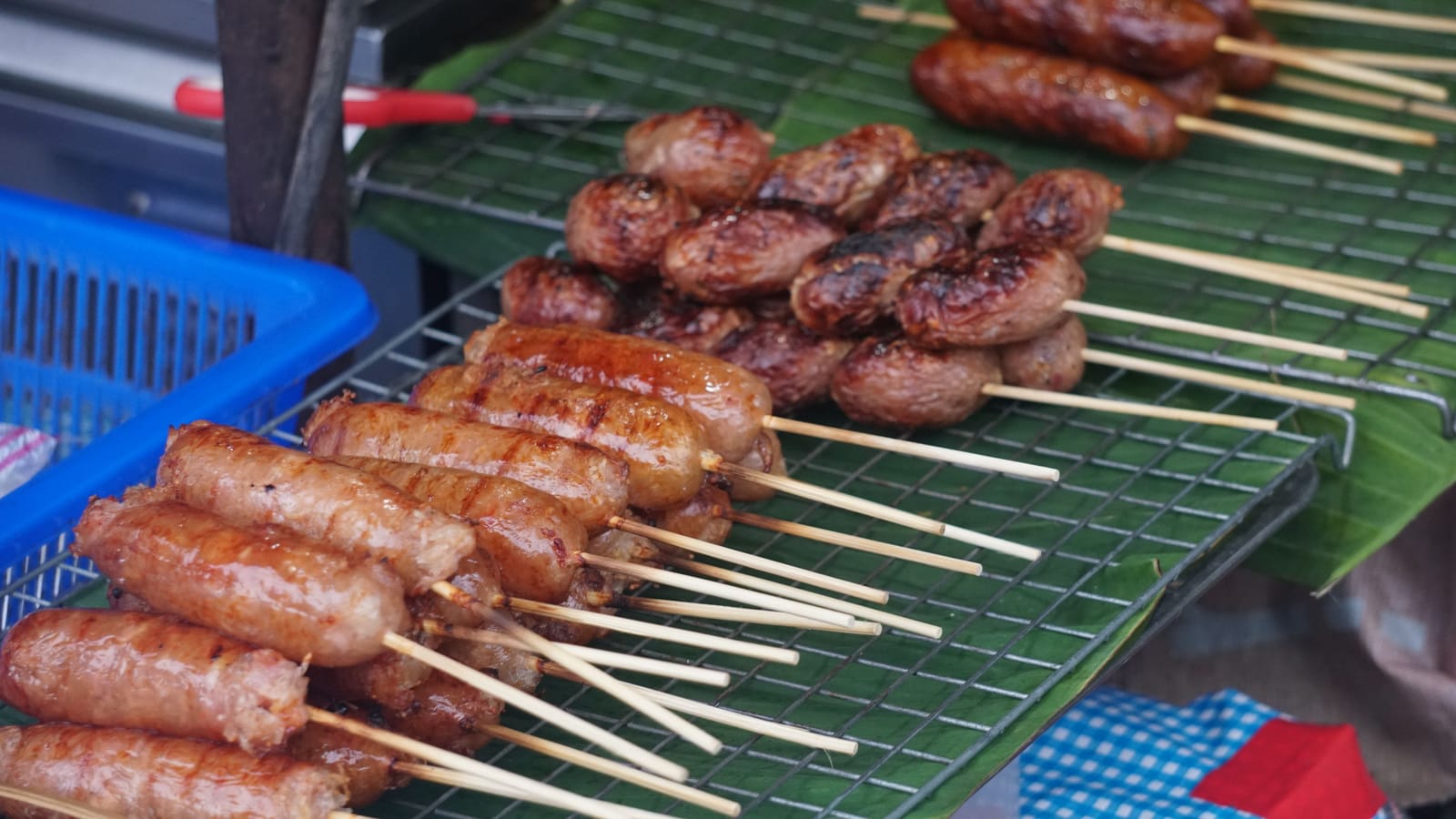
Sai ua is Chiang Mai's grilled pork sausage, packed with lemongrass, kaffir lime leaf, turmeric and dried chilli, then coiled and charred over charcoal. Warorot Market, the city's oldest covered market by the Ping River, sells it by weight from several stalls, usually with sticky rice and a chilli dip.
It travels well cold, which is why vendors sell it to visitors heading to the airport. A coil runs 15-20 THB per piece, and smokiness is the test of quality, not chilli heat.
Khao kha moo at the Cowboy Hat Lady's stall
Khao kha moo is stewed pork leg, braised for hours in soy, cinnamon and star anise until the skin turns gelatinous, served over rice with a boiled egg and pickled greens. The best-known version in Chiang Mai comes from a stall by Chang Phueak Gate, run by a vendor known locally as the Cowboy Hat Lady, for the hat she wears every night from 5pm.
A plate costs 30-60 THB. Expect a queue after 7pm; it moves fast because the pork is pre-cooked and only needs reheating and slicing.
Gai yang at SP Chicken
Gai yang, grilled marinated chicken, is a lunch dish here rather than a late-night one. SP Chicken, a stall near Wat Phra Singh in the Old City, grills it over charcoal and serves it with som tam (green papaya salad) and sticky rice for about 100-150 THB a head.
Service usually stops by 2pm once the day's chickens sell out, so this is a dish to plan a morning around, not an evening.
Nam prik ong at a sit-down kitchen
Nam prik ong is a dip of minced pork, dried chillies, tomato and shrimp paste, simmered until it thickens into something closer to a ragu than a sauce. It is eaten with pork crackling, sticky rice and raw vegetables for scooping.
It rarely appears at street stalls, since the dip needs a stove running most of the day; Huen Phen and other Old City kitchens serve it as a starter, usually 60-90 THB for a shareable portion.
Gaeng hang lay, the curry with Burmese roots
Gaeng hang lay is a pork belly curry seasoned with ginger, tamarind and a northern curry paste that owes its pickled-garlic sourness to Burmese cooking across the border. It is slow-braised until the fat turns soft rather than crisp, unlike most Thai pork dishes.
Old City restaurants serve it with sticky rice rather than jasmine rice, and a portion for two runs about 150-200 THB.
Khanom jeen nam ngiao, the Shan noodle bowl
Khanom jeen nam ngiao pairs fresh rice noodles with a tomato-based broth, pork or beef, and a dried flower bud called dok ngiao that gives the dish its name and a faint sourness. It is the clearest sign of Shan influence on Chiang Mai cooking, carried south by traders from what is now Myanmar's Shan State.
Morning markets are the place to find it, usually alongside khao soi stalls, for about 25-40 THB a bowl.
Specialty coffee on Nimmanhaemin Road
Chiang Mai grows its own coffee in the hills around Doi Chang and Doi Inthanon, and Nimmanhaemin Road, the Nimman district west of the Old City, has turned that into one of Thailand's densest cafe scenes. Ristr8to, run by former world latte-art champion Arnon Thitiprasert, roasts single-origin hill-tribe beans and serves flat whites from about 90-120 THB.
The scene owes something to Bangkok's own coffee boom, visible in Blue Bottle's recent arrival in the capital, though Chiang Mai's cafes lean more on local beans than imported roasts. Southeast Asia's coffee traditions stretch further still, down to Hanoi's egg coffee, brewed with condensed milk rather than cream.
The tasting menu at Blackitch Artisan Kitchen
For a formal counterpoint to the markets, Blackitch Artisan Kitchen, a 16-seat restaurant in Nimman run by self-taught chef Phanuphol "Black" Bulsuwan, serves a tasting menu of Thai ingredients prepared with French and Japanese technique, priced at roughly 2,500-3,000 THB a head.
It is one of the restaurants behind Thailand's growing Michelin presence, and bookings run weeks out, so reserve before arriving in the city rather than on the day.
Markets, neighbourhoods and when to go
What to eat in Chiang Mai depends as much on the hour as the neighbourhood. The city's food geography splits into a handful of areas, each active at different hours:
- Warorot Market (Ping River): daytime market, busiest 7am-4pm, for sai ua, dried chilli pastes and a Yunnanese-Muslim food court.
- Chang Phueak Gate night market: open 5pm-midnight daily, for khao soi and khao kha moo.
- Old City (inside the moat): sit-down kitchens like Huen Phen and SP Chicken, mostly a lunch crowd.
- Nimmanhaemin (Nimman): specialty coffee and contemporary restaurants, busiest evenings and weekends.
- Sunday Walking Street (Ratchadamnoen Road): weekly market with northern dishes alongside handicrafts, from late afternoon until around 10pm.
November to February is the cool season and the easiest time to eat outdoors; April's Songkran festival empties many kitchens for days.
Is Chiang Mai expensive to eat in?
Is Chiang Mai expensive to eat in? Street food runs 25-90 THB a dish, so a full day of market eating rarely passes 500 THB. Tasting menus and hotel restaurants are the exception, closer to Bangkok prices.
Is the food in Chiang Mai very spicy? Chillies arrive dried and are often served on the side rather than cooked in, so dishes can be milder than their reputation suggests; ask for chilli separately if unsure.
What's the difference between Chiang Mai and Bangkok food? Chiang Mai cooking draws on Lanna, Shan and Burmese traditions, uses less coconut milk and sugar, and serves sticky rice rather than jasmine rice as the default.
Do I need reservations for street food? No, but Blackitch and other tasting-menu restaurants need weeks of notice; markets and stalls are first-come, first-served.
Where to book first
Three places for a first itinerary: Huen Phen (112 Ratchamanka Road, Old City) for a sit-down introduction to khao soi and nam prik ong; the Chang Phueak Gate night market for khao kha moo and a second bowl of khao soi after dark; and Blackitch Artisan Kitchen (27/1 Nimmanhemin Soi 7) for the one dinner worth booking weeks ahead. Between these three stops sits most of what to eat in Chiang Mai on a first visit.