Beaujolais harvest 2026 falls to 320,000 hectolitres
Hail on 16 July, drought and heat cut the crop by about a tenth, the interprofession says. The wines are judged very good, and there will not be enough of them to go round.
The Beaujolais harvest 2026 will yield between 320,000 and 330,000 hectolitres, about 10% less than in 2025, Inter Beaujolais vice-president Jean-Marc Lafont told the French trade title Vitisphere on 2 October. Hail, drought and heat cut the crop; demand has not fallen with it.
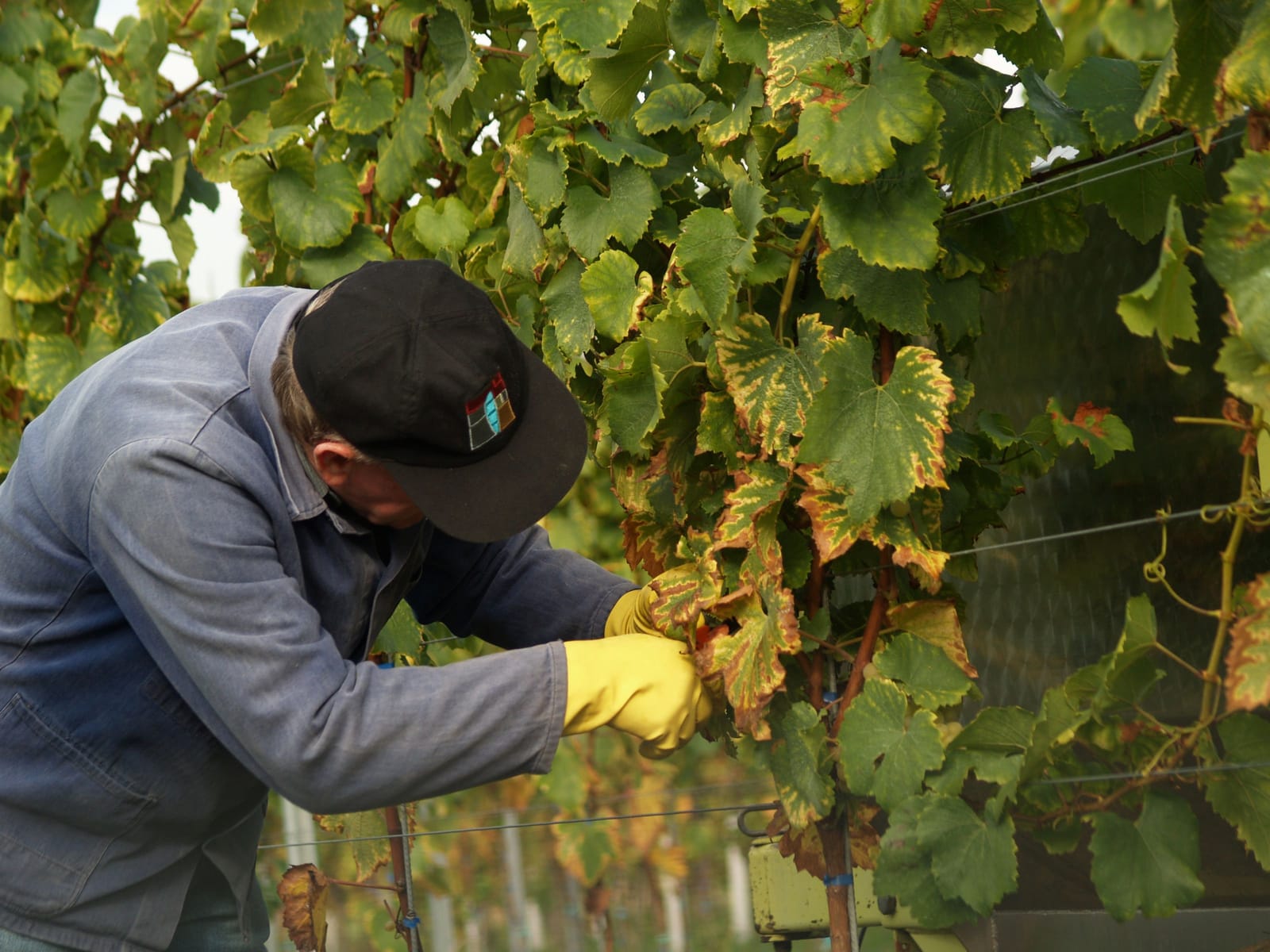
Picking opened on 13 August and was over by around 10 September. That start is six days earlier than in 2025, when it fell on 19 August, and more than three weeks ahead of 2024, when it began on 6 September, according to Vitisphere.
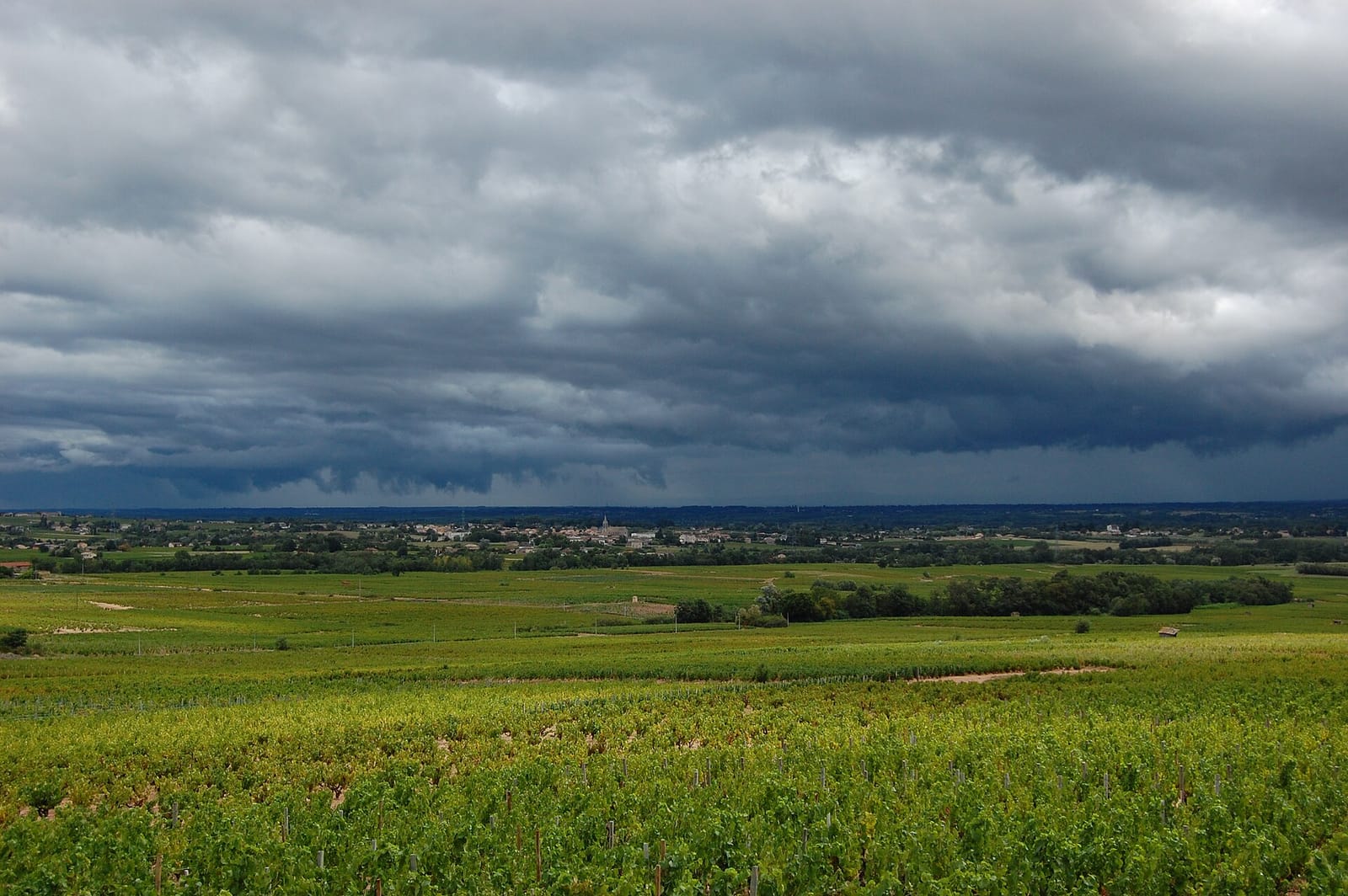
The decisive date came before any of that. On 16 July a hailstorm crossed roughly 5,000 hectares of vines, Lafont said, with losses running from 5% to 95% depending on the plot. The corridor ran through the Beaujolais-Villages sector from Les Ardillats to Saint-Étienne-des-Oullières, and the crus of Brouilly and Côte de Brouilly, already struck in late June, took the worst of it. An earlier count by the same publication, on 20 August, put the storm-affected area at about 4,000 of the region's 11,600 hectares.
A good vintage and a short one: Beaujolais has more buyers than wine this autumn.
Where the hail fell, yields halved
The regional figure is an average, and Lafont, who farms Domaine de Bel Air in Lantignié, said it hides wide gaps between appellations and estates. At Château de la Chaize in Odenas, director Boris Gruy told Bourgogne Aujourd'hui in late August that the property had been hit twice and would not exceed 20 hectolitres per hectare. Vinetur reported around 25 hl/ha in Moulin-à-Vent and Chénas.
Further south, where more rain fell, organic growers were bringing in 35 to 40 hl/ha, the Burgundy magazine wrote.
On quality the interprofession is confident. “We have very pure aromas that have really stayed on the fruit,” Lafont said, describing wines with good colour, roundness and balance once acidity had been slightly corrected.
Beaujolais harvest 2026 meets a market that wants more
The difficulty is arithmetic. Demand remains firm, particularly for export, and the volume is, in Vitisphere's account, not enough to supply everyone. Prices for the new wines are under upward pressure as a result.
On paper Beaujolais is doing better than its neighbours. The agriculture ministry's statistics service Agreste, in its 1 September estimate, put the combined Burgundy-Beaujolais basin 33% below 2025, within a national crop of about 34 million hectolitres, the lowest since 1957. Burgundy itself logged its earliest harvest in nearly 500 years.
The first public test comes on 19 November, the third Thursday of the month, when Beaujolais Nouveau goes on sale. Final volumes for the Beaujolais harvest 2026 will be known only once growers file their harvest declarations this winter. Until then the region has a good vintage and too little of it, in that order.