Nigeria food inflation: food prices fall 1.55% in September
Headline inflation eased to 14.63%, a third monthly decline, while the annual food rate barely moved. In Lagos markets, maize and pepper got cheaper and tomatoes dearer.
Nigeria food inflation turned negative on a monthly basis in September, with food prices falling 1.55% from August, the National Bureau of Statistics (NBS) reported on 15 October. Headline inflation eased to 14.63% from 15.39%, its third consecutive monthly decline.
Month on month, the headline index rose just 0.06%, against 0.71% in August, according to the NBS figures reported by Nairametrics and Leadership. Core inflation, which strips out farm produce and energy, stood at 12.95% year on year.
What moved Nigeria food inflation in September
A monthly fall in food prices is not the same as cheaper food: the annual rate has barely moved.
The monthly fall in food prices, after a 1.02% rise in August, is a swing of 2.57 percentage points. On an annual basis the picture is flatter: food inflation stood at 19.59%, against 19.57% in August.
The bureau linked the monthly movement to the prices of guinea corn flour, maize flour, local short-grain rice, eggs, onions, palm oil, green beans, Irish potatoes, okra, fresh tomatoes, dried green peas and plantain, Leadership and TVC News reported. The release does not say how far each item moved, or in which direction.
Rural prices fell 0.89% on the month, while urban prices rose 0.53%, faster than in August, according to Nairametrics. TVC News, reading the state tables, put Lagos at the top for annual food inflation, at 34.40%; the NBS warns that state figures are weighted differently and should not be compared directly.
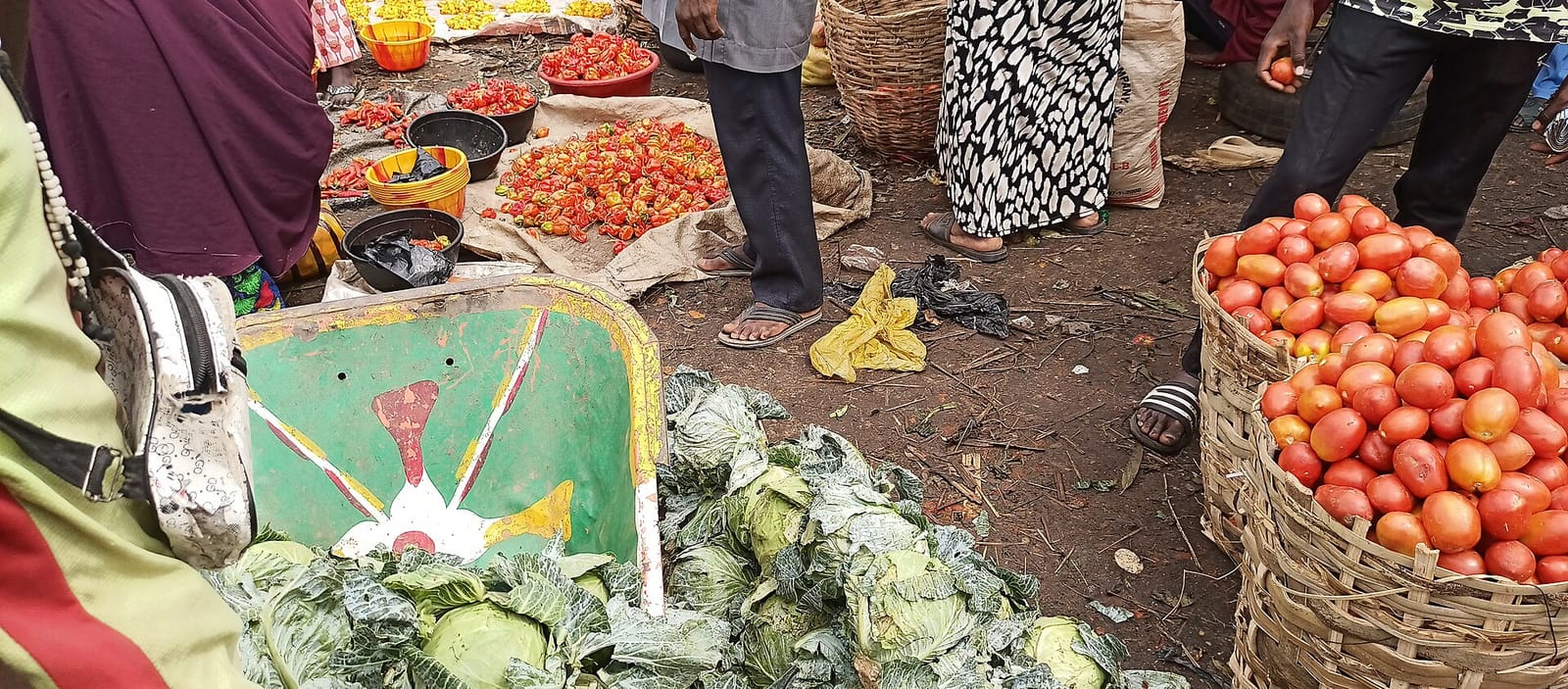
A survey of four Lagos markets, Mushin, Daleko, Mile 12 and Oyingbo, published by Nairametrics on 2 October shows the same unevenness. Of 67 staples, 36 got cheaper in September and 16 dearer. A 50 kg bag of maize fell from N50,000 to N40,000 and a big bag of pepper dropped 20% to N80,000, while a big basket of oval tomatoes rose from N70,000 to N80,000 and a big bag of egusi from N370,000 to N480,000.
What the central bank does next
The figures follow a 350-basis-point cut in the Central Bank of Nigeria's policy rate, to 23%, at its meeting on 21 and 22 September. The next Monetary Policy Committee meeting is set for 23 and 24 November, according to the bank's calendar.
Elsewhere, food is pushing prices the other way: in the Philippines, inflation rose to 7.2% as rice and vegetables surged. The NBS usually releases data in mid-month, so October's figures should land before the rate decision.
Sources
- Nairametrics ·
- Leadership ·
- TVC News ·
- Nairametrics ·