Jollof rice recipe: West Africa's smoky party classic
Nigeria's party rice gets its colour from a slow-cooked tomato base, and its signature smokiness from a deliberate scorch at the bottom of the pot.
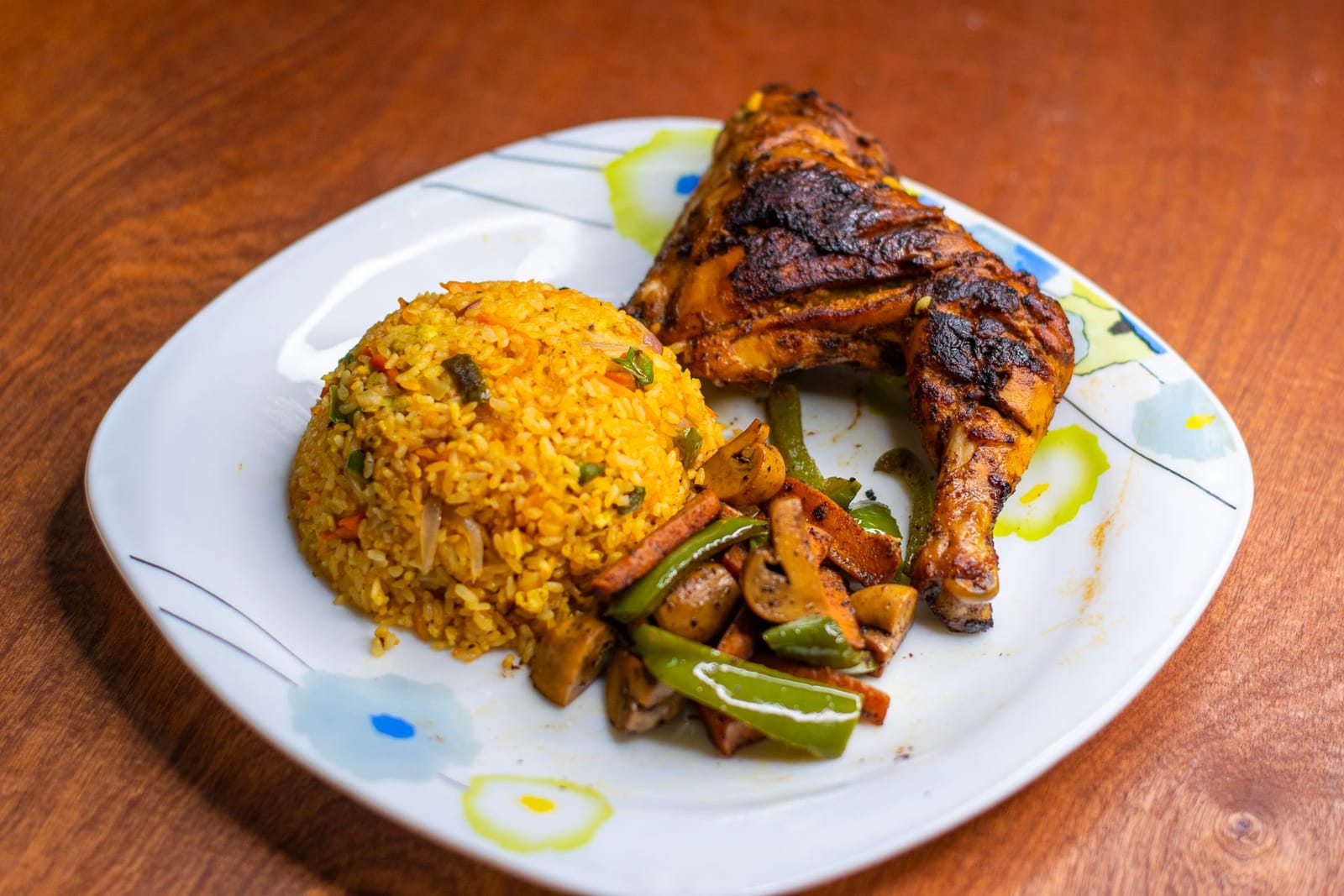
Jollof rice is West Africa's tomato rice, built on a blended pepper base that reduces to a deep red before the rice ever touches the pot, finished with a brief, deliberate scorch that gives "party jollof" its smoky name.
The dish traces to the Senegambia region and the Wolof empire of the 14th to 16th centuries, and now anchors family tables and wedding buffets from Lagos to Accra to Dakar. Food writer Yewande Komolafe, author of "My Everyday Lagos" and a recipe developer for The New York Times, treats the base sauce, obe ata, as the whole dish's foundation: blend it smooth, then cook out its raw edge before the rice joins. Skip that step and the jollof tastes thin and acidic instead of rounded.
Ingredients
Jollof rice is West Africa's proof that a sauce, cooked slowly enough, becomes a cuisine.
- 400 g parboiled long-grain rice, rinsed until the water runs clear
- 4 ripe plum tomatoes, roughly chopped
- 2 red bell peppers, roughly chopped
- 1-2 scotch bonnet or habanero chillies, to taste
- 2 onions, 1 roughly chopped, 1 thinly sliced
- 100 ml vegetable oil
- 3 tbsp tomato paste
- 2 garlic cloves, grated
- 1 thumb ginger, grated
- 1 tsp smoked paprika
- 1 tsp curry powder
- 1 tsp dried thyme
- 2 bay leaves
- 750 ml chicken or vegetable stock
- Salt, to taste
Method
- Blend the tomatoes, bell peppers, chopped onion and chillies with a splash of water to a smooth purée. This is obe ata, the base every jollof is built on.
- Heat the oil in a heavy, lidded pot and fry the sliced onion until soft. Add the garlic and ginger and cook for a minute, until fragrant but not browned.
- Stir in the tomato paste and fry it for 3-4 minutes before adding the purée. Cooking the paste first drives off its raw, tinny edge, the step most recipes that taste flat have skipped.
- Add the smoked paprika, curry powder, thyme and bay leaves. Simmer uncovered for 20-25 minutes, stirring now and then, until the sauce thickens and the oil rises and separates at the surface, the visual cue Nigerian cooks call the stew being "fried".
- Stir in the rinsed rice until every grain is coated, then pour over stock just to cover. Parboiled rice needs less liquid than raw long-grain; too much and the jollof turns to porridge.
- Cover tightly, lower the heat and cook undisturbed for 20 minutes. Don't lift the lid: the trapped steam is what lets the rice at the bottom caramelise against the pot without the top drying out.
- For the smoky party finish, raise the heat under the pot for the final 2 minutes, just long enough for the bottom layer to catch, then take it off the heat and rest, covered, for 10 minutes before fluffing from the edges.
A jollof for every table
Serve with fried plantain, coleslaw or grilled chicken, and go easy on stirring once it's plated: jollof is meant to hold its shape, not fall apart like a pilaf. Nigerian cooks tend to favour parboiled long-grain rice and a heavier hand with smoke; Ghanaian versions lean on fragrant jasmine rice and a milder, more fragrant stew. Neither side is wrong, and most households keep one pot of each at a party.
Can you make it without the smoky finish? Yes: take the pot off the heat before the final scorch and this jollof rice recipe still works, it just loses the char that gives party versions their name.
Nigeria's own food economy has had an easier year: food prices fell 1.55% in September, a rare break for a kitchen staple that depends on tomatoes, onions and rice all moving in price together.