Panforte recipe: Siena's dense spiced nut and fruit cake
A medieval Tuscan recipe that is more honeyed nut brittle than cake: toasted almonds and hazelnuts, candied peel and warm spice, set hard and sliced thin.
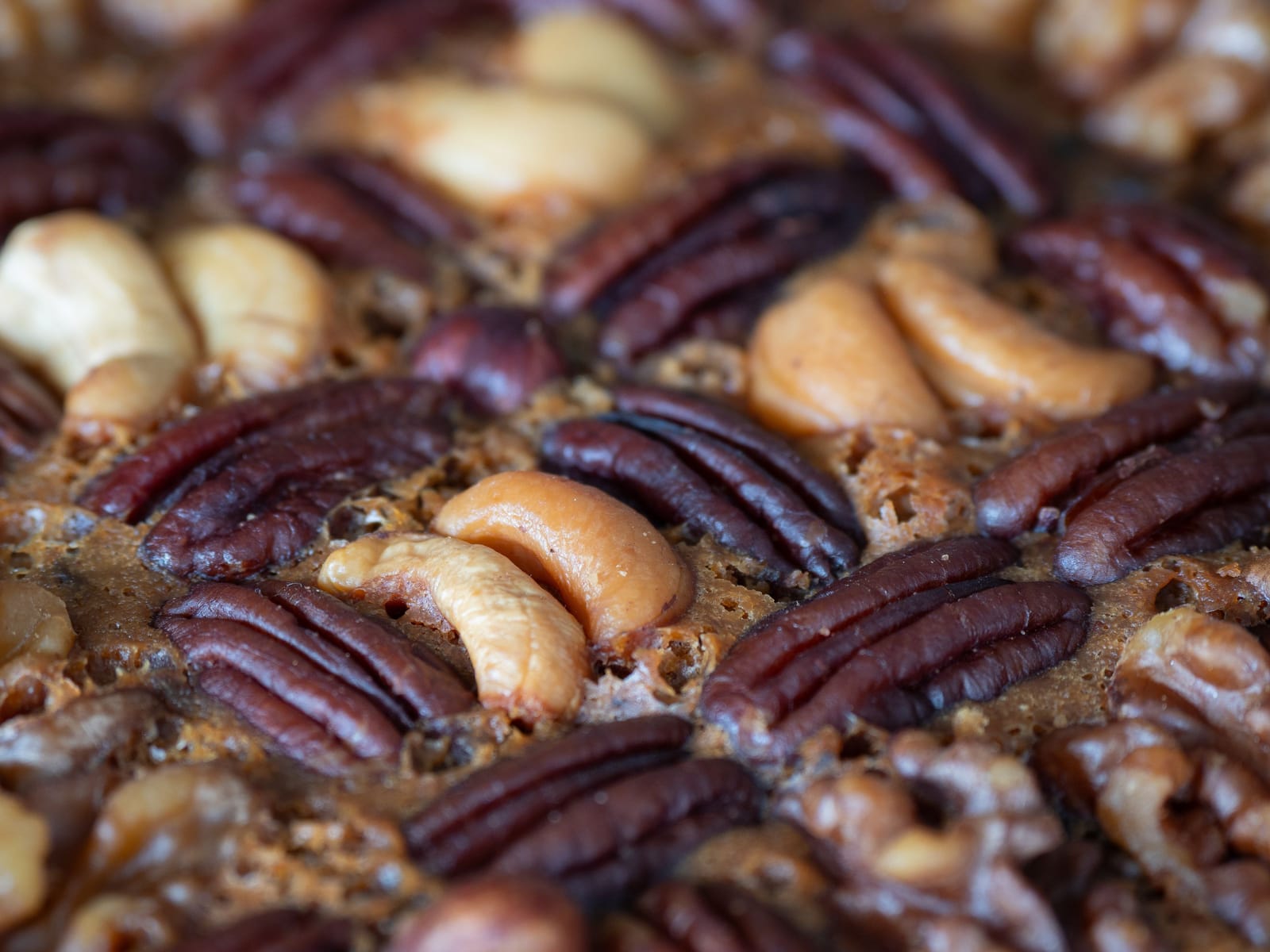
Panforte is Siena's oldest sweet, a disc of toasted nuts and candied fruit bound in honey and spice, sliced as thin as a coin because a thick wedge is far too much. Bakeries in Siena sell it year-round, not just at Christmas, and the better ones still set it on sheets of edible wafer paper, the way convents did eight centuries ago.
The city's oldest confectioners, among them Nannini, trading since 1911, keep the formula close to its medieval root: equal weight of nuts, fruit and honey syrup, bound with just enough flour and spice to hold the shape. Tuscany's open-fire cooking is having a London moment this week with the opening of Osteria Panzano in Knightsbridge, and panforte is the sweet that belongs at the end of that kind of meal: dense, barely baked, built to travel.
Ingredients
Equal weight of nuts, fruit and honey, bound with just enough flour to hold the shape.
- 150g blanched almonds
- 150g hazelnuts
- 100g candied orange peel, diced
- 100g candied citron peel, diced
- 100g plain flour
- 1 tsp ground cinnamon
- 1/2 tsp ground cloves
- 1/2 tsp ground coriander seed
- 1/4 tsp freshly grated nutmeg
- 150g honey
- 150g caster sugar
- 2 sheets edible wafer paper (ostia), or baking parchment
- 2 tbsp icing sugar, for dusting
Method
- Heat the oven to 150C (130C fan). Spread the almonds and hazelnuts on a tray and toast for 10 minutes, until they colour and smell nutty; rub the hazelnuts in a tea towel to loosen most of their skins. Toasting first stops the finished panforte tasting raw at the centre, since the cake itself barely bakes.
- Chop the nuts roughly and tip them into a large bowl with the candied orange and citron peel.
- Sift the flour, cinnamon, cloves, coriander and nutmeg over the nut mixture and toss until every piece is coated. The flour does two jobs: it keeps the fruit from sinking to the bottom, and it soaks up moisture from the honey so the cake sets firm rather than sticky.
- Line the base of a 20cm cake tin with wafer paper, or with parchment brushed lightly with a neutral oil.
- Put the honey and sugar in a small saucepan over medium heat and cook, without stirring, until a sugar thermometer reads 115-118C, or until a drop forms a soft, pliable ball in cold water. Short of soft-ball stage, the panforte won't set; past it, the finished slice turns brittle instead of chewy.
- Pour the hot syrup over the nut mixture at once and stir hard and fast with a wooden spoon — it stiffens within a minute, so work quickly, pulling it right to the edges of the bowl before it seizes.
- Scrape the mixture into the lined tin and press it flat with the back of a wet spoon or a wet palm; wetting your hand stops the honey from sticking to your skin rather than the cake.
- Bake for 30-35 minutes, until the surface looks dry and slightly darker at the edges but still gives a little in the centre when pressed. It firms up entirely as it cools, so resist the urge to leave it in longer for a firmer bite now.
Vin Santo, and a knife that stays clean
Let the panforte cool completely in the tin — at least two hours, ideally overnight — before turning it out and dusting it heavily with icing sugar on both sides. Wrapped in baking parchment, it keeps for a month in a cool cupboard, improving slightly as the spices settle.
Slice it thin, the way Sienese bakeries do, with a long knife run under hot water between cuts so the honey doesn't drag. The traditional pairing is a small glass of Vin Santo, Tuscany's amber dessert wine, though a short, bitter espresso does the same job of cutting the sweetness.
Can panforte be made without wafer paper? Yes — lightly oiled baking parchment lines the tin almost as well; wafer paper simply keeps the base from sticking the old-fashioned way.