Bouillabaisse recipe: Marseille's two-stage fish stew
The Mediterranean fishermen's stew splits into broth and fish, a method the city's 1980 charter wrote down to keep the dish honest.
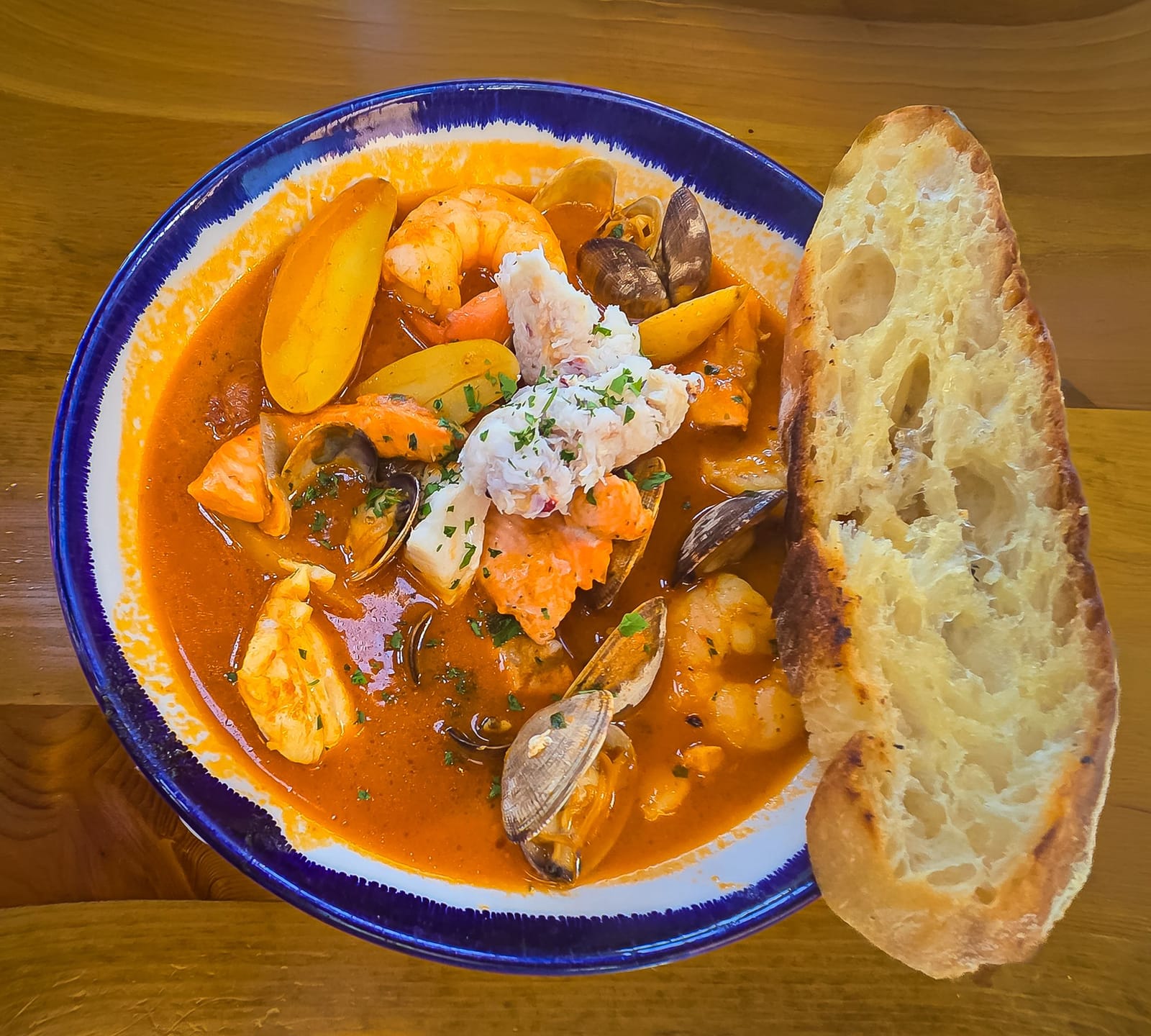
Bouillabaisse began as a Marseille fishermen's stew, built from the rockfish too bony to sell, and it still turns on one point: the broth and the fish are cooked, and served, separately.
Marseille's restaurateurs wrote that method down in 1980 in the Charte de la Bouillabaisse Marseillaise, a pact meant to stop the dish drifting into a generic fish soup. It sets a minimum of four kinds of Mediterranean rockfish, a saffron broth, and rouille and croutons on the side, the version restaurants such as Chez Fonfon, in the Vallon des Auffes, still cook from.
Ingredients
The broth and the fish are cooked, and served, separately.
- 1.5 kg mixed firm white fish (monkfish, conger eel, red mullet), cut into chunks, bones and heads reserved
- 300 g mussels, scrubbed and debearded
- 300 g raw prawns, shell on
- 3 tbsp olive oil
- 1 onion, chopped
- 1 leek, white part only, sliced
- 1 fennel bulb, sliced
- 4 garlic cloves, crushed
- 4 ripe tomatoes, chopped (or 400 g tinned)
- Zest of 1 orange, in strips
- 2 bay leaves and a sprig of thyme
- A large pinch of saffron threads
- 50 ml pastis
- 2 litres fish stock or water
- 4 waxy potatoes, peeled and sliced
- Salt and black pepper
- For the rouille: 2 egg yolks, 2 garlic cloves, 1 small chilli, a pinch of saffron, 200 ml olive oil
- Toasted baguette and grated Gruyère, to serve
Method
- Sweat the onion, leek and fennel in the oil for 8 minutes until soft but not coloured, so the base sweetens the broth rather than just thickening it.
- Add the garlic, tomatoes, orange zest, bay, thyme and fish bones, and cook 5 minutes to build a concentrated base before any liquid goes in.
- Add the pastis, bubble a minute to cook off the alcohol, then add the stock and saffron. Boil hard for 20 minutes; a fast boil emulsifies the oil into the broth, giving it body instead of leaving a thin soup.
- Strain through a fine sieve, pressing the solids dry, then return the broth to the pot. Add the potatoes and simmer 12 minutes until tender.
- Make the rouille: whisk the egg yolks with the garlic, chilli and saffron, then add the oil drop by drop, as for a mayonnaise, until it thickens.
- Add the firmest fish first and simmer 4 minutes, then the mullet, mussels and prawns for 4 minutes more, until the mussels open. Taking the fish out in stages keeps every piece intact.
- Lift the fish and potatoes onto a platter and serve the broth separately, with rouille on toasted baguette and Gruyère on the side.
Why the broth comes first
Can you make bouillabaisse without rascasse? Yes — outside the Mediterranean, monkfish, conger eel and red mullet give the broth a similar depth.
In Marseille, bouillabaisse is eaten in two services: broth with rouille-soaked croutons first, then the fish and potatoes. A chilled Provence rosé cuts through the rouille better than a red, and if the true fish is hard to find, hake and gurnard make a lighter stand-in for rascasse and conger eel without losing the two-stage method that makes the dish. See also What to eat in Lyon.