What to eat in Marseille: 9 dishes and where to find them
From bouillabaisse at a fishing-cove institution to couscous in Noailles, the Mediterranean port's food runs through its markets as much as its restaurants.
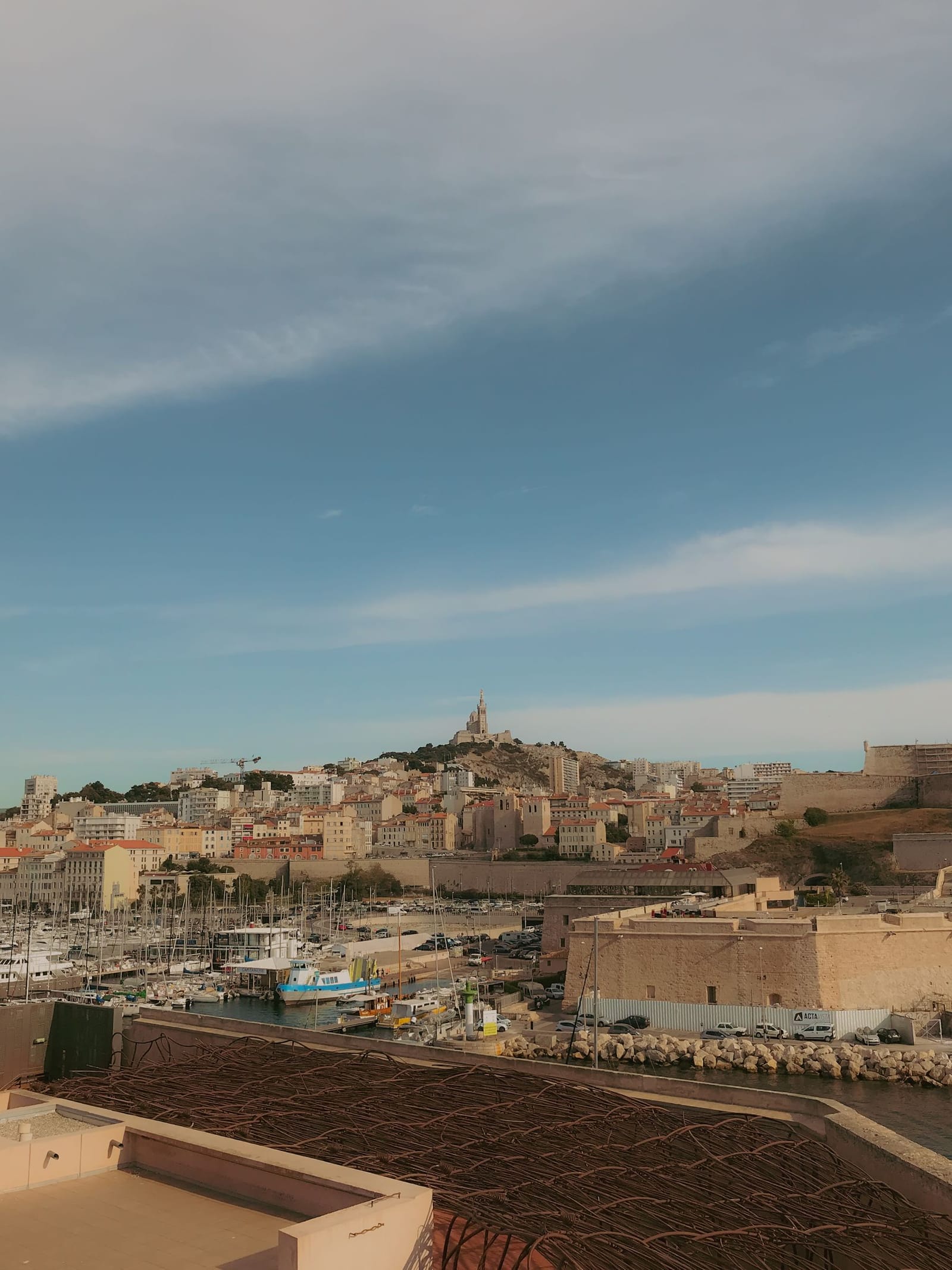
What to eat in Marseille starts with bouillabaisse, the saffron fish stew the city's fishermen built from the catch no one would buy, but the real answer runs wider: pastis at the Vieux-Port, couscous in Noailles, and chickpea panisse fried dockside at L'Estaque.
France's oldest city has spent 2,600 years as a Mediterranean port, and its food shows it. Genoese dockworkers, Armenian and Comorian traders, and generations of Algerian and Tunisian families have shaped what Marseille eats as much as any chef has, which is why working out what to eat in Marseille means spending as much time in markets and family kitchens as at a tasting menu. Olive oil, garlic, saffron and anchovy run through almost everything on this list.
What to eat in Marseille: start with bouillabaisse at Chez Fonfon
The broth and the fish are cooked, and served, separately.
Bouillabaisse is Marseille's signature dish: a saffron broth built from rockfish, served separately from the fish itself with rouille and croutons on the side. Chez Fonfon, tucked into the fishing cove of the Vallon des Auffes, has cooked a version of the same family recipe for decades and still follows the 1980 Charte de la Bouillabaisse Marseillaise, the local pact that sets a minimum of four rockfish species.
A set bouillabaisse menu runs from roughly €65 to €90 per person, fish included; book ahead, since the dish is made to order and the restaurant is small. It closes on Mondays outside the summer season. Try the full bouillabaisse recipe at home.
Pieds et paquets at Paulette, Endoume
Pieds et paquets is Marseille's other claim on offal: lamb's trotters and tripe parcels stewed slowly with white wine, tomato and garlic, a dish the city traces to the Pomme neighbourhood around 1880. Paulette, on the Rue du Vallon des Auffes in Endoume, is one of the few addresses that still serves a properly old-fashioned version, with a terrace worth booking ahead for.
It is not a dish for the squeamish, but it rewards anyone who orders it with a plate of the kind of slow-cooked Marseille cooking that rarely makes it onto a tourist menu.
Navettes at Le Four des Navettes, Saint-Victor
The navette is Marseille's edible souvenir: a boat-shaped, orange-blossom biscuit, hard enough to keep for months, baked without yeast. Le Four des Navettes, on Rue Sainte by the Abbaye Saint-Victor, has run the same vaulted wood oven since 1781 and bakes nothing else, making it the oldest working bakery in the city.
Sales peak around Candlemas on 2 February, when a procession from the abbey ends at the bakery's door, but the ovens run year-round and a bag of navettes travels well.
Panisse and chichis fregi at Chez Magali, L'Estaque
Panisse, a chickpea-flour fritter fried until the outside crisps and the inside stays custardy, arrived with Genoese dockworkers in the 19th century and became Marseille's cheapest, fastest lunch. Chez Magali, a kiosk on the L'Estaque port, fries panisse alongside chichis fregi, a sugared, doughnut-like fritter sold by the dozen on the same stretch of quay that inspired Cézanne and Braque to paint it.
Eat both standing up, from a paper cone, looking out at the fishing boats; that is the intended setting, not a side table.
Marseille-style pizza at Chez Jeannot, Vallon des Auffes
Marseille has its own pizza tradition, thicker and more generously topped than its Neapolitan cousin, and Chez Jeannot has baked it in a wood-fired oven at the Vallon des Auffes since 1949. What began as a single oven and four tables, run by the Mounier family for decades, now seats considerably more, with the same sea view it always had.
It sits a short walk from Chez Fonfon, which makes the cove worth a half-day rather than a single meal.
Pastis at Bar de la Marine, Vieux-Port
Pastis is Marseille's apéritif, an anise spirit that filled the gap absinthe left behind in the early 20th century, and Bar de la Marine on the Vieux-Port is the bar Marcel Pagnol put in his 1930s Marseille trilogy. It still pours pastis the traditional way, over ice and lengthened with water at the table.
For a wider tasting, La Maison du Pastis, at 108 Quai du Port, stocks around 75 pastis and absinthe labels and will talk a visitor through the difference before they commit to a bottle. For the vintage behind the glass, see France's shrinking wine harvest.
Couscous at Le Femina chez Kachetel, Noailles
Marseille's Algerian and Kabyle families have cooked couscous in the city for over a century, and Le Femina chez Kachetel, on Rue du Musée in Noailles, has served it since 1921. The menu runs from a plain semolina or barley couscous to one built on fish, at prices from around €15 to €35, in a halal, alcohol-free dining room run by the same family across generations.
It is usually busiest at lunch; arriving close to opening avoids the wait.
Spices and North African pastries at Marché des Capucins, Noailles
The Marché des Capucins, founded in 1956, is the cheapest food market in central Marseille and the heart of Noailles, the North African quarter that gives the city much of its everyday flavour. Saladin Épices du Monde, on the adjoining Rue Longue des Capucins, has sold ras el hanout, saffron and other spices from the same shopfront since 1986.
Come hungry: stalls around the market fry panisse and chichis through the day, and the surrounding streets hold some of the city's best North African bakeries.
A modern, vegetable-led table at Ourea
Marseille's fine-dining scene has its own vegetable-forward strand, and Ourea, a small bistro in the 6th arrondissement run by chef Matthieu Roche and Camille Fromont, is its clearest example: plant-led plates built around organic and biodynamic wine. A weekday lunch runs from about €25 to €35, with a longer tasting menu around €62.
Book well ahead; the dining room seats only a handful of tables and the kitchen changes its short menu weekly.
Markets, neighbourhoods and when to go
- Marché des Capucins, Noailles: food market, open mornings except Monday, cheapest prices in the centre.
- Vieux-Port fish market, Quai des Belges: fishermen sell the morning's catch dockside daily until around 1pm.
- Vallon des Auffes: a working fishing cove with three restaurants (Chez Fonfon, Chez Jeannot, Paulette nearby) within a five-minute walk of each other.
- Best time to go: spring and early autumn avoid the August crowds and the worst summer heat, and still catch bouillabaisse season at its best.
Questions about eating in Marseille
Is Marseille expensive to eat in? Not especially. A couscous or panisse lunch costs under €15, and even a full bouillabaisse dinner tops out around €90 a head, cheaper than equivalent seafood tables in Paris or Nice.
Is bouillabaisse worth the price? At a restaurant that still follows the 1980 charter, yes: the broth and fish are prepared separately and the fish is not padded out with filler, which is the real test of a genuine version.
What should vegetarians order? Panisse, navettes and the tasting menu at Ourea cover most of the city's best vegetarian eating; couscous can be ordered without meat at most Noailles addresses.
Do I need to book ahead? For Chez Fonfon, Ourea and Paulette, yes, several days ahead in high season. Market stalls and Le Femina take walk-ins.
Where to book first
For a first pass at what to eat in Marseille, book these three: Chez Fonfon, 140 Rue du Vallon des Auffes, for the bouillabaisse that defines the city; Le Femina chez Kachetel, 1 Rue du Musée, for the couscous that defines Noailles; and Ourea, 72 Rue de la Paix-Marcel-Paul, for where Marseille's kitchens are heading next. For another French port of call, see what to eat in Lyon.
Sources
- Marseille Tourist Office - Charte de la Bouillabaisse ·
- Marseille Tourist Office - Chez Fonfon ·
- Marseille Tourist Office - Le Four des Navettes ·
- Made in Marseille - Guide Marseille Gourmande ·
- Made in Marseille - Le Femina, couscous a Noailles ·
- Gault&Millau - Ou manger une bonne bouillabaisse a Marseille ·