Peru's southern anchovy season sits empty as quota waits
Six weeks after PRODUCE authorized 251,000 tonnes for the second southern season, boats had landed none of it, El Niño Costero having pushed the shoal out of reach.
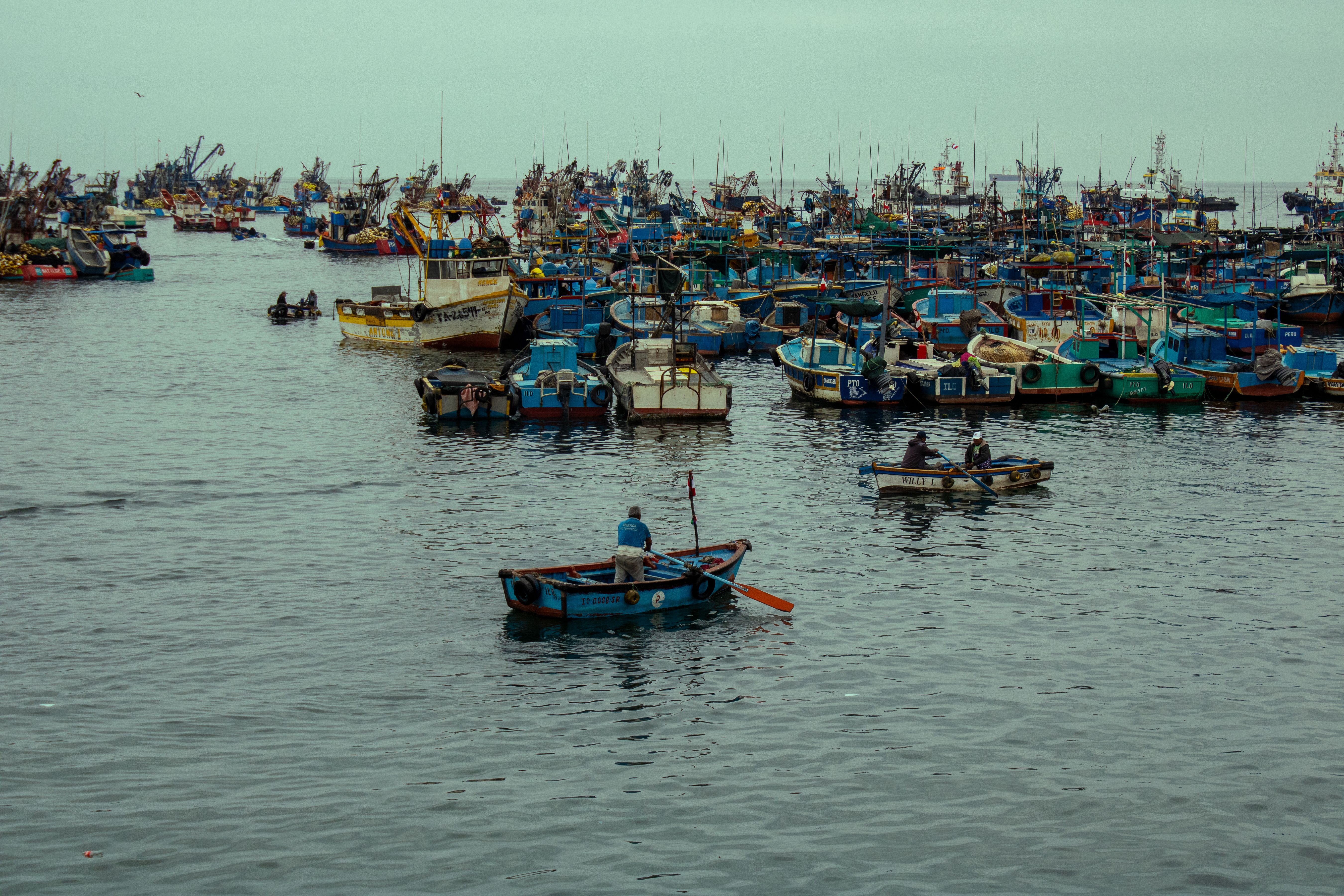
Six weeks into Peru's second anchovy season in the south, boats had landed nothing against a 251,000-tonne quota. Infobae reported zero registered catch as of August 10, even though the Ministry of Production (PRODUCE) authorized the season to run from July 1 to December 31 across the maritime area south of 16°S.
PRODUCE set the ceiling — the LMTCP-Sur, its Total Maximum Permissible Catch Limit — at exactly half the 502,000-tonne annual limit for the southern anchoveta (Engraulis ringens) and white anchoveta (Anchoa nasus) stock. IMARPE, Peru's marine research institute, recommended holding back the other half, citing juvenile fish and a warming ocean.
Why the anchovy season stalled
A quota is a ceiling, not a promise; this year the sea set the real limit.
The reserve looks justified in hindsight. ENFEN, Peru's El Niño monitoring committee, has kept a Coastal El Niño Alert in force since spring; its coastal index hit 3.29 in July, up from 0.96 in March, a jump it classifies as "strongly warm." Warmer water pushes anchoveta into deeper, scattered grounds and weakens the coastal upwelling that feeds it, so fleets built for shallow, dense schools come home empty.
The pattern is not confined to the south. Peru's north-central zone, which usually supplies most of the world's fishmeal, closed its first 2026 season on August 21 having landed just 24.61% of a 1.91-million-tonne quota — about 470,000 tonnes. PRODUCE responded on September 14, through Resolution No. 00323-2026, by excluding that season from the count used to reassess shipowners' future catch shares, an acknowledgment the shortfall was the sea's doing, not the fleet's.
Anchoveta is the biggest single-species catch on the planet by volume, and Peru lands most of it. Nearly all of it feeds fishmeal and fish oil bound for aquaculture pens in China and Europe; a smaller, more visible share turns up whole and salted, or ground into the anticuchera sauces seasoning Lima's ceviche counters, the same city where cooks plate Gastón Acurio's causa limeña. A season with no landings touches both markets at once.
What PRODUCE watches next
PRODUCE can still raise or lower the southern quota, or close specific grounds, as IMARPE's surveys come in — the same adaptive levers used on the north-central stock this year, and a milder version of the recalibration behind the Pacific bluefin tuna quota's rise for 2027-28 elsewhere in the ocean. ENFEN expects El Niño Costero conditions to persist into the 2026–2027 summer, which leaves the December 31 closing date more formality than target.
Whether any of the 251,000 tonnes gets caught before then depends less on PRODUCE's June calendar than on the water temperatures IMARPE is still measuring.
Sources
- El Peruano — PRODUCE autoriza segunda temporada de pesca de anchoveta 2026 en la zona sur · 2026-06-26
- Andina — Gobierno autoriza segunda temporada de pesca de anchoveta en zona sur desde el 1 de julio · 2026-06-26
- Infobae — Impacto en el mar peruano: El Niño Costero seguirá afectando a la pesca y la distribución de especies · 2026-08-29
- Infobae — Anchoveta: industriales no perderán cuota futura por baja captura en la primera temporada 2026 · 2026-09-15