Philippine banana exports outgrow available land
The Philippines shipped a record 2.9 million tonnes of bananas in 2025, and growers say buyer demand from Asia now outpaces what farmland can supply.
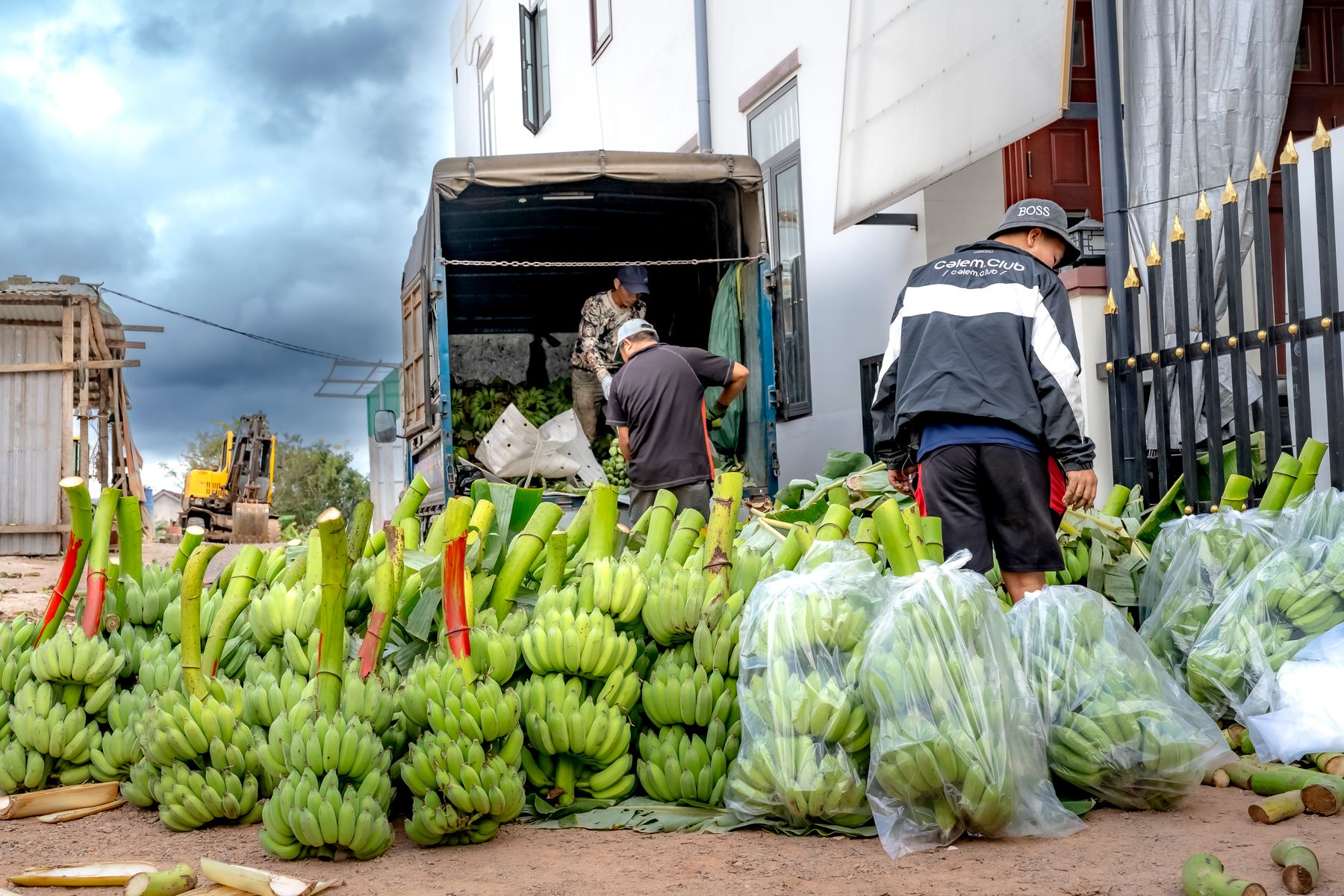
Philippine banana exports climbed to roughly 2.92 million tonnes in 2025, a 26% jump that put the country back in second place among the world's exporters, behind Ecuador. Growers now say the constraint isn't demand. It's land.
"It's a supply problem right now, which is a good problem," says Stephen Antig, executive director of the Pilipino Banana Growers and Exporters Association (PBGEA). "It's just that we don't have enough land to produce all these bananas."
Philippine banana exports meet a land wall
It's a supply problem right now, which is a good problem — we just don't have enough land.
The Comprehensive Agrarian Reform Law caps most agricultural landholdings at five hectares, a limit that predates the country's current export boom and now blocks large-scale plantation expansion. Fusarium wilt, the soil fungus known as Panama disease (TR4), has also knocked out acreage in Mindanao that would otherwise be replanted with Cavendish.
The industry still shipped close to 700,000 tonnes in the first quarter of 2026 alone, PBGEA figures show, up from 2.32 million tonnes exported in all of 2024. Philippine banana exports simply haven't kept pace with what buyers want to place on order, a squeeze that echoes how Philippine rice imports have shifted toward broken grains this year as farm output strains against demand elsewhere in the country's food trade.
China is the clearest illustration of the gap. "By share size, China can actually buy everything that we produce," Antig says, a line that reads as both compliment and warning for an industry wary of leaning on one customer.
Central Asia enters the picture
To spread that risk, PBGEA is looking past its established buyers in Japan, South Korea, China and the Middle East toward Kazakhstan, Mongolia and Russia. "We're trying to diversify our market as a strategic option," Antig says. "We don't want to put all our eggs in one basket."
Other exporters are making the same calculation. Uganda signed a coffee export deal with South Korea this year for much the same reason: a single dominant buyer is convenient until it isn't.
Philippine banana exports also face tighter competition ahead. Vietnam and Cambodia are expanding banana acreage aimed at the same Chinese buyers, and Chinese companies have themselves been developing plantations across Southeast Asia, turning the industry's biggest customer into a future rival grower.
Weather adds a third pressure point. Forecasters are tracking a potential Super El Niño for October and November 2026, a pattern that past cycles have cut Philippine banana exports by 10 to 15%.
None of that changes the land math. Until the agrarian reform cap or TR4 losses ease, PBGEA's diversification drive is a hedge against a ceiling the industry cannot yet build past.
Sources
- FreshPlaza · 2026-09-15
- BusinessWorld Online · 2026-02-02
- Pilipino Banana Growers and Exporters Association (PBGEA) · 2026-09-15