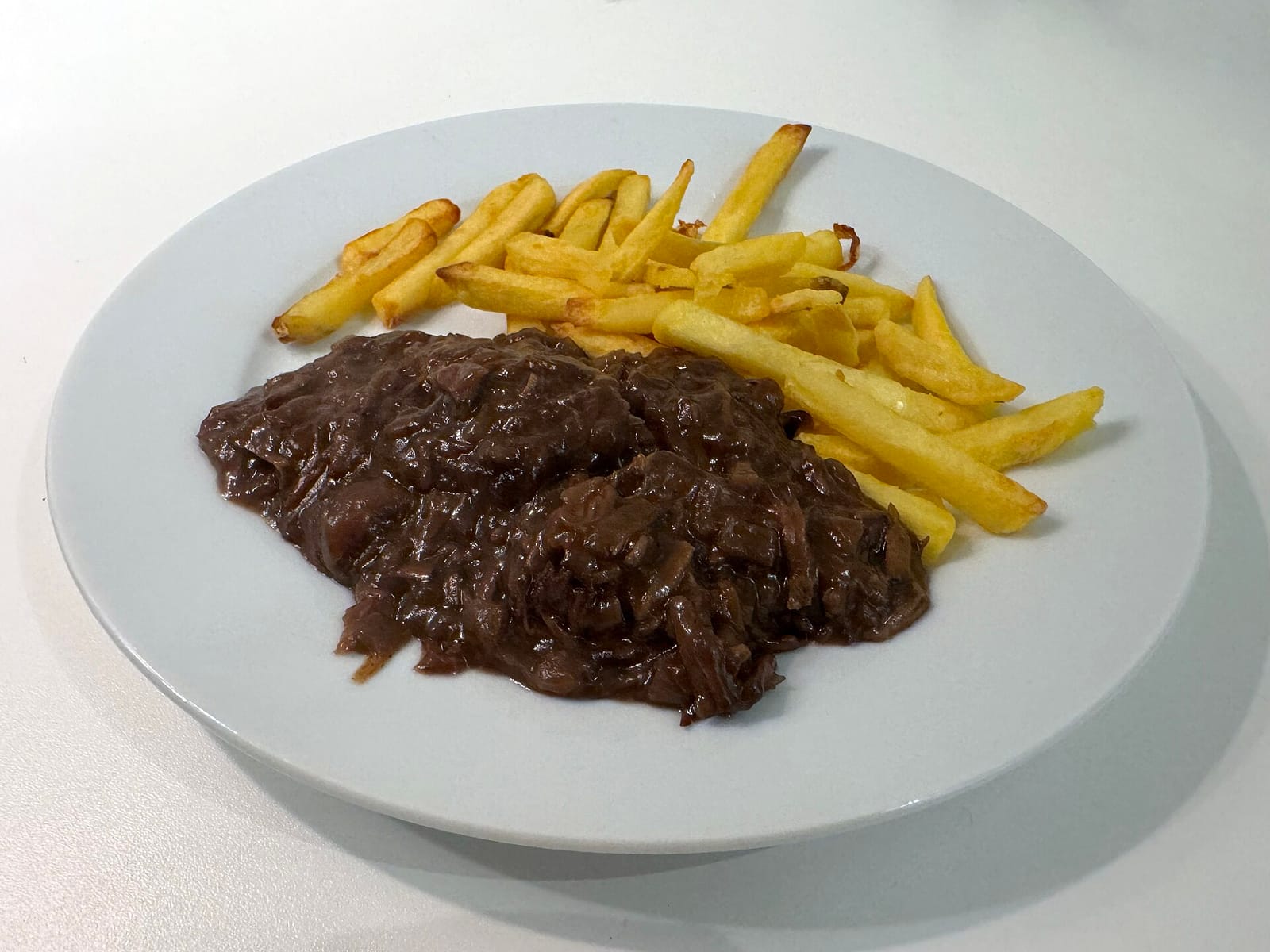
Draadjesvlees recipe: Dutch braised beef with stewed pears
Three hours of gentle simmering until the beef falls apart into threads, with stewed pears and red cabbage with apple: how to make draadjesvlees the way Prakm in Haarlem serves it.
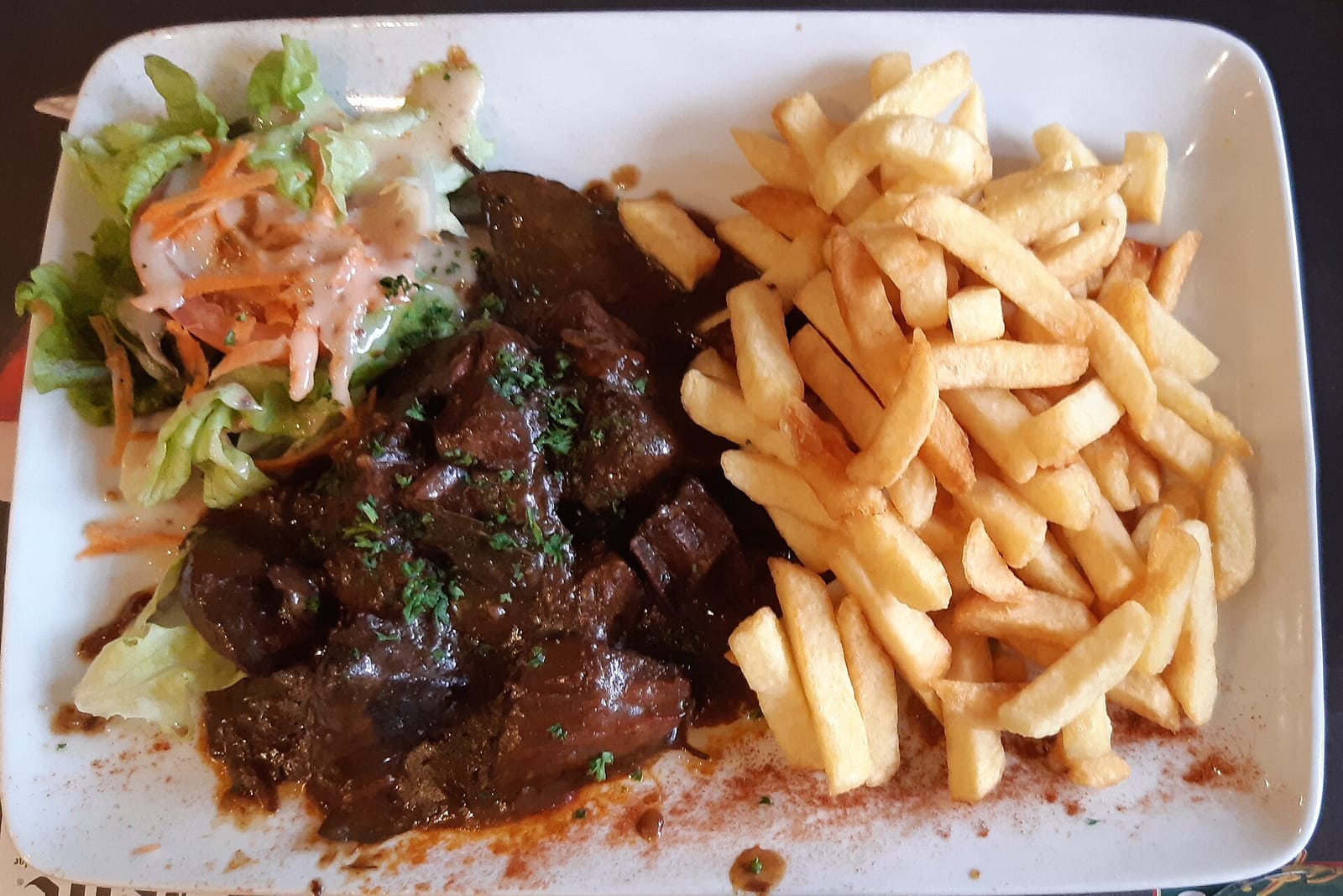
This draadjesvlees recipe gives you the Dutch Sunday stew that refuses to be rushed: braising steaks simmered so slowly that they fall apart into threads on their own. Served with stewed pears, red cabbage with apple and pan-fried potatoes.
In Haarlem, this plate is on the menu at Prakm on the Kleine Houtstraat, a restaurant built entirely around Dutch home cooking. On the November menu the dish is called Tegen de draad (against the grain): draadjesvlees with stewed pear, red cabbage with apples and pan-fried potatoes, at € 23,95. The name draadjesvlees, literally thread meat, refers to the long fibres the beef breaks into after braising. If you have eaten out in Haarlem before, you may also know Jackie's in the old slaughterhouse. This draadjesvlees recipe is our own home version, for four people.
Ingredients
No hurry: after three hours of simmering the beef pulls apart with a fork.
- 1 kg braising steak (shin or chuck), in 5 cm pieces
- 60 g butter
- 2 onions, chopped
- 1 tablespoon plain flour
- 500 ml beef stock
- 2 bay leaves and 4 cloves
- 1 tablespoon vinegar and 1 teaspoon soft brown sugar
- 4 cooking pears (such as Gieser Wildeman), peeled
- 250 ml red wine, 250 ml water, 50 g sugar and 1 cinnamon stick
- 1 small red cabbage (about 750 g), finely shredded
- 2 tart apples (such as Reinette), diced
- 3 tablespoons vinegar and 2 tablespoons sugar for the cabbage
- 1 kg waxy potatoes
- Pepper and salt
Method
- Pat the beef dry and season with pepper and salt. Heat 40 g butter in a casserole and brown the beef in two batches until deep brown on all sides. Lift it out.
- Fry the onions in the fat for 5 minutes. Sprinkle over the flour and cook for 1 minute.
- Return the beef and pour in the stock so the meat is just covered. Add the bay leaves, cloves, vinegar and brown sugar.
- Put the lid on and let the beef simmer very gently for 3 hours. Stir now and then and top up with a splash of water if needed.
- Meanwhile, put the pears on with the wine, water, sugar and cinnamon. Stew them with the lid on over low heat for 2 hours until red and tender.
- Bring the red cabbage to the boil with the apples, vinegar, sugar, half a cup of water and a pinch of salt. Braise over low heat for 45 minutes and stir in 20 g butter at the end.
- Boil the potatoes in their skins for 15 minutes, let them cool, peel and slice them. Fry in a pan with butter for 15 minutes until golden.
- Pull the beef into threads with two forks, remove the bay leaves and cloves and season the sauce with salt and pepper.
Tip: a draadjesvlees recipe for leftovers
Draadjesvlees tastes even better the next day, so feel free to make a double batch. Leftovers work on a bread roll or stirred through stamppot. Prefer onion and vinegar in the lead role? Try our hachee recipe for Dutch beef and onion stew. You can also cook this draadjesvlees recipe in the oven: 3 hours at 150 °C with the lid on.
Frequently asked questions about this draadjesvlees recipe
Which beef is best for draadjesvlees? Braising cuts with some fat and connective tissue, such as shin, chuck or brisket. Lean meat like sirloin turns dry rather than tender during a long braise.
How long should draadjesvlees braise? Allow 3 to 4 hours over very low heat. It is ready when the beef pulls apart effortlessly with a fork.
What do you eat with draadjesvlees? The classics are red cabbage, stewed pears and potatoes, boiled, fried or mashed. At Prakm it comes with stewed pear, red cabbage with apples and pan-fried potatoes.