What to eat in Zurich: 10 dishes and where to find them
Veal in cream sauce at Kronenhalle, a bratwurst at Sternen Grill and Luxemburgerli on Paradeplatz: Zurich's food lives in guild houses, old-town cellars and one late-night grill.
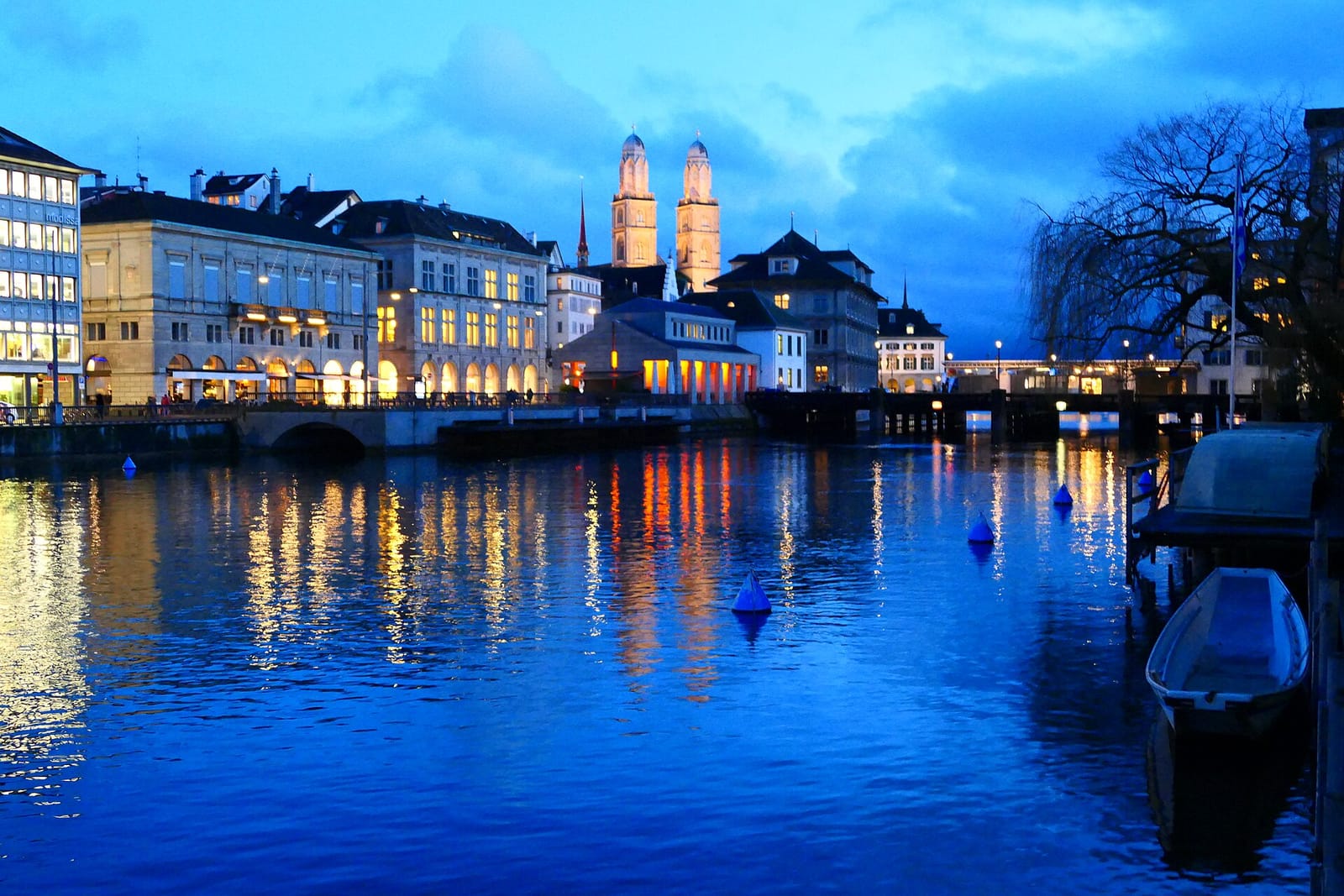
What to eat in Zurich comes down to veal in cream, potatoes fried in butter and cheese melted at the table, served in guild houses and old-town cellars that have cooked the same way for generations. Add a bratwurst eaten standing up at Bellevue and a box of Luxemburgerli from Paradeplatz, and you have the city's food in a single day.
Zurich cooks like the German-speaking Switzerland around it: dairy, veal, potatoes and long winters. Fondue and raclette arrived from the French-speaking west and the Valais, but the city adopted both, and its old town now has rooms that serve little else from November to February. Anyone working out what to eat in Zurich should know it is also the city that gave the world Birchermüesli, developed around 1900 by the physician Maximilian Bircher-Benner as a light meal for patients at his sanatorium above the lake.
Eating out here is expensive, and the menus explain why: the sector's collective agreement sets some of Europe's highest floors, and Swiss hospitality minimum wages rise again in 2027. The prices below come from the restaurants' own current menus; where a house does not publish them, we say so rather than guess.
Zurich eats veal, cream and melted cheese, and the best of it is still cooked in old-town cellars.
Geschnetzeltes at Kronenhalle: what to eat in Zurich first
Zürcher Geschnetzeltes is the city's signature dish: thin strips of veal seared quickly, then finished in a sauce of white wine, cream and mushrooms, with a golden Rösti on the side. To cook it at home, follow AMUSE's Zürcher Geschnetzeltes recipe.
Zurich Tourism calls the version at Kronenhalle, Rämistrasse 4, near Bellevue, "the classic". The restaurant has served guests since 1924 under walls hung with original works by Picasso and van Gogh, and its kitchen is open daily from 12:00 to 22:30. Kronenhalle does not publish its prices online. For a second opinion, Zunfthaus zur Waag on Münsterhof 8, a guild house dating from 1636, builds its menu around Zurich classics.
Rösti, the side dish that became a meal
Grated potato pressed into a pan with butter and fried until a crisp crust forms on both sides: Rösti started as a farmers' breakfast in the canton of Bern and became the national side dish.
At Swiss Chuchi, the restaurant of Hotel Adler on Rosengasse 10 in the Niederdorf, the homemade Rösti comes topped with melted raclette cheese for CHF 26.50 on the autumn 2026 menu. The same kitchen serves its Zürcher Kalbsgeschnetzeltes in mushroom cream sauce for CHF 44.50, with Rösti as one of the sides.
St. Galler bratwurst at Sternen Grill, Bellevue
Zurich's most democratic meal is a white veal-and-pork sausage from St. Gallen, grilled, served with a crisp Bürli roll and a smear of sharp mustard, and eaten standing at the counter. Sternen Grill has sold it at Theaterstrasse 22, on Bellevue, since 1963.
The take-away hatch opens at 10:30 every day and runs until 23:00 on Sundays and Mondays and until midnight from Tuesday to Saturday, which makes it the city's default late-night stop. Upstairs, a seated restaurant serves from 11:30 to 22:00 for those who prefer a table.
Kalbsbratwurst in the Zeughauskeller, Paradeplatz
The Zeughauskeller, at Bahnhofstrasse 28a beside Paradeplatz, occupies an arsenal built in 1487, where the city stored and repaired its weapons. In 1926 the weapons became decoration and the building became a restaurant; legend has it that William Tell's crossbow once hung here.
Order the Kalbsbratwurst, a fine veal sausage, or the coarser Bauernbratwurst; every sausage comes with the house potato salad. The kitchen also cooks Geschnetzeltes and Wiener Schnitzel, and is open daily from 11:30, with hot food until 22:00.
Fondue moitié-moitié at Swiss Chuchi, Niederdorf
Moitié-moitié means half and half: Gruyère and Vacherin Fribourgeois melted with white wine, kirsch and garlic, then eaten with bread on long forks.
Swiss Chuchi charges CHF 34.50 per person for 200 g of moitié-moitié, the same as its Vaudois four-cheese version, and CHF 37.50 for a house blend of more mature cheeses. A dry white from the Valais is the standard pairing, the canton that took ten of the sixteen categories at this year's Grand Prix du Vin Suisse.
Raclette à discrétion at Raclette Stube, Niederdorf
Raclette is a half-wheel of cheese melted under a heater and scraped onto boiled potatoes, with pickled onions and gherkins to cut the fat. At Raclette Stube, Zähringerstrasse 16, it comes à discrétion, refilled until you stop, for CHF 41.80 per person on the current menu.
The same room serves fondue fribourgeoise from CHF 32.80 per person. It opens from 17:30 on weekdays and from 13:00 at weekends.
Älplermagronen, the alpine pasta bake
Herders' food from the high pastures: macaroni and potatoes cooked together, bound with cream and cheese, topped with fried onions and served with apple purée on the side.
Swiss Chuchi lists its classic Älplermagronen for CHF 25.50, one of the cheaper ways to eat a hot Swiss meal in the old town.
Vegetarian Geschnetzeltes at Hiltl, Sihlstrasse
Hiltl, founded in 1898 by Ambrosius Hiltl and listed by Guinness World Records as the oldest vegetarian restaurant in the world, is now run by the fourth generation of the family at Sihlstrasse 28. Its Züri Geschnetzeltes swaps veal for plant-based Planted, with mushrooms, white wine and Rösti, for CHF 36.
The buffet, more than 100 dishes charged by weight at CHF 5.90 per 100 g, still carries the Indian recipes Margrith Hiltl brought back from Delhi in the 1950s. Meat-free cooking has gone mainstream in Switzerland: Dominik Hartmann became GaultMillau's first vegetarian chef of the year in October.
Luxemburgerli at Confiserie Sprüngli, Paradeplatz
Two small, airy almond-meringue shells joined with buttercream: Sprüngli sold the first Luxemburgerli in 1957, from a recipe brought by a young confectioner from Luxembourg, and they quickly became Zurich's edible souvenir.
The Sprüngli house on Paradeplatz, Bahnhofstrasse 21, has stood there since 1859. Its café opens from 8:30 on weekdays, 9:00 at weekends, for breakfast, lunch and cake.
Tirggel, Zurich's honey biscuit
Tirggel are thin, hard honey biscuits pressed in carved wooden moulds, with scenes that stand out in relief once baked. They are recorded in Zurich from the 15th century, and until 1840 only the city's own bakers were allowed to make them.
Production peaks before Christmas and before the Sechseläuten spring festival. The food hall of Globus on Bahnhofstrasse sells them, as does Berg & Tal Marktladen, a shop for small Swiss producers.
Markets, neighbourhoods and when to go
- Bürkliplatz weekly market, at the lake end of Bahnhofstrasse: Tuesdays and Fridays, 6:00 to 11:00.
- Markthalle im Viadukt, Viaduktstrasse, Kreis 5: Monday to Saturday, 9:00 to 20:00, with Tritt Käse for cheese and St. Jakob Beck for bread under the railway arches.
- Niederdorf, the old town east of the Limmat: the fondue and raclette rooms, including Swiss Chuchi and Raclette Stube.
- Paradeplatz and Bahnhofstrasse: Sprüngli, the Zeughauskeller and the Globus food hall within a few minutes' walk.
- When to go: November to February for fondue and raclette, December for Tirggel and Christmas markets, April for the Sechseläuten.
Zurich food questions, answered
What is the most famous dish in Zurich? Zürcher Geschnetzeltes, veal strips in a white wine, cream and mushroom sauce, served with Rösti. Kronenhalle's version is the one Zurich Tourism calls the classic.
How much does a meal in Zurich cost? On the menus checked for this guide, traditional main courses run from CHF 25.50 for Älplermagronen to CHF 44.50 for veal Geschnetzeltes, and cheese fondue costs CHF 32.80 to CHF 37.50 per person.
Where can vegetarians eat traditional Swiss food in Zurich? Hiltl serves a plant-based Züri Geschnetzeltes with Rösti, and most fondue and raclette houses are meat-free by nature.
Which season is best for deciding what to eat in Zurich? Winter. Fondue, raclette and Tirggel are cold-season food, and the old-town restaurants run their fullest menus from November to February.
Where to book first
If you have one evening and a short list of what to eat in Zurich, book these three tables. For tasting menus, the Michelin Guide Switzerland 2026 lists every starred kitchen in the country.
- Kronenhalle, Rämistrasse 4: the Geschnetzeltes, in the room that defines dining in Zurich.
- Zeughauskeller, Bahnhofstrasse 28a: sausages and potato salad under a 15th-century arsenal roof.
- Swiss Chuchi, Rosengasse 10: fondue, Rösti and Älplermagronen in a single sitting in the Niederdorf.