What to eat in Milan: 10 dishes and where to find them
Saffron risotto, veal cutlets the size of a plate and panettone that never goes out of season: Milan's food identity runs through trattorie, pasticcerie and the Galleria's marble bars.
What to eat in Milan starts with saffron and butter, not tomato and olive oil: this is a city of rich, golden dishes built for cold winters, shaped by Lombard dairy farms and two centuries of Spanish and Austrian rule. Skip the postcard pasta and go looking for risotto, a veal cutlet the size of a dinner plate, and a Christmas cake the city made its own.
Milan's table has little to do with the tomato-and-olive-oil south. Butter, saffron, rice from the Po valley and veal define it, a legacy that leaves the city closer in spirit to Vienna than to Naples. The aperitivo, now exported worldwide, was invented here, in bars built for an after-work crowd with somewhere else to be.
A fashion and design economy that pulls in chefs and diners from across Europe means Milan now runs two food cities at once: an old one, of trattorie serving the same four dishes since the 1920s, and a new one, of pizzerias, wine bars and tasting menus opening every month. Eat through both.
Milan cooks in butter and saffron, not tomato, and the aperitivo it gave the world started here.
Risotto alla milanese, the city in one dish
Butter, beef marrow, Parmigiano Reggiano and a pinch of saffron, stirred for twenty minutes until the rice turns the colour of egg yolk: this is Milan's defining dish, and the one to order if you only eat once in the city. Local legend credits a stained-glass worker on Milan's Duomo with the first saffron-stained batch, dyeing a wedding risotto to tease a colleague obsessed with the pigment.
It appears on nearly every trattoria menu in the centre, usually for €16-20, often served alongside, not instead of, ossobuco.
Cotoletta at Trattoria Masuelli San Marco, Porta Romana
The Milanese cutlet is bone-in veal, pounded thin, breaded and fried in clarified butter until the edges curl into what locals call an orecchia d'elefante, an elephant's ear. It is not the same dish as a Viennese schnitzel, despite the comparisons: the bone stays in, and the butter frying is non-negotiable.
Trattoria Masuelli San Marco, at Viale Umbria 80 in Porta Romana, has cooked the Lombard canon since 1921 under four generations of the same family. A fixed lunch menu pairing risotto, cotoletta and dessert runs around €18-25; check current hours before going, since the kitchen keeps a traditional, limited schedule.
Ossobuco, the risotto's other half
Veal shank braised until the marrow softens to a spreadable paste, finished with gremolata, a sharp mix of lemon zest, garlic and parsley. Milanese purists skip the tomato that creeps into other regions' versions, keeping the braise pale and the marrow the point. AMUSE's own ossobuco alla milanese recipe breaks down the technique, including the case against tomato.
Cassoeula, the dish for frosty nights
Pork ribs, cotechino and verzini sausage braised slowly with savoy cabbage until the fat renders into the vegetable: cassoeula is Milan's winter dish, traditionally eaten after the first hard frost, roughly November through February. It shows up less on menus built for visitors, so look for it at trattorie further from the Duomo, where the kitchen still cooks to the Milanese calendar rather than the tourist one.
Panettone at Pasticceria Cucchi, Corso Genova
Cucchi, at Corso Genova 1 near the Navigli, has made panettone since 1936, when Luigi and Vittorina Cucchi opened the shop on the same corner it still occupies. Ownership passed in 2023 to the heirs of pastry maker Giacomo Bulleri, with the recipe and the room kept as they were.
On a warm evening, skip the plain slice and order pangelà, Cucchi's own invention: a disc of panettone split and filled with gelato, served as a sandwich rather than a cake.
Panettone at Davide Longoni, all year round
Most of Milan sells panettone only from late October through Epiphany. Davide Longoni's bakery, known across the city's bread scene for long sourdough fermentation, bakes it year-round, at roughly €35-45 depending on size. It is a useful address if your trip to Milan falls outside the Christmas window and you still want to understand what the fuss is about.
Aperitivo at Camparino in Galleria
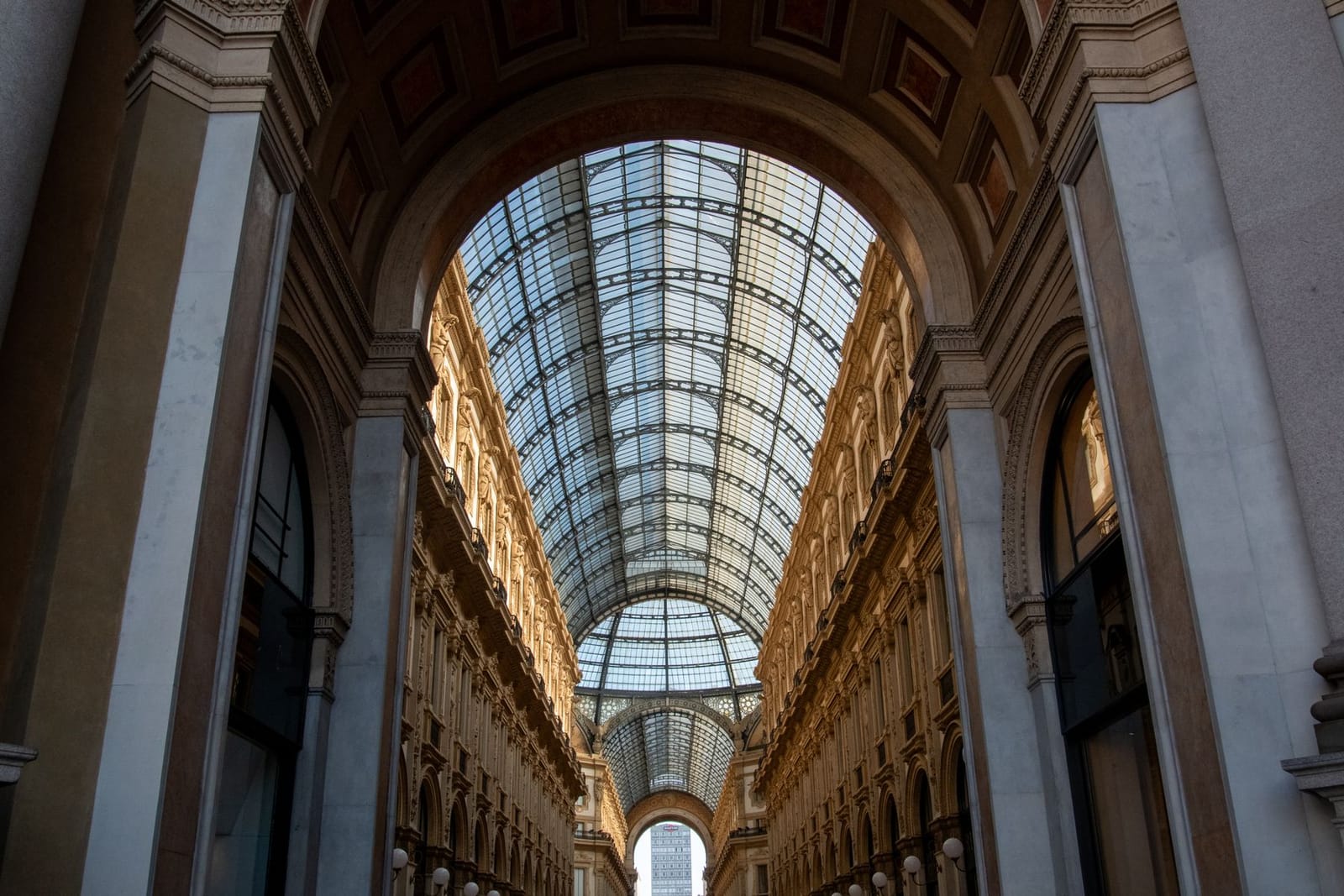
Davide Campari opened Camparino in 1915, inside the Galleria Vittorio Emanuele II, the glass-roofed arcade that connects the Duomo to La Scala. It is the closest thing Milan's aperitivo culture has to a birthplace: Campari Seltz and the Negroni have stayed on the list since. The marble counters and stained glass make it worth the markup over a neighbourhood bar. AMUSE covered the wider scene during Milano Wine Week 2026, which filled two hubs across the city with producer tastings this autumn.
Tortelli di zucca, the pumpkin that wandered north
Sweet and savoury at once: pumpkin, crushed amaretti biscuits, mustard di Cremona and Parmigiano, folded into pasta and dressed simply in butter and sage. The dish belongs more properly to Mantua and Cremona, but Milan's trattorie pick it up every autumn, usually October through December. AMUSE's pumpkin risotto recipe, from the same Lombard pumpkin tradition, is a useful primer on the sweet-savoury balance before you order.
Pizza at Futura, the new Milan
Rome-trained pizzaiolo Luca Pezzetta brought his hand-stretched tonda romana north, opening the first Futura on Via Borsieri in Isola in October 2025 and a second location at Via Gaudenzio Ferrari 1, near Corso Genova, on 30 October 2026. The new room adds a fully gluten-free kitchen, with its own oven and certified flours, plus a ten-seat cocktail bar. It is as good a sign as any of where Milan's food scene is headed: specialised, design-conscious, and unwilling to sacrifice flavour for either constraint.
Fine dining in the Quadrilatero
For a tasting menu, Milan's fashion district now doubles as a dining one. Three-Michelin-starred chef Enrico Bartolini opened a restaurant inside the Dior flagship in Montenapoleone, bringing his Lombard-rooted, produce-driven cooking to the Quadrilatero della moda. AMUSE covered the opening in full: Monsieur Dior Milan brings Enrico Bartolini to Montenapoleone.
Markets, neighbourhoods and when to go
Base yourself near the food, not just the shops.
- Mercato Centrale Milano, by Porta Garibaldi station: a covered food hall for a fast, varied meal between sights.
- Brera: upscale, gallery-dense, good for aperitivo and a formal dinner.
- Navigli: the canal district, dense with bars and late kitchens, best after dark.
- Isola: the youngest scene, where Futura and much of the new wave of openings have landed.
- Porta Romana: traditional trattorie, including Masuelli, with fewer tourists.
- Panettone season runs October to the Epiphany in January; cassoeula belongs to the coldest months, November to February.
- Many small trattorie close for two to three weeks around Ferragosto, in mid-August; check before planning a summer trip.
- Dress code tightens at upscale addresses; trattorie stay casual.
Milan eating, the short version
Is Milan expensive to eat in? Less than its fashion-capital reputation suggests. A full trattoria meal with risotto or cotoletta runs €25-45 a head; tasting menus at the top addresses start around €150 and climb well past €300.
What is Milan's signature dish? Risotto alla milanese, the saffron-and-marrow rice that appears on nearly every traditional menu in the city.
When is the best time to visit for food? October to December, when panettone season overlaps with tortelli di zucca, truffle season further south, and the first cassoeula of the year.
Do I need to book ahead? For Masuelli, the Dior restaurant and Futura's weekend sittings, yes, several days out. Aperitivo bars and panettone counters take walk-ins.
Where to book first
Three addresses to start with: Trattoria Masuelli San Marco, Viale Umbria 80, Porta Romana, for cotoletta and risotto; Camparino in Galleria, Galleria Vittorio Emanuele II, for the aperitivo that started it all; and Futura, Via Gaudenzio Ferrari 1, for where the city's pizza scene is headed next.