What to eat in Bilbao: 10 dishes and where to find them
From Casco Viejo pintxos bars to a Michelin-starred kitchen inside the Guggenheim, here is where Bilbao actually eats, with prices and addresses.
What to eat in Bilbao starts with pintxos and a cold glass of txakoli, but the city's real draw is how far its kitchens push past the bar snack: a Michelin-starred tasting menu inside the Guggenheim, a century-old grill where the steak outgrows the plate, and a fish stew that still tastes of the boats that landed it.
Bilbao spent the 20th century as an industrial port on the Nervión, and its food still carries that working identity: hearty, fish-led, built around markets and txokos, the private gastronomic societies where Basque men once cooked for each other and still do. The Guggenheim's arrival in 1997 brought tourists and money, and the kitchens answered without losing the city's appetite for a well-made plate over a styled one.
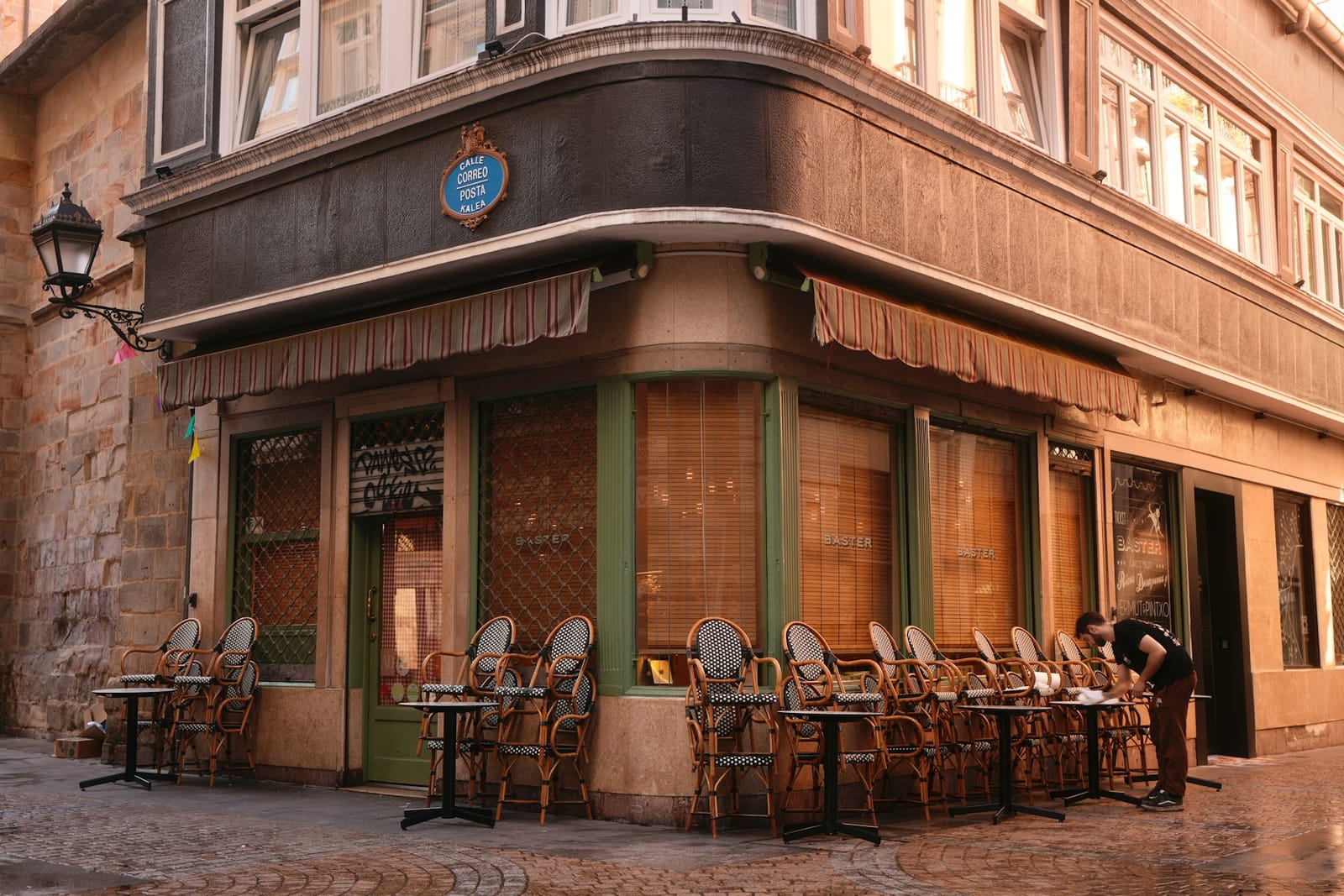
What to eat in Bilbao changes by neighbourhood: the medieval Casco Viejo for pintxos bars stacked three deep at the counter, the grid streets of Ensanche for grills and white-tablecloth rooms, the riverside for the Guggenheim's own kitchen. None of it is far from any other part.
The real draw is how far Bilbao's kitchens push past the bar snack.
Pintxos at Gure Toki, Plaza Nueva
Start where most Bilbaínos start: the arcaded Plaza Nueva in Casco Viejo, where Gure Toki serves modern pintxos at prices still pitched at locals, not tourists, among them crab tempura, scallops and txistorra sausage.
A pintxo runs roughly €2.50-€5, and the custom is to move bar to bar, one or two plates and a small glass of wine at each, rather than sit down at one. Plaza Nueva alone holds a dozen worth trying.
Bacalao al pil-pil at Sorginzulo
Also on Plaza Nueva, Sorginzulo serves bacalao al pil-pil and bacalao croquettes alongside bonito and foie, a fair introduction to the Basque obsession with salt cod cooked low and slow until its own gelatin binds the sauce.
Zarate, further into Ensanche, makes its version with a morcilla built from the fish's own callos, a more serious sit-down take on the same dish. AMUSE has the full technique in its own bacalao al pil-pil recipe, including the exact temperature that keeps the sauce from breaking.
Txuletón at Casa Rufo
Casa Rufo, a family-run room with a grocery counter at the front, built its name on txuletón, a thick, well-aged beef chop grilled over coals and carved at the table. Recent reviews still call the char and the fat the best reason to book ahead.
A txuletón for two runs upward of €25 per person depending on the cut's weight and age, and the restaurant is closed Sundays. Reservations are close to essential on weekends.
Txangurro at El Globo
El Globo, on Calle Diputación, built a following on txangurro gratinado, spider crab picked from the shell, mixed with a light tomato-brandy sauce and browned under the grill, served straight in its own shell as a pintxo-sized dish or a full plate.
Marmitako in Casco Viejo
Marmitako, a fisherman's stew of bonito, potato and pepper named after the marmita pot it is cooked in, shows up on menus across Casco Viejo once the weather turns, a working-boat dish built to use what the catch brought in rather than impress anyone. AMUSE has the full marmitako recipe, from a coastal town further along the Basque shore.
Gilda and vermouth at Café Iruña
Café Iruña, tiled and Moorish-arched since 1903 on Calle Colón de Larreátegui, is where to drink a vermouth and eat a gilda, the skewer of pickled guindilla pepper, olive and anchovy that started the whole idea of the pintxo. It is touristy and occasionally crowded, and still worth it for the room alone.
The tasting menu at Mina
Chef Álvaro Garrido's one-Michelin-star Mina, now on Calle Ercilla in Indautxu, runs a daily-changing tasting menu built on fish and vegetables from the nearby Mercado de la Ribera, with a 10-course version priced around €85 and a fuller menu nearer €110. Booking well ahead is close to mandatory.
Modern Basque cooking at Nerua, inside the Guggenheim
Nerua, chef Josean Alija's one-Michelin-star restaurant inside the museum itself, treats Basque produce with a lighter, more vegetable-forward hand than the city's grills, on an eight-course Muina menu priced around €85.
Basque cheesecake at Bascake
Basque cheesecake, crustless and deliberately scorched on top until the centre stays custard-soft, was invented in 1988 at La Viña in San Sebastian, not Bilbao, but Bascake's Bilbao counter bakes the city's most reliable version if a trip along the coast isn't on the itinerary. For the original, AMUSE has a full what to eat in San Sebastian guide.
Markets, neighbourhoods and when to go
- Mercado de la Ribera: a 19th-century riverside market, open mornings Monday to Saturday with a Tuesday-to-Friday evening reopening at some stalls; come early for the best fish.
- Casco Viejo: the old town, for pintxos bars and Plaza Nueva.
- Ensanche: the 19th-century grid south of the old town, for grills, Mina and Café Iruña.
- Best time: year-round; autumn brings marmitako and the start of the txuletón season's best beef, spring and early summer the calmest weather for a pintxos crawl outdoors.
Is Bilbao expensive to eat in?
Is Bilbao expensive to eat in? Less than San Sebastian or Madrid for a similar standard: a pintxos crawl for two with wine runs €30-€50, and even Mina's longer tasting menu stays under €120 a head.
Do I need to book ahead? For Mina, Nerua and Casa Rufo, yes, especially on weekends; pintxos bars take no reservations and work on a stand-at-the-counter basis.
Is Bilbao only for fish and meat, with nothing for vegetarians? Vegetable pintxos are common, and Nerua in particular leans vegetable-forward, though a fully vegetarian txuleton or pil-pil crawl isn't really the point of the city.
What's the local wine to order? Txakoli, the sharp, lightly sparkling Basque white, poured from a height to aerate it; it is the default glass alongside pintxos and fish.
Where to book first
Three to call ahead of arriving: Mina, Ercilla 37, Indautxu, for the tasting menu; Casa Rufo, for the txuletón; and Nerua, inside the Guggenheim, for the museum's own kitchen. Everything else in this guide takes walk-ins.