What to eat in San Sebastian: 10 dishes and where to find them
Pintxos built a global reputation on small plates and short walks between bars; here's where the city's classics — and a few modern additions — actually deliver.
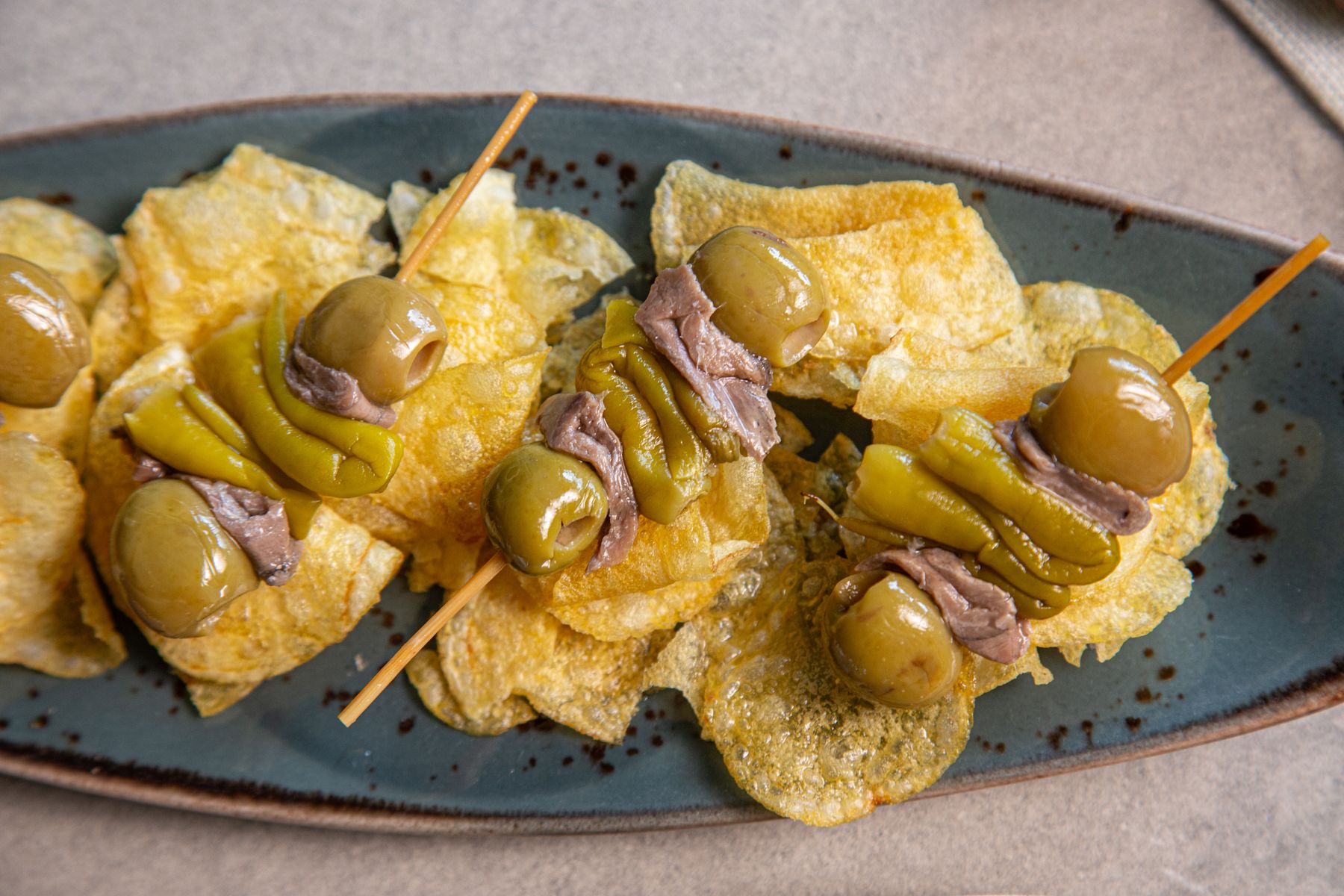
What to eat in San Sebastian starts with pintxos: small, composed bites eaten standing at a bar and chased with a glass of txakoli before moving to the next bar a few steps away. Don't leave without a grilled txuleta steak, a slice of burnt Basque cheesecake and at least one gilda, the toothpick-speared original.
San Sebastian's food identity runs on two tracks that rarely meet elsewhere: a pintxos scene dense enough to fill an entire evening with bar-hopping, and a concentration of Michelin three-star kitchens — Arzak, Akelarre and Martín Berasategui — unmatched per capita almost anywhere in the world. Both draw on the same Atlantic seafood, Basque cattle and small-batch produce from the Gipuzkoa countryside — which is why the question of what to eat in San Sebastian rarely has a single answer.
The Parte Vieja, the old town, holds most of the classic pintxos bars within a ten-minute walk of each other, which is why nobody here books a table for dinner so much as a route.
Nobody in San Sebastian books a table for dinner so much as a route.
Gilda at Bar Casa Vallés
The gilda is San Sebastian's founding pintxo: a green olive, a salt-cured anchovy and a pickled guindilla pepper, speared on a single toothpick. It was invented at Bar Casa Vallés in 1948, reportedly named after Rita Hayworth's film character for being "green, salty and a little spicy."
Casa Vallés, on Reyes Católicos in the Parte Vieja, still opens at 9am, earlier than almost anywhere else in the old town. A gilda here costs about €3; order it with a small glass of vermouth rather than wine, the way regulars do before lunch.
Grilled txuleta at Casa Urola
Txuleta is a thick, bone-in rib steak from mature Basque cattle, grilled hard over coals and served rare in the middle, sliced but still attached to the bone. It's the dish locals order for a table of four to share, not a quick pintxo.
Casa Urola, at Fermín Calbetón 20, cooks its txuleta over a carbon grill and prices it by weight, typically around €60 a kilo. For a smaller taste, order the pintxo version: two steak skewers over fries, which runs closer to €8.
Bacalao al pil-pil with txangurro at Bodegón Alejandro
Salt cod cooked pil-pil style — slowly emulsified with olive oil and garlic until the sauce turns thick and pale — is one of the two or three dishes that define Basque home cooking. Bodegón Alejandro serves its version alongside txangurro, spider crab meat baked in its own shell donostiarra-style.
The restaurant, tucked in the Parte Vieja, runs a lunch menu of around €30 that includes both dishes across a full sitting, making it one of the more affordable ways to eat a proper Basque meal at a table rather than a bar.
Wild mushrooms with egg yolk at Ganbara
Ganbara built its reputation on a countertop display of raw seasonal produce — wild mushrooms, langoustines, carabineros — rather than on composed, modern pintxos. The kitchen's approach is deliberately plain: let good ingredients speak.
Its signature setas de temporada, wild mushrooms sautéed and topped with a creamy egg yolk that runs into the pan when pierced, changes with what the forests around Gipuzkoa produce that week and is priced accordingly, usually €12 to €18 depending on the mushroom.
Cochinillo and foie gras at La Cuchara de San Telmo
La Cuchara de San Telmo cooks pintxos to order rather than laying them out on the counter, which means a short wait and a hot plate. Its crisp-skinned cochinillo, suckling pig confit until the meat falls apart, and its pan-seared foie gras with apple compote are the two dishes regulars ask for by name.
The bar sits in the Parte Vieja and gets crowded fast after 8pm; pintxos run €4 to €7, making it easy to try both dishes without committing to a full meal.
Carrillera de ternera at Borda Berri
Borda Berri, at Fermín Calbetón 12, turned braised beef cheek into one of the pintxos every visitor is told to order. The carrillera de ternera is cooked for hours until it needs no knife, finished in its own reduced braising liquid.
At around €6 a plate, it's a heavier, meal-in-miniature pintxo best split rather than eaten solo before moving on to the next bar.
La Hoguera at Bar Zeruko
Zeruko works in the modern, technique-driven register of pintxos: foams, gels and tableside theatre rather than cold counter displays. Its best-known creation, La Hoguera ("the bonfire"), is a piece of salted cod served over a bed of smoking coal, arriving at the table still smouldering.
It costs around €6 to €8 and is meant to be eaten as soon as it lands, while the smoke is still doing its work on the fish.
Vinegar-cured anchovies at Txepetxa
Txepetxa has made vinegar-cured white boquerón anchovies since 1972 and does little else, which is the point. Two fillets go on a small toasted slice of bread, topped with one of a dozen choices — sea urchin, crab, spider crab roe — that regulars order by number rather than name.
The bar sits in the Parte Vieja and charges €2.50 to €4 a piece depending on the topping, cheap enough to order three different ones in a row.
Basque burnt cheesecake at La Viña
The now-global burnt Basque cheesecake was invented here in 1990 by La Viña's owner, Santiago Rivera, who baked it hot and uncovered until the top scorched dark brown while the centre stayed barely set. The contrast between the bitter crust and the soft, almost liquid middle is the entire dish.
A slice at La Viña, on 31 de Agosto Kalea in the Parte Vieja, costs about €6 and is served plain, without cream or fruit, the way it was designed.
Txakoli, poured from height
Txakoli is a lightly sparkling, high-acid white wine made from Basque coast vineyards, traditionally poured from a height of about a foot to rough up the pour and release its natural fizz. It's the default pintxos drink here, closer to a palate cleanser than a wine to linger over.
A small glass runs €2 to €3 at most bars in the Parte Vieja; ask for txakoli rather than vino blanco and bartenders will pour it the traditional way without being asked twice.
Markets, neighbourhoods and when to go
Once the classic answers to what to eat in San Sebastian are ticked off, two areas beyond the old town are worth the walk for a different pace of eating:
- Mercado de la Bretxa — the covered market on the edge of the Parte Vieja, best visited before 1pm for fish and Idiazábal, the smoked sheep's cheese sold direct from producers.
- Gros — the neighbourhood across the Urumea river, with a newer, less touristed pintxos scene and shorter queues at the bar.
- Pintxos hours — most bars serve pintxos from around 12.30pm to 3pm and again from 8pm to 10.30pm; the counters empty out between times.
- Closing days — many old-town bars close on Sunday evening or all day Monday, so plan a Saturday crawl if the trip is short.
Frequently asked questions
A few practical questions come up often when people plan what to eat in San Sebastian and how to pace a visit.
Is San Sebastian expensive to eat in? Less than its Michelin-star density suggests. A round of pintxos and drinks for two rarely passes €40 to €50, and even a sit-down lunch at a mid-range restaurant like Bodegón Alejandro stays close to €30 a head.
Do you need reservations for pintxos bars? No — pintxos bars don't take bookings, and the custom is to walk in, order at the counter and move on. Reservations only matter for sit-down restaurants and the three-star kitchens.
How many pintxos should one person eat? Four to six pintxos across two or three bars makes a full meal for most visitors; pace the crawl rather than filling up at the first stop.
When is the best time to visit? Late September brings San Sebastian Gastronomika, the city's food and wine congress, along with the tail end of good weather and thinner summer crowds.
Where to book first
For a first taste of San Sebastian's three-star tier, book Arzak (Alto de Miracruz 21) 60 to 120 days ahead; the Arzak family has run the kitchen since 1897 and holds one of Spain's longest-standing Michelin records. Akelarre (Paseo Barrenetxe 8), perched above the Bay of Biscay, needs similar notice. Kokotxa (Campanario 11), in the old town, rewards seasonal, seafood-led cooking with only three or four weeks' lead time — the easiest of the three to actually get into.
For dishes closer to the ones on this list, Slow & Low in Barcelona made a similar bet on tapas over tasting menus this year, and our fricandó recipe covers the other great Spanish braise worth learning at home.
Sources
- San Sebastián Turismo · 2026-01-01
- Devour Tours · 2026-01-01
- Pintxos.es · 2026-01-01
- National Geographic · 2026-01-01