Egg prices split: heavy eggs rise, industry eggs get cheaper
Just before the December rush, heavy table eggs in the Netherlands are going up by a few cents, while industry eggs fall by more than 10 cents a kilo. Meanwhile bird flu has turned up in Zegveld.
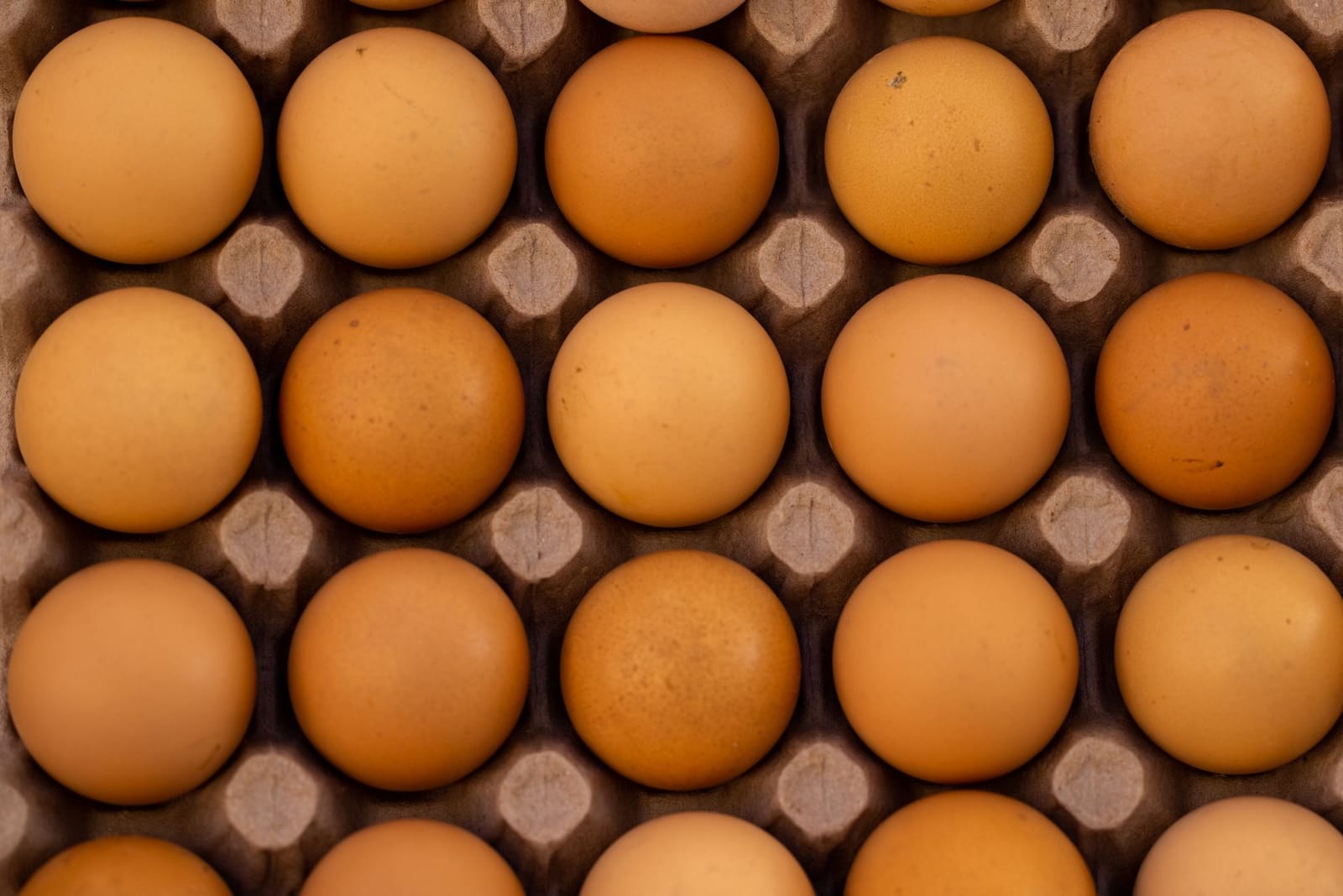
Dutch egg prices are moving in two directions in week 48: heavy table eggs are getting a few cents more expensive, while the guide price for industry eggs falls by more than 10 cents a kilo. That is according to Nieuwe Oogst, based on market figures from Friday 27 November.
For bakeries, caterers and kitchens that use a lot of egg in December, it is a mixed message. If you buy whole eggs in large sizes, you pay slightly more. If you work with egg products, which are made from industry eggs, you will see that purchasing market going down. Earlier this week we reported that the cocoa price could climb again for pastry chefs.
Egg prices for heavy sizes rise while light eggs fall
Heavy eggs are getting dearer while industry eggs fall: the egg market is moving both ways.
According to Nieuwe Oogst, 100 white barn eggs of 65 to 66 grams now cost €12.42, 5 cents more than a week earlier. Brown eggs in that class rise 4 cents to €13.69. The heaviest class, 72 to 73 grams, goes up 5 cents: €13.34 for white and €15.06 for brown. The very light eggs of 40 to 41 grams, on the other hand, drop 41 cents to €5.31 per 100.
On the industry market the movement is the other way round. The NOP guide price for barn industry eggs falls 10.3 cents to €1.410 per kilo. Caged eggs drop by the same amount. Nieuwe Oogst says supplies of eggs from Eastern Europe are putting pressure on the market.
The Barneveld egg quotation, the best-known price benchmark for Dutch eggs, was unchanged in week 47. Barn eggs are quoted there between €7.45 and €14.55 per 100, prices that have not moved since the end of August. The Amsterdam Index for brown barn eggs in size L edged up from €15.80 to €15.85.
Bird flu in Zegveld keeps the egg market unsettled
On 27 November bird flu was confirmed at a site with ornamental waterfowl in Zegveld, in the municipality of Woerden. The Dutch food safety authority NVWA is culling 350 birds there. A ten-kilometre restriction zone with a transport ban applies around the site. Earlier in November there were outbreaks at a duck farm in Ermelo, a laying-hen farm in Collendoorn and a hobby keeper in Uithoorn.
For the oliebollen bakers now planning their batter, the coming month is what counts most. If you want to compete for the title of best oliebol in the Netherlands, you can still enter until 8 December. The next weekly Barneveld quotation will show whether the standstill in egg prices survives the festive month.