Banketstaaf recipe: Dutch almond pastry with homemade paste
Equal parts almonds and sugar, a few days' rest in the fridge and a hot oven: how to bake the butter almond log that fills Amsterdam bakery windows before Sinterklaas.
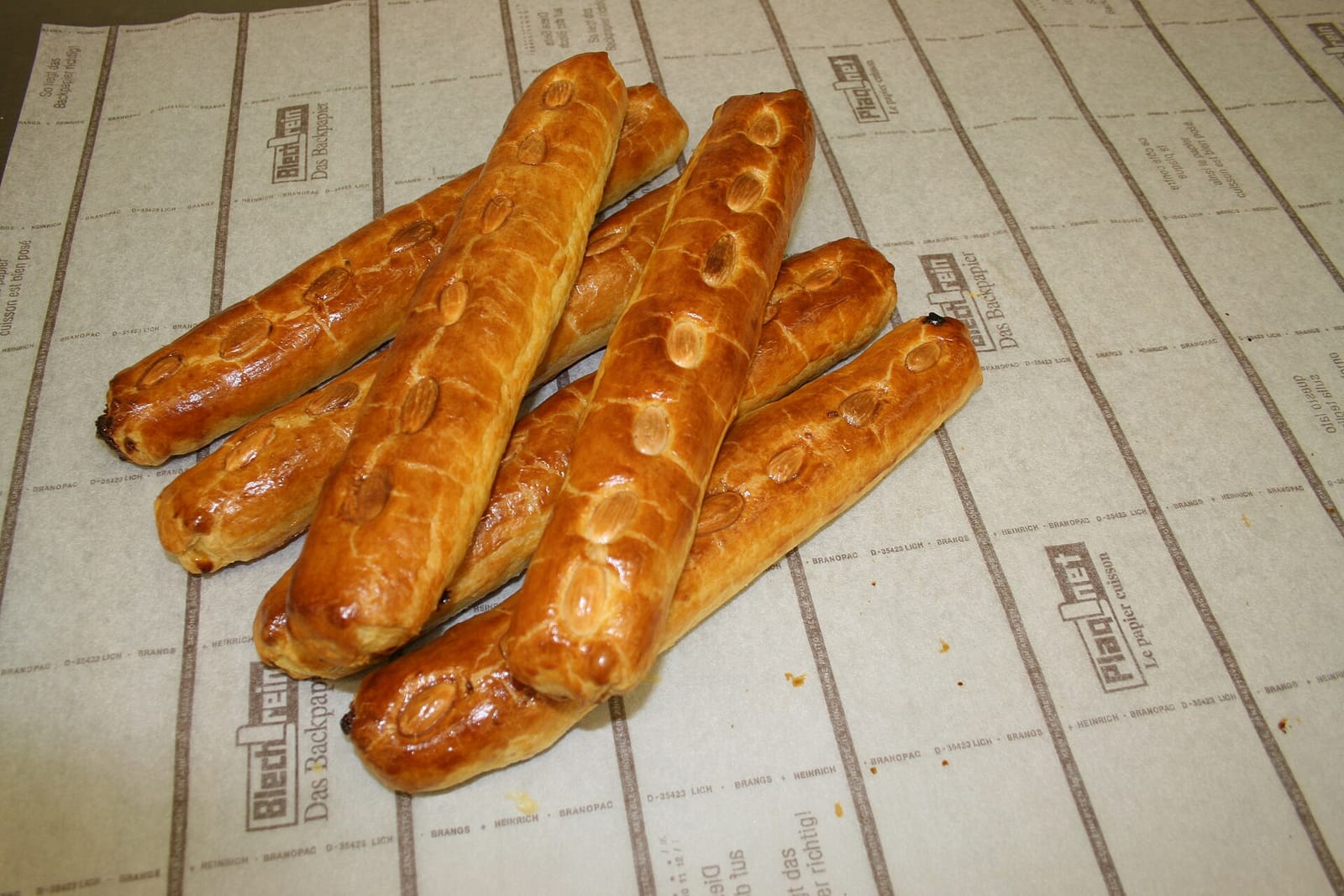
This banketstaaf recipe starts not with the puff pastry but with the filling: homemade almond paste that ripens in the fridge for at least a night. That makes the paste firmer, so it does not leak from the pastry.
With Sinterklaas back in the country since this weekend, almond logs and butter letters are back in Dutch bakery windows. At Patisserie Holtkamp on Vijzelgracht 15, where I amsterdam says a pastry shop has stood since 1886, an almond log costs € 13.25 these weeks and a butter letter S € 25.95. The letter is nothing new: it already appears in Max Havelaar, the Dutch novel from 1859. Real almond paste is almonds and sugar; cheaper baker's paste is cooked white beans with apricot kernels. This is our own recipe for two logs. Prefer small biscuits? Bake our kruidnoten recipe with Dutch spice mix.
Ingredients
What separates a good banketstaaf from a mediocre one is not the pastry but the filling.
- 200 g blanched almonds
- 200 g caster sugar
- Zest of half a lemon
- A pinch of salt
- 2 eggs: one for the paste, one for brushing
- 450 g all-butter puff pastry (a roll or frozen sheets)
- About 20 almond halves to decorate
- 2 tbsp apricot jam, warmed and sieved
Method
- Grind the almonds together with the sugar in a food processor to a fine, sandy powder. The sugar stops the nuts turning oily.
- Add the lemon zest, salt and three quarters of a beaten egg and knead into a firm, pliable paste. Wrap it in cling film and leave it in the fridge for at least a night, ideally two to three days. The flavour matures.
- Roll the cold paste into two logs about 30 cm long and 2 cm thick.
- Cut the pastry into two strips of roughly 32 by 12 cm. Lay the paste on top, fold the pastry around it and press the ends firmly shut. Place the logs seam side down.
- Brush with beaten egg, but not over the cut edges: egg there glues the layers together. Press on the almond halves and prick a few holes so steam can escape. Chill the logs for 20 minutes.
- Heat the oven to 220 °C, slide in the logs and turn it straight down to 200 °C. Bake for 25 to 30 minutes until deep golden. The cold butter in the pastry turns to steam in the hot oven and puffs up the layers.
- Brush the hot logs with the warm apricot jam for shine and cool them on a rack so the base stays crisp.
Tip for your banketstaaf recipe
Use the same paste and pastry to make a letter: gently bend a filled log into an S, or lay three short logs as an H. Leave room: the curves spread a little.
Frequently asked questions
Can I use shop-bought almond paste? Yes, but read the label. If it says baker's paste or banketspijs, it contains beans. If in doubt, add a drop of iodine: bean starch turns blue.
How long does a banketstaaf keep? Two to three days in an airtight tin. Warm it for five minutes in an oven at 180 °C and the pastry turns crisp again.
Can you freeze a banketstaaf? Yes, preferably unbaked. Bake it straight from the freezer and allow five to ten minutes extra.
Sources
- Patisserie Holtkamp – webshop, Sinterklaas-assortiment (Amandelstaaf, Boterletter S) ·
- I amsterdam – Best cake shops in Amsterdam (Holtkamp, Vijzelgracht 15) ·
- Wikipedia – Banketletter (bladerdeeg, amandelspijs, Max Havelaar) ·
- BNNVARA Kassa – Goedkope banketspijs of dure amandelspijs: wat is het verschil? ·