Basque burnt cheesecake recipe from La Viña in San Sebastián
Santiago Rivera baked the crustless, custard-centred cheesecake at La Viña in 1988. Here is how to make it, charred top and all.
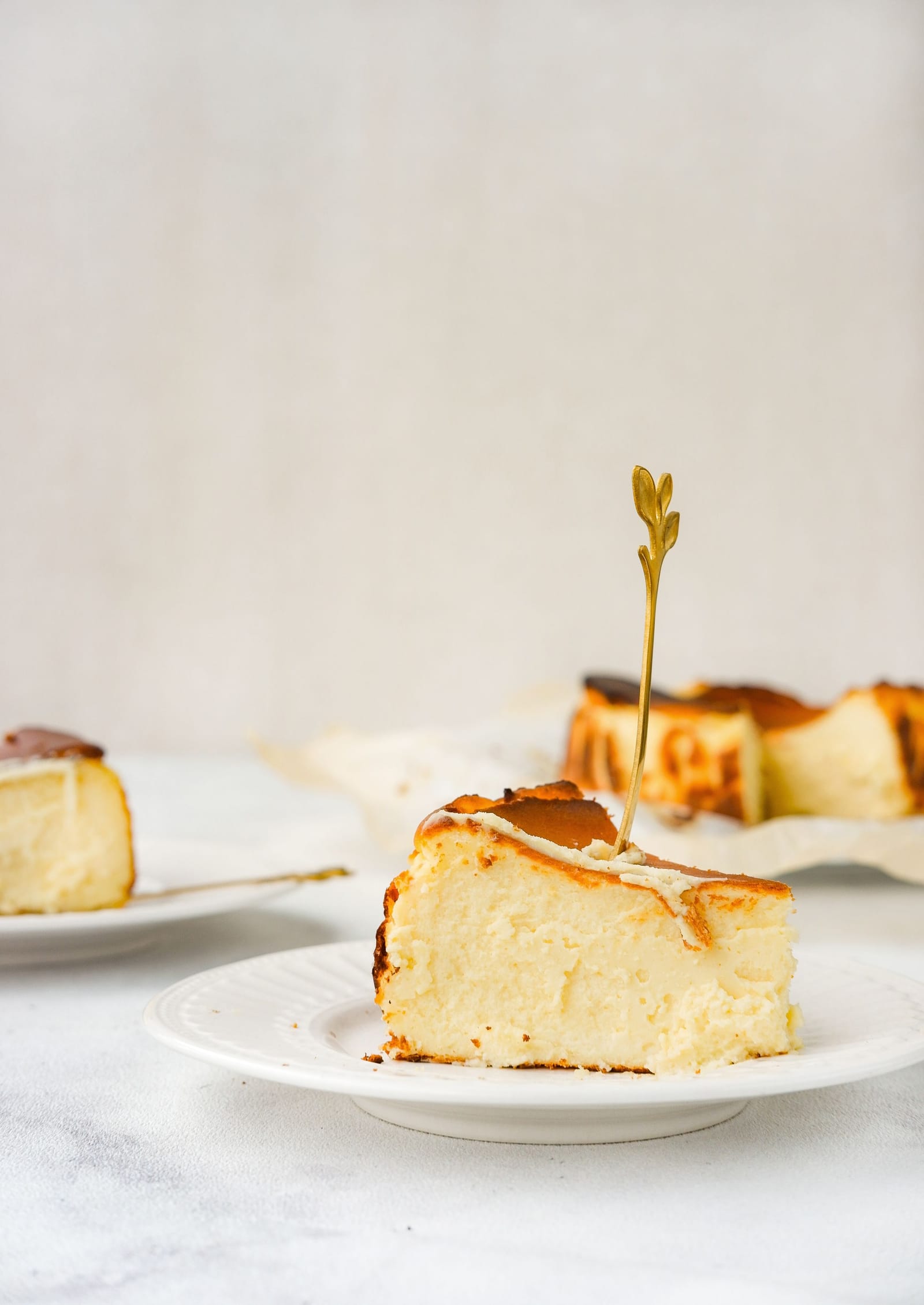
The cake that changed cheesecake has no crust, no water bath and no fear of the oven: cream cheese, eggs, cream and sugar, baked hot and fast until the top turns almost black.
Santiago Rivera built this recipe at La Viña, his family's pintxo bar on Calle 31 de Agosto in San Sebastián's Old Town, in 1988. He wanted a cheesecake that needed no base and no gentle bain-marie, so he pushed the oven past where most bakers stop and let the surface burn while the middle stayed loose. The bar never patented the recipe or kept it quiet; Rivera has handed it to anyone who asked for three decades, which is partly why versions of it now sit on menus from Tokyo to Mexico City.
The dish lands the same week Asador Etxebarri, 40 minutes from San Sebastián in the Basque hills, took the No. 1 spot on The World's 50 Best Restaurants 2026 list. Basque cooking rarely needs a ranking to prove itself, but the coincidence is a reminder that the region's most famous export to home kitchens still comes from a bar counter, not a tasting menu.
No base, no bain-marie, no apology for burning the top — that's the whole trick.
Ingredients
- 700 g full-fat cream cheese, at room temperature
- 250 g caster sugar
- 5 large eggs, at room temperature
- 400 ml heavy cream (35% fat)
- 35 g plain flour, sifted
- 1/2 tsp fine salt
Method
- Heat the oven to 230°C (446°F), well above the usual cheesecake range. The cake gets its name from this step: a short, fierce bake chars the surface before the custard beneath has time to set firm, which is what gives the centre its wobble.
- Line a 22 cm springform tin with two overlapping sheets of baking paper, pushed at least 5 cm above the rim. There is no biscuit base to hold the batter, so the paper collar does the work of a crust, letting the mixture rise as it bakes without spilling over.
- Beat the cream cheese and sugar together until just smooth, keeping the mixer on low. Whipping in air makes the cake puff and then collapse unevenly as it cools, instead of settling into one dense layer.
- Add the eggs one at a time, beating only until each one disappears into the mixture. Overbeating here traps more air for the same reason as the step before.
- Stir in the cream, then sift the flour and salt over the top and fold them through by hand. Folding rather than beating keeps the flour from developing gluten, which would turn the finished cake rubbery instead of custardy.
- Pour into the tin and bake for 45-50 minutes, until the top is deep mahogany-black in patches and the centre still moves like set custard when the tin is shaken. Pull it well before it looks "done" by ordinary cheesecake standards.
- Cool in the tin at room temperature for an hour, then chill for at least 4 hours before unmoulding. The curd keeps firming as it cools; cut it too soon and it collapses rather than holding a clean slice.
Serving it the San Sebastián way
La Viña serves the cake just above fridge-cold, in thick wedges, with nothing else on the plate. That restraint is deliberate: the burnt top already supplies the bitterness a caramel sauce would otherwise add, and cream or fruit mostly blunts the contrast between crust and custard.
For a pintxo-bar pairing, pour a glass of txakoli, the sharp, lightly sparkling white from the Basque coast; its acidity does the job a squeeze of lemon would do on a richer dessert.
Basque burnt cheesecake recipe FAQ
Why does this Basque burnt cheesecake recipe have no base? La Viña's original skips a biscuit crust entirely; the burnt top plays that role, giving the slice structure and bitterness without extra sweetness.