Brined roast turkey recipe: Meredith Laurence's method
Blue Jean Chef Meredith Laurence brines her Thanksgiving turkey in a spiced, citrus-scented brine before roasting it hot, then low, for crisp skin and meat that stays moist to the bone.
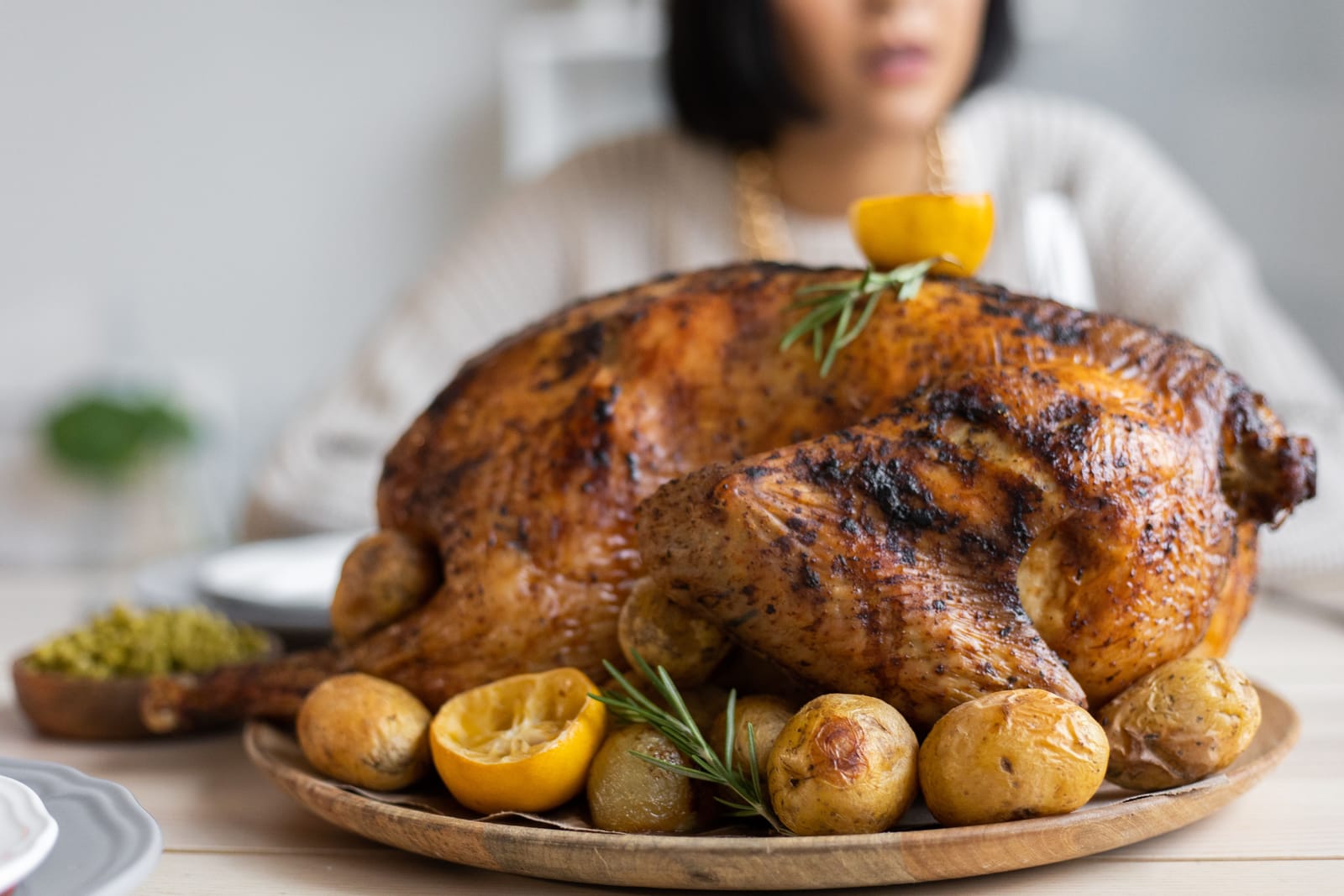
Blue Jean Chef Meredith Laurence brines her Thanksgiving turkey in a spiced, citrus-scented brine before roasting it hot, then low, for crisp skin and meat that stays moist to the bone.
A wet brine works by osmosis: salted water moves into the muscle, and the salt loosens the proteins so they hold on to more of that water through the dry heat of the oven. The sugar and aromatics season the meat from the inside, not just the surface, which matters more on a bird this size than on anything smaller.
Ingredients
The brine does the seasoning; the oven just has to get out of the way.
- 300 g kosher salt
- 180 g brown sugar
- 5 sprigs fresh sage
- 5 sprigs fresh thyme
- 2 large sprigs fresh rosemary
- 4 bay leaves
- 5 garlic cloves, crushed
- 3–4 dried chilli peppers
- 1 tbsp black peppercorns
- Peel of 2 oranges
- 6–8 litres cold water
- 1 whole turkey, 6.5 kg or larger
- 120 g butter, melted
- Extra fresh herbs and garlic cloves, for the cavity
- 700 ml chicken or turkey stock, or white wine
Method
- Combine the salt, sugar, herbs, garlic, chilli, peppercorns and orange peel with 1 litre of water in a saucepan and bring to a boil, just long enough to dissolve the salt and sugar fully — undissolved crystals won't season the bird evenly.
- Cool the brine completely before use; a warm brine would start cooking the turkey's surface and encourage bacteria in the hours it sits in the fridge.
- Submerge the turkey in the cooled brine, topped up with the remaining cold water, and refrigerate for 8 to 18 hours — long enough for the salt to reach the breast's centre, not so long that the texture turns spongy.
- Lift the turkey out, discard the brine, rinse the bird and pat it dry, then rest it uncovered on a rack in the fridge for several hours or overnight: a dry surface is what lets the skin blister and crisp instead of steaming.
- Let the turkey sit at room temperature while the oven heats to 230°C, then brush it all over with melted butter and pack the cavity with herbs and garlic.
- Pour the stock or wine into the roasting pan, put the turkey in, and immediately drop the oven to 180°C — the hot start sets the skin, the lower heat that follows cooks the meat through without drying it out.
- Roast for about 13 minutes per 450 g, basting every 45 minutes and tenting the breast with foil if it browns too fast, until the thickest part of the thigh reads 74°C.
- Rest the turkey under loose foil for at least 30 minutes before carving, so the juices redistribute through the meat instead of running onto the board.
Carry the brine into the gravy
Skim the fat from the roasting pan drippings and use what's left, thinned with stock, as the base for gravy — the brine's salt and aromatics have already seasoned it, so taste before adding more salt. The same base works just as well under a pricier bird this year, since the technique matters more than how much the turkey cost.
Can I brine a frozen turkey? No — the bird needs to be fully thawed first, or the brine won't reach the meat evenly before the salt has time to work.