What to eat in Bangkok: 10 dishes and where to find them
Crab omelette at Jay Fai, boat noodles at Victory Monument, guay jub in Yaowarat and a three-star southern Thai menu, with addresses and 2026 prices in baht.
What to eat in Bangkok is decided less by restaurants than by specialists: shops that have made one noodle soup, one congee or one chicken rice for half a century. Do not miss a charcoal-wok crab omelette in the old town, boat noodles by the bowlful near Victory Monument and a peppery Chinatown noodle soup after dark.
Bangkok cooks on top of several kitchens at once. Teochew and Hainanese migrants left congee, rolled noodles and chicken rice; the canals left boat noodles; workers from Isan, the northeast, brought papaya salad; the south supplies turmeric, shrimp paste and serious heat. Sour, salty, sweet and hot are balanced at the table, which is why every counter carries the same condiment jars.
The city also has fresh recognition. The Michelin Guide Thailand 2026, presented on 27 November 2025, gave Sorn three stars, a first for a Thai restaurant, and lists 137 Bib Gourmand addresses, 44 of them in Bangkok and its surrounding provinces. Prices below are in Thai baht as they stand in 2026, in the format AMUSE used for what to eat in Tokyo.
What to eat in Bangkok starts with crab omelette at Jay Fai, Phra Nakhon
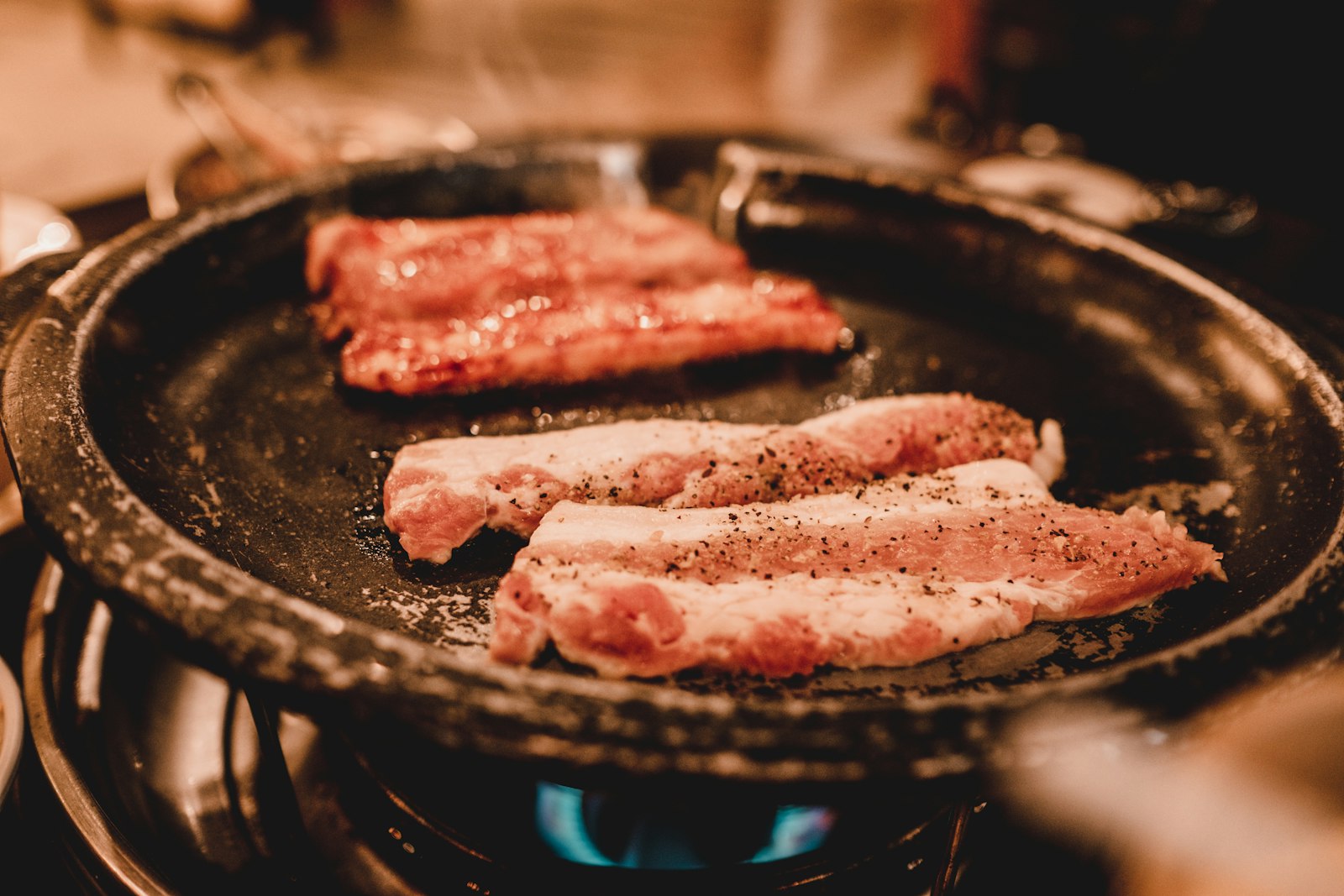
Jay Fai is the street stall that won a Michelin star in 2018 and kept it in the 2026 guide. Chef Supinya Junsuta cooks every order herself over charcoal, in ski goggles against the flare of the wok, and her crab omelette is a dense, crisp-edged roll packed with crab meat.
One cook and one wok explain the wait of several hours. The shop is at 327 Maha Chai Road; the crab omelette was last reported at about 1,400 THB, and opening days change often enough that its official Instagram is the only reliable timetable.
Pad thai at Thipsamai, Phra Nakhon
Pad thai is stir-fried rice noodles with tamarind, palm sugar, fish sauce, dried shrimp, tofu, egg and bean sprouts. Thipsamai, a few doors from Jay Fai at 313-315 Maha Chai Road, has cooked it since the 1960s and is known for a version fried in shrimp oil and wrapped in a thin sheet of egg.
The standard plate costs about 120 THB and the egg-wrapped Superb Padthai with sea prawns around 130 THB; a premium plate with river prawns reaches 500 THB. It opens 10am to midnight.
Boat noodles at Doy Kuay Teow Reua, Victory Monument
Kuay teow reua were once sold from boats on Bangkok's canals, in small bowls that could be handed across the water. The broth is dark, spiced and thickened with a little blood, topped with pork or beef, herbs and crackling.
Locals order five or six bowls and stack the empties. Doy Kuay Teow Reua, in an alley off Ratchawithi Soi 18 beside Wat Makok, a walk from BTS Victory Monument, opens roughly 8am to 6pm; a bowl costs about 15 to 20 THB.
Khao man gai at Go-Ang Kaomunkai Pratunam, Pratunam
Khao man gai is Bangkok's Hainanese chicken rice: poached chicken over rice cooked in chicken fat and stock, with a clear soup and a fermented soybean, ginger and chilli sauce that carries the flavour.
Go-Ang started as a stall in 1960 and serves from 960-962 Phetchaburi Road, Soi 30, by Pratunam market, with Bib Gourmand recognition. Poached chicken rice costs about 65 to 90 THB, a mixed plate with fried chicken around 95 THB.
Tom yum mama at Jeh O Chula, Banthat Thong
Tom yum mama drops Thailand's favourite instant noodle into a hot, sour, creamy tom yum broth with minced pork, pork balls and raw egg yolk. It sounds like student food, and near Chulalongkorn University that is what it started as.
Jeh O Chula, 113 Soi Charat Mueang off Banthat Thong Road, has cooked for more than 60 years and held a Bib Gourmand every year from 2018 to 2025. It opens about 4pm to midnight; take a queue number around 3:30pm. A shared pot costs about 300 to 500 THB.
Guay jub at Nai Ek Roll Noodle, Yaowarat
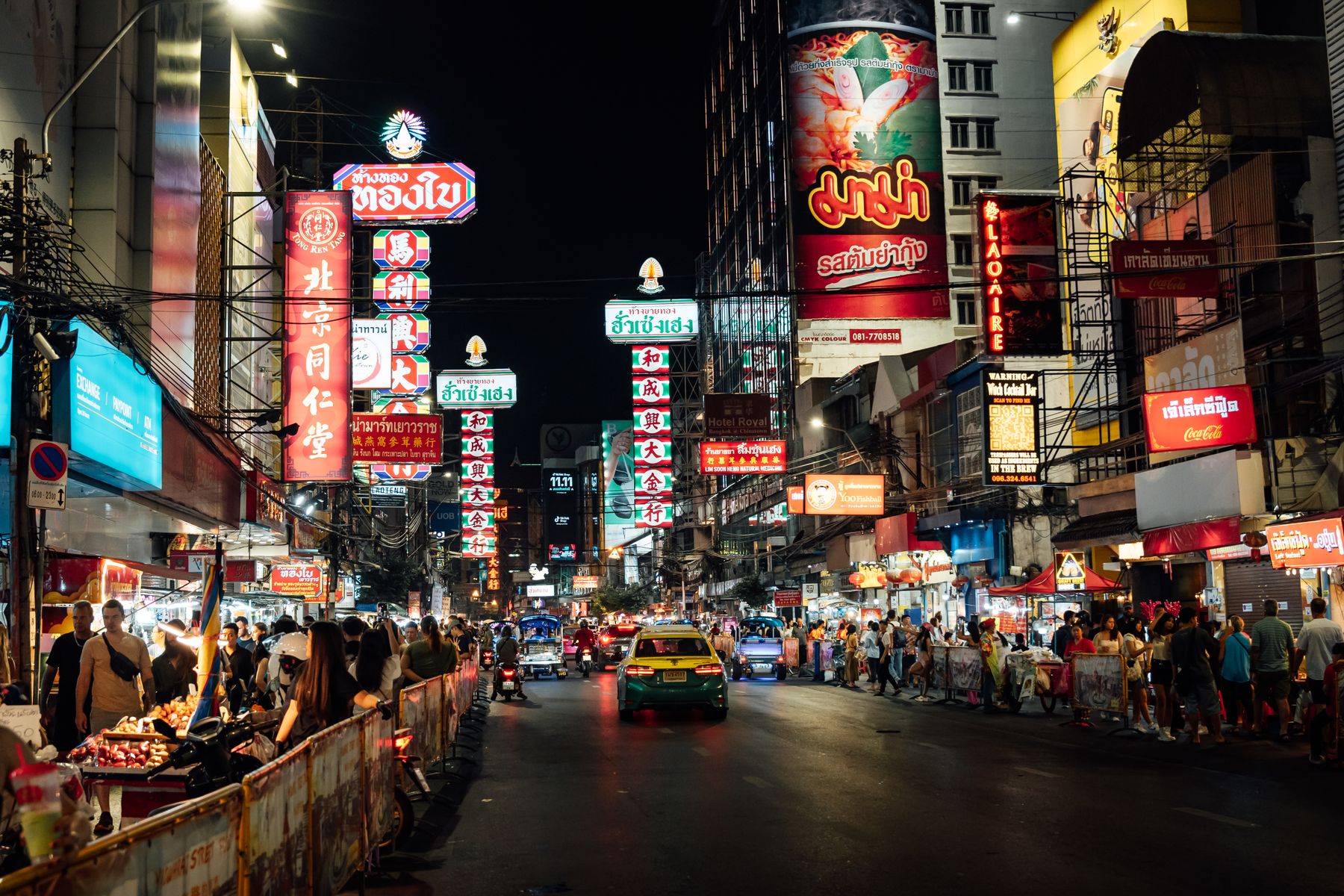
Guay jub is a Teochew soup of rice-noodle sheets that curl into tubes in a clear, strongly peppered broth, with crispy pork belly, offal and a boiled egg. It is the bowl Chinatown eats at midnight.
Nai Ek began as a pushcart more than 50 years ago and has worked from 442 Yaowarat Soi 9 since 1989. It opens 8am to midnight, and most dishes cost 60 to 100 THB.
Jok at Jok Prince, Bang Rak
Jok is rice broken down into thick, smooth congee, served with pork meatballs, ginger and usually an egg. At Jok Prince the pot is cooked over charcoal, which gives it a light smoky note.
The shop, at 1391 Charoen Krung Road opposite Robinson Bangrak, has held a Bib Gourmand since 2018. It opens early, pauses in the afternoon and reopens for the evening; bowls cost about 45 to 70 THB, cash only.
Som tam at Somtum Der, Sala Daeng
Som tam is green papaya pounded with lime, fish sauce, chilli, garlic, tomato and palm sugar; the Isan form adds fermented fish sauce and salted crab. It comes with sticky rice, larb and grilled sausage, always shared.
Somtum Der, 5/5 Sala Daeng Road in Silom, is a Michelin-recommended Isan dining room with many versions of som tam. Most dishes cost 80 to 130 THB; dinner for two with beers lands around 1,000 to 1,100 THB.
Mango sticky rice at Mae Varee, Thong Lo
Khao niao mamuang pairs ripe Nam Dok Mai mango with sticky rice soaked in sweet, lightly salted coconut cream. Mango season peaks from about March to June, but Mae Varee sells it year-round.
The shop has traded for more than 30 years at 1 Sukhumvit Soi 55, by exit 3 of BTS Thong Lo, and packs portions to take away. A serving costs about 160 THB in 2026.
Southern Thai tasting menu at Sorn, Khlong Toei
Sorn is the other end of the scale. Self-taught chef Supaksorn "Ice" Jongsiri cooks more than 20 courses from ingredients sourced directly from southern Thailand's 14 provinces.
It opened in 2018 on Sukhumvit Soi 26 and is the first Thai restaurant with three Michelin stars. The menu costs about 7,200 THB, with wine pairings from 4,900 to 8,800 THB; seats are released on TableCheck at noon on the 25th of each month.
Markets, neighbourhoods and when to go
Treat this list of what to eat in Bangkok as a map by district; traffic makes the BTS and MRT the honest way to connect them.
- Or Tor Kor Market, 101 Kamphaeng Phet Road, opposite Chatuchak Weekend Market — daily 6am to 6pm, MRT Kamphaeng Phet exit 3; top produce, curry pastes and ready meals.
- Phra Nakhon (old town) — Jay Fai and Thipsamai on Maha Chai Road.
- Yaowarat (Chinatown) — street stalls from about 6pm until late.
- Banthat Thong Road — a student food street that fills after 5pm.
- Victory Monument — boat noodles from morning to late afternoon.
- Bang Rak and Silom — congee at breakfast, Isan food at dinner.
- Sukhumvit and Thong Lo — mango sticky rice and most fine dining.
- Best time — November to February for cooler evenings; March to June for mangoes.
Questions before you book a table
Is Bangkok expensive to eat in? Not at street level. Noodles or chicken rice cost 15 to 100 THB; an Isan dinner around 500 THB per person; a three-star menu is priced like its European peers.
Is street food safe in Bangkok? Busy stalls with fast turnover are the safest choice, since food is cooked to order and does not sit.
Is tipping expected? Not at stalls. Restaurants often add a service charge; otherwise small change or about 10 percent is appreciated.
What is the best introduction to what to eat in Bangkok? An evening in Yaowarat, then a morning at Or Tor Kor and lunch in the old town. For another city where Chinese migrants shaped the everyday menu, read what to eat in Lima.
Where to book first
Three reservations to make first: Sorn, Sukhumvit Soi 26, Khlong Toei, when seats open on the 25th; Jay Fai, 327 Maha Chai Road, Phra Nakhon, after checking its Instagram for current days; and Somtum Der, 5/5 Sala Daeng Road, Silom, for a group dinner. Everything else on this list of what to eat in Bangkok works on a queue, not a booking.
Sources
- Time Out Bangkok - Michelin stars in Thailand for 2026 announced · 2025-11-27
- Khaosod English - Michelin unveils Thailand's 2026 Bib Gourmand list · 2025-11-20
- MICHELIN Guide - Jay Fai · 2026
- Thipsamai - official site · 2026
- Xtreme Foodies - Doy Kuay Teow Reua · 2026-02-05
- Tourism Authority of Thailand - Go-Ang Kaomunkai Pratunam · 2026
- The Finest Thai - Jeh O Chula guide · 2026-06-05
- DanielFoodDiary - Nai Ek Roll Noodle · 2026-05-16
- Tourism Authority of Thailand - Jok Prince Bang Rak · 2026
- Tripadvisor - Somtum Der, Sala Daeng · 2026
- DanielFoodDiary - Mae Varee Mango Sticky Rice · 2024-08-19
- Restaurants for Kings - Sorn Bangkok · 2026
- Nerd Nomads - Best markets in Bangkok 2026 (Or Tor Kor) · 2026