What to eat in Tokyo: 10 dishes and where to find them
Sushi at Tsukiji before 9am, tsukemen under Tokyo Station, soba in Kanda, monjayaki in Tsukishima and a 1909 taiyaki shop, with addresses and 2026 prices in yen.
What to eat in Tokyo comes down to specialists: shops that make one thing, often for more than a century, from soba and tempura to tonkatsu and taiyaki. Eat at counters rather than from fifty-page menus, and eat sushi, noodles and skewers where the city eats them, by the train lines and the old markets.
Tokyo held 160 Michelin-starred restaurants in the 2026 selection, more than any other city, according to The Japan Times, and on 16 February 2027 Michelin will unveil its Tokyo, Kyoto-Osaka and Nara selections together in Tokyo for the first time. The city's everyday cooking is older than any star: sushi, soba and tempura began as quick food sold from stalls in Edo, as Tokyo was called until 1868.
This guide follows the format of AMUSE's guides to what to eat in Lisbon and what to eat in Lima: one dish per stop, the address and a price range in yen as it stands in 2026.
Tokyo eats best at the counter: one dish, one queue, one price on the wall.
What to eat in Tokyo starts with sushi at Tsukiji Outer Market, Tsukiji
The wholesale fish market moved to Toyosu in 2018, but the Outer Market stayed: blocks of stalls selling knives, dried bonito, rolled omelette and fish, with sushi counters wedged between them. Nigiri here is Edomae in style, a slice of fish on hand-pressed vinegared rice, brushed with soy by the cook.
Most shops trade from early morning until about 2pm, and many close on Sundays, holidays and some Wednesdays. Sushizanmai Honten, 4-11-9 Tsukiji, never shuts: the market's official site lists it as open 24 hours, 365 days a year. Sets at the market's counters run from about ¥1,500 to ¥5,000 or more. At the other end of the scale, Sushi Kaiseki Okuno opens at the Tokyo National Museum on 30 September with a ¥35,000 course.
Tsukemen at Rokurinsha, Tokyo Station
Tsukemen is ramen taken apart: thick noodles served beside a dense pork-and-fish dipping broth.
It trades from Tokyo Ramen Street, in the basement of the station's Yaesu side, with 26 seats, a morning session from 7:30am to 9:45am and regular service from 10am to 11pm. A bowl costs about ¥850 to ¥1,300, cash or transit card; the morning queue is shorter. The Yaesu side keeps filling up: Tofrom Yaesu opened beside the station on 10 September with 68 food tenants.
Soba at Kanda Matsuya and Kanda Yabu Soba, Kanda
Soba are buckwheat noodles, served cold on a bamboo tray with a dipping sauce or hot in broth. Order mori or seiro, cold and plain, to judge the noodle, then pour the cooking water, sobayu, into the leftover sauce and drink it.
Kanda Matsuya, Kanda Sudacho 1-13, has served soba since 1884; it closes on Sundays and Mondays, and Tabelog puts spending at ¥1,000 to ¥1,999. A few minutes away, Kanda Yabu Soba, Kanda Awajicho 2-10, mixes ten parts buckwheat to one of wheat and charges ¥1,320 for seiro. It closes on Wednesdays.
Edomae tendon at Kaneko Hannosuke, Nihonbashi
Tempura in Tokyo means Edomae: seafood fried light and, at its cheapest, served over rice as tendon under a sweet soy sauce.
Kaneko Hannosuke, 1-11-15 Nihonbashi Muromachi, is built around one bowl: conger eel, prawn, squid, nori and a soft egg fried in batter, dressed in a sauce recipe handed down to the founder's grandson. It costs about ¥1,000 to ¥1,200. There are no reservations, so the queue is part of the price; it opens daily from 11am, 10am at weekends.
Sukiyaki at Ningyocho Imahan, Ningyocho
Sukiyaki is beef cooked at the table: thin slices of wagyu simmered in soy, sugar and mirin in a shallow iron pan, then dipped in raw egg. It spread in the late 19th century, when eating beef was new in Japan.
Ningyocho Imahan opened in 1895 as a beef hot pot restaurant and has specialised in sukiyaki in Ningyocho since 1956. At the flagship, 2-9-12 Nihonbashi Ningyocho, lunch courses start at ¥8,800 and dinner sets at ¥13,530, tax included, plus a 12% service charge at dinner.
Monjayaki at Monja Kondo, Tsukishima
Monjayaki is a batter far thinner than okonomiyaki's, mixed with cabbage and toppings, cooked on a hotplate at the table and scraped up half-set with small spatulas. It belongs to Tsukishima, a district on reclaimed land in Tokyo Bay whose main street is lined with monja shops.
Monja Kondo, 3-12-10 Tsukishima, calls itself the district's oldest, open since 1950. A plain "nostalgic" monja costs ¥825; the mentaiko, mochi and cheese version ¥2,090. It opens at 5pm on weekdays and 11:30am at weekends.
Tonkatsu at Tonki, Meguro
Tonkatsu is a thick pork cutlet coated in panko and deep-fried, served sliced with shredded cabbage, rice, miso soup and a dark, fruity sauce. Loin, rosu, carries more fat; fillet, hire, is leaner.
Tonki, 1-1-2 Shimo-Meguro, a minute from Meguro Station, has fried pork since 1939 at a long counter wrapped around an open kitchen. Sets cost about ¥2,000 to ¥3,000; it opens from 4pm to 9pm and closes on Tuesdays and the third Monday of the month.
Yakitori and motsuyaki at Omoide Yokocho, Shinjuku
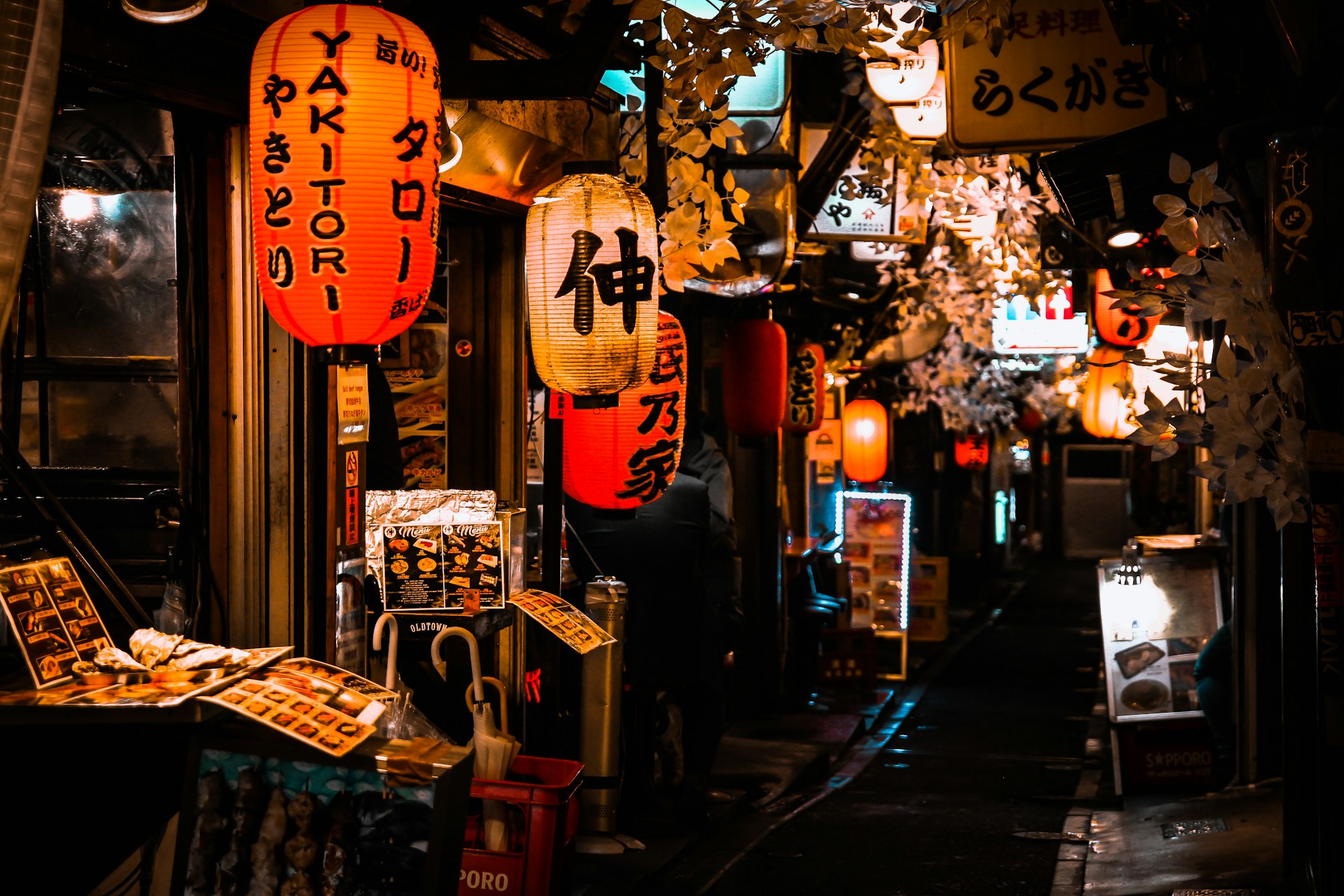
Yakitori is chicken grilled on skewers over charcoal, seasoned with salt or a sweet soy glaze, tare; motsuyaki does the same with offal. Omoide Yokocho, by the west exit of Shinjuku Station, grew out of a post-war black market around 1946 and still packs about 60 bars and restaurants into lanes beside the tracks.
Skewers usually cost ¥150 to ¥300, and an evening with drinks about ¥2,500 to ¥4,000 per person. Many counters add a small table charge with an appetiser, and according to the alley's official site a majority take cash only.
Bento and sweets in the depachika at Isetan Shinjuku, Shinjuku
Depachika are the food basements of department stores: bento, pickles, grilled eel, wagashi and French pastry sold from counters.
Isetan Shinjuku, 3-14-1 Shinjuku, runs two basement food floors with more than 180 vendors, open roughly from 10am to 8pm and linked to Shinjuku-sanchome Station. A bento runs from about ¥1,500 to ¥4,000, and prepared food is often marked down in the last hour.
Taiyaki at Naniwaya Sohonten, Azabu-Juban
Taiyaki is a fish-shaped cake of thin batter filled with sweet red bean paste and eaten hot. Naniwaya Sohonten, open since 1909 at 1-8-14 Azabu-Juban, is credited with selling the first.
Each one is baked in its own iron mould, a slow method called itchō-yaki, so the shell comes out thin and crisp. A taiyaki costs about ¥200. The shop closes on Tuesdays and Wednesdays; the café upstairs is the way round the queue.
Markets, neighbourhoods and when to go
Most of what to eat in Tokyo sits near a train station, so plan by line rather than by district.
- Tsukiji Outer Market: early morning until about 2pm; many shops close on Sundays, holidays and some Wednesdays.
- Tokyo Station and Nihonbashi: Ramen Street from 7:30am, Kaneko Hannosuke, Imahan and the new tenants of Tofrom Yaesu.
- Kanda: soba at lunchtime; both shops stop serving at about 8pm.
- Tsukishima: monja from 5pm on weekdays, from late morning at weekends.
- Shinjuku: Isetan's food floors by day, Omoide Yokocho after dark.
- Yurakucho: more skewers under the railway viaduct, the gado-shita, along some 700 metres of track.
- When to go: March to May and October to November for mild weather; autumn also brings new-season soba, shinsoba.
Questions before you eat in Tokyo
Is Tokyo expensive to eat in? Soba, tendon, tsukemen and taiyaki all cost under ¥2,000 at the places above, tonkatsu about ¥2,000 to ¥3,000. Sukiyaki at Imahan is the exception.
Is tipping expected? No. Where a service charge exists, as at Imahan's dinner, it is already on the bill.
Do I need cash? Often. Many yokocho bars take cash only, so carry notes for a day of eating.
What is the best single introduction to what to eat in Tokyo? A morning at Tsukiji Outer Market, lunch in Kanda and an evening in Omoide Yokocho cover sushi, soba and yakitori in one day.
Where to book first
- Ningyocho Imahan, 2-9-12 Nihonbashi Ningyocho: sukiyaki lunch courses from ¥8,800, bookable on the restaurant's website.
- Monja Kondo, 3-12-10 Tsukishima: online reservations, no phone bookings.
- Tonki, 1-1-2 Shimo-Meguro: bookings for groups of four or more; smaller parties queue from 4pm.
Everything else on this list of what to eat in Tokyo runs on the queue. Michelin's announcement in February will lengthen some booking lists; it will not shorten the line at Kaneko Hannosuke.
Sources
- The Tsukiji Outer Market - Official Website: Sushiizanmai Honten · 2026-09-11
- Ningyocho Imahan - Ningyocho Honten menu · 2026-09-11
- The MICHELIN Guide - 20 years in Japan, three selections unveiled together · 2026-09-11
- The Japan Times - Tokyo retains Michelin crown with 160 starred restaurants for 2026 · 2025-09-27