Oyakodon recipe: Tokyo's parent-and-child rice bowl
A weeknight staple built on one trick: eggs poured into the pan twice, so the bowl keeps ribbons of barely-set yolk instead of turning into an omelette.
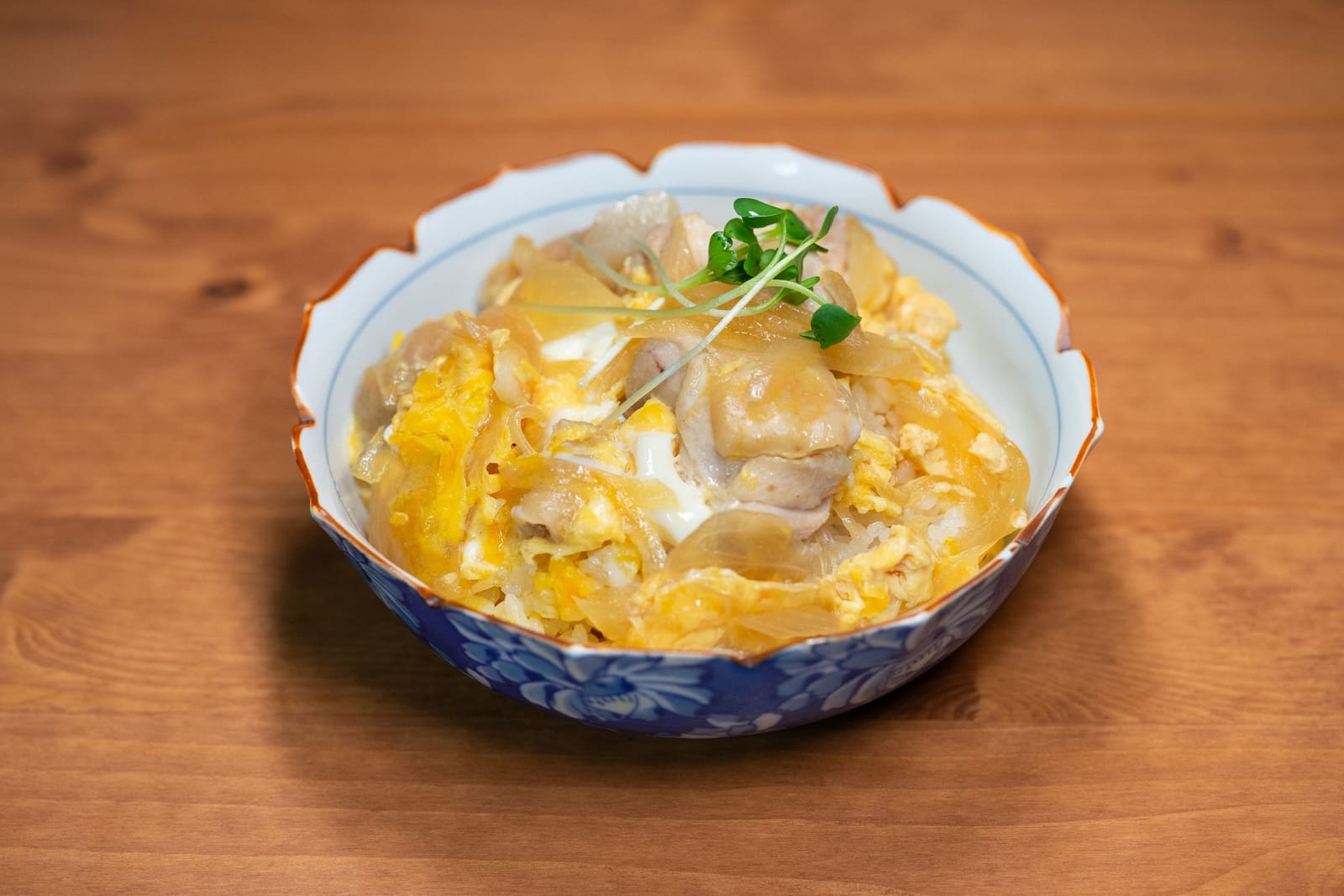
Oyakodon is Tokyo's weeknight answer to a whole chicken dinner: thigh meat and onion simmered in dashi, sweetened with mirin, then set with egg into a loose, barely-cooked curtain over rice.
The name means “parent and child” — chicken and egg in the same bowl — and the dish traces back to Tamahide, a Nihonbashi restaurant that has served chicken hot pot since 1760. Around 1891, the story goes, the owner's wife ladled leftover hot pot broth, egg and all, over a bowl of rice for a regular customer in a hurry. The improvised bowl stuck, and donburi cooking in Japan has leaned on the same two-stage egg technique ever since.
The technique is the whole dish. The eggs go in twice, not once, so the pan holds pockets of just-set white next to ribbons of still-wobbling yolk — overcook it in one go and oyakodon turns into an omelette on rice.
Oyakodon rewards patience with the egg, not the stove — ten seconds decides everything.
Ingredients
- 2 boneless, skin-on chicken thighs (about 300 g), cut into bite-size pieces
- 1 small onion, thinly sliced
- 200 ml dashi stock
- 3 tbsp soy sauce
- 3 tbsp mirin
- 1 tbsp sugar
- 4 large eggs
- 2 bowls freshly cooked short-grain rice
- 2 tbsp mitsuba or spring onion, chopped, to finish
Method
- Bring the dashi, soy sauce, mirin and sugar to a simmer in a small frying pan with a lid, just wide enough for one portion. The sauce should taste a little too salty on its own — the rice underneath will balance it.
- Add half the onion and simmer for 3-4 minutes until it softens but still has some bite; it needs to hold its shape under the egg.
- Add half the chicken and poach for 4-5 minutes, turning once, until just cooked through. Poaching rather than frying keeps the meat tender and lets it pick up the sauce instead of browning against it.
- Beat two of the eggs loosely — a few strokes, not a smooth batter. Streaks of white left in the mix are what give the finished dish its ribboned texture.
- Pour in half the beaten egg, cover, and cook for 30 seconds until just beginning to set at the edges. Pour in the rest, cover again, and cook for another 20-30 seconds: the aim is egg set at the edges and still loose in the centre, since it keeps cooking in its own heat once off the stove.
- Slide the chicken, onion and egg over a bowl of rice in one motion, keeping the layers intact rather than stirring them in. Repeat with the second portion, scatter with mitsuba, and serve immediately.
Why two small pans, not one big one
Tamahide still serves oyakodon in individual copper pans so each portion sets on its own — in one large pan, the egg at the centre never firms before the edges turn rubbery. Cooking two portions one after another takes the same ten minutes and gets far closer to the original.
Oyakodon belongs to a wider donburi family built on the same logic of sauce, protein and rice, several steps removed from the dumplings of Utsunomiya's gyoza. Hot green tea, rather than anything stronger, is the usual pairing — this is a dish built to be eaten fast, between the pan and the table.
Can this oyakodon recipe be made with chicken breast? Thigh holds up better to poaching and stays juicier; breast works too, but cook it a minute less so it doesn't dry out before the egg sets.