What to eat in Buenos Aires: 10 dishes and where to find them
Ten real addresses for asado, choripan, milanesa, pizza and dulce de leche across Buenos Aires, each with a neighbourhood, a price in pesos and no filler.
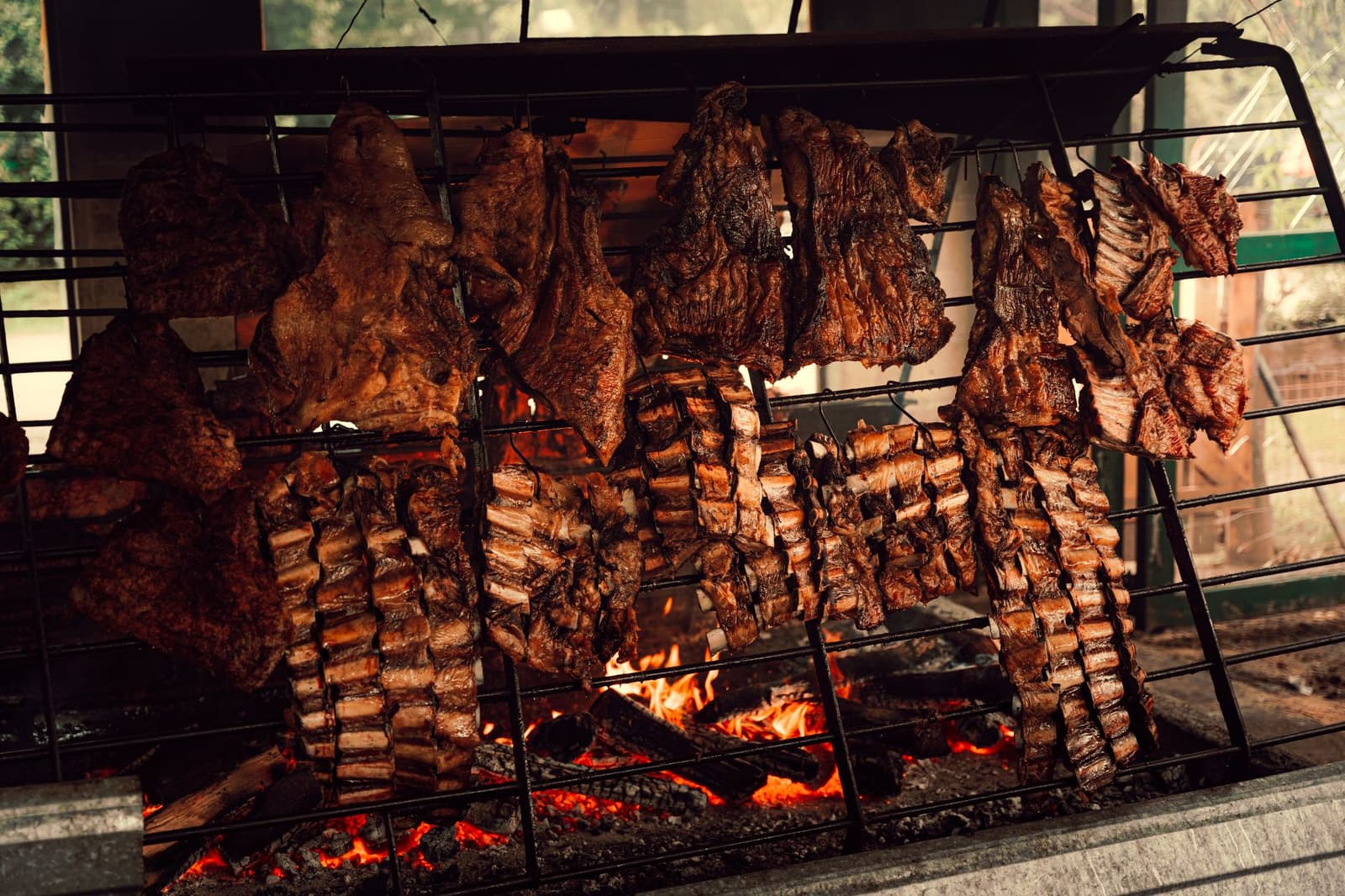
What to eat in Buenos Aires starts with a question of fire: wood, charcoal and enough beef to feed a small country. Ten real addresses below cover asado, choripán, milanesa, pizza and dulce de leche, with 2026 prices in pesos and no filler.
Argentina eats more beef per person than almost anywhere on earth, and Buenos Aires built its identity around the parrilla long before Michelin noticed it in 2026. Italian immigration shaped the other half of the plate: pizza a la piedra, milanesa and dulce de leche sit next to the grill on every corner, and the city's bares notables still pour coffee in rooms unchanged since the 1880s.
Tripadvisor named a 12-seat neighbourhood grill Argentina's best restaurant in 2026, proof the city runs on small rooms and slow fires, not spectacle. This is what to eat in Buenos Aires with one afternoon and one appetite: asado first, then the rest.
Buenos Aires still eats by the clock of the parrilla, not the tasting menu.
What to eat in Buenos Aires first: asado at Don Julio
Asado is the reason people fly to Buenos Aires with an empty suitcase. The cut worth ordering is bife de chorizo, a thick sirloin grilled slowly over quebracho-wood coals until the fat crisps and the centre stays pink.
Don Julio, at Guatemala 4699 in Palermo Viejo, grills it best. A narrow-cut bife de chorizo runs $87,000 and the wide cut $95,000, both roughly 500 g to share, plus a $7,000 cubierto per person. The restaurant holds one star in the 2026 Michelin Guide Argentina, so tables book out weeks ahead through its own app.
Argentina's asado is riding a wider regional moment: this November, the World's 50 Best Restaurants gala moves to Lima for the first time, putting South American kitchens under a bigger spotlight.
A historic corner and its milanesa napolitana
Milanesa is Argentina's other national dish: a thin cut of beef, breaded and fried, then topped however the kitchen likes.
El Preferido de Palermo, a former Asturian almacén at Jorge Luis Borges 2108, corner Guatemala, has fed Palermo since 1952. Restaurateur Pablo Rivero, who also owns Don Julio, restored the corner store in 2019 with chef Guido Tassi. The milanesa de bife de chorizo costs $41,300; the napolitana version, piled with ham, cheese and tomato, runs $51,800.
Choripán at a counter with no chairs
Choripán is grilled chorizo split lengthwise, charred on the cut side, and stuffed into crusty bread with chimichurri. It is the sandwich sold outside every stadium and street fair in the country.
Chori, at Thames 1653 in Palermo Soho, sells little else: five versions of grilled chorizo in bread, a blood-sausage morcipán, and a vegetarian sandwich with eggplant and goat's cheese. A classic pork choripán runs around $5,400; loaded versions reach $9,400. The counter runs 12:30pm to half past midnight, no reservations, barely any seats.
Empanadas at a Recoleta institution
Buenos Aires bakes its empanadas rather than frying them, a habit that separates the capital from the fried, spicier versions found further north. Beef with egg and olive is the standard filling, sealed with a braided edge called the repulgue.
El Sanjuanino has made empanadas at Posadas 1515 in Recoleta since 1962, alongside locro on cooler days. A dozen at a classic house like this averages around $26,000 citywide, per a price survey Infobae ran across Buenos Aires empanaderías in May 2025. It is a different grammar from the ceviche-led street food of Lima, where citrus and raw fish do the work that beef and bread do here.
Pizza a la piedra on Corrientes
Genoese immigrants gave Buenos Aires its own pizza: thick, cheese-heavy, cut into squares, eaten standing at a marble counter with a glass of moscato.
Güerrín has done exactly that at Avenida Corrientes 1368 since 1932. An Especial Güerrín — mozzarella, ham, peppers and olives — costs $38,200, per prices Canal 26 tracked along Corrientes through 2026. Go after 11pm to see the counter at its busiest.
Dulce de leche, packaged properly
Dulce de leche is milk and sugar cooked down into a spreadable caramel, and it turns up above all in the alfajor: two shortbread discs sandwiching a thick layer of it, dipped in chocolate.
Havanna opened its first counter in Mar del Plata in 1948 and now runs a flagship at Florida 602, on the Microcentro pedestrian mall, wrapping alfajores the same way it did on day one. A box of six classic dulce de leche alfajores starts at $13,000 through the brand's own shop.
Malbec by the glass in Palermo
Mendoza grows most of the Malbec that made Argentine wine famous, and Buenos Aires drinks it faster than anywhere else in the country, usually by the glass.
Pain et Vin, a bakery and wine bar at Gorriti 5132 in Palermo Viejo, pours wine by the glass from midday to 10pm and runs a guided tasting flight daily between 4pm and 8pm. A five-wine flight with a cheese board and bread for two came to about $104,000 in a January 2025 visit, sommelier notes included.
A market that still smells of the barrio
Mercado de San Telmo occupies an iron-and-glass hall from 1897 at Defensa 961, mixing butchers and greengrocers with sit-down counters that never made it onto a tourist map.
It opens daily, roughly 8am to 8pm, and El Hornero de San Telmo, one of the stalls inside, bakes empanadas and simmers locro through the colder months. Sunday brings the separate Feria de San Telmo antiques fair along Defensa, 10am to 5pm — a different, louder event entirely.
Coffee at a bar notable in Almagro
A bar notable is a legally protected café, usually more than a century old, with the marble counters and original fittings to prove it. Buenos Aires has around ninety of them.
Las Violetas, at Avenida Rivadavia 3899 in Almagro, has poured coffee under its stained-glass ceiling since 1884; poet Alfonsina Storni was a regular. A café con leche costs around $4,700 and a medialuna $1,700, prices recorded in August 2025. It opens from 6am on weekdays, later on weekends.
Milanesa a caballo at a downtown bar notable
Milanesa a caballo means milanesa "on horseback," topped with one or two fried eggs so the yolk runs into the breadcrumbs, usually with a mountain of fries alongside.
Los Galgos, on Avenida Callao 501 at the corner of Lavalle in San Nicolás, has stood since 1930 and reopened under chef Julián Díaz in 2015 with its original marble and woodwork intact. A milanesa a caballo cost $39,900 on a visit recorded in August 2026.
What to eat in Buenos Aires without a reservation: markets, neighbourhoods and hours
- Palermo Soho and Palermo Viejo: kitchens shut mid-afternoon and reopen around 8pm; dinner tables fill after 9:30pm.
- San Telmo: the indoor Mercado de San Telmo runs daily; the Feria de San Telmo antiques fair takes over Defensa street only on Sundays.
- Recoleta: quieter by night, better for a daytime empanada or coffee break between museums.
- Microcentro: pizza counters on and around Corrientes stay open latest, often past midnight.
- Almagro: the bar notable circuit, reached by Line A of the subte.
Questions before you book
Do I need to book a table at Don Julio? Yes, weeks ahead through the restaurant's own app; walk-ins can try the standby list at opening time but rarely get seated before 11pm.
What time do porteños actually eat dinner? Kitchens open around 8pm to 8:30pm, but most tables only fill after 9:30pm, later on weekends.
Is eating out in Buenos Aires still cheap? In pesos, no — menu prices have climbed with inflation. In dollars, converted at the roughly 1,550-peso blue-market rate quoted by exchange trackers in late September 2026, a $87,000 steak works out near $56, still below equivalent grills in Europe or the United States.
Are there good vegetarian options? Yes: Chori's eggplant and goat's-cheese sandwich, empanadas de verdura at most empanada houses, and milanesa de berenjena on many bodegón menus.
Where to book first
That's what to eat in Buenos Aires, address by address. Three bookings to make before anything else:
Don Julio, Guatemala 4699, Palermo Viejo — reserve through the restaurant's app at least two to three weeks out for the asado.
Pain et Vin, Gorriti 5132, Palermo Viejo — book the 4pm wine-tasting flight a few days ahead; walk-in glasses are easier to find after 6pm.
Mercado de San Telmo, Defensa 961, San Telmo — no booking needed, but arrive before 1pm on weekdays to beat the lunch counters filling up.