What to eat in Melbourne: 11 dishes and where to find them
Eleven dishes, eleven addresses: dim sims, banh mi, souvlaki and a $425 degustation, plus the neighbourhoods and market days that decide when to go.
What to eat in Melbourne starts with a dumpling, not a degustation. The city runs on laneway coffee, late-night Cantonese and a Greek grill older than most of its skyscrapers, and eleven very different dishes cover the ground better than one.
Melbourne cooks with the accents of the people who moved there, which is the real answer to what to eat in Melbourne: order what one community does best. Vietnamese kitchens in Footscray, Greek grills on Lonsdale Street, Italian bakeries on Lygon Street and Cantonese kitchens in Chinatown opened here first, then spread across Australia. The city also invented its own dish, the dim sim, a fried or steamed dumpling with little in common with Cantonese dim sum beyond the name.
Add Victoria's dairy, seafood and produce, a laneway culture built for small bars and smaller kitchens, and a coffee scene that still argues over who invented the flat white. The restaurant map keeps moving too: a 70-year-old dining room recently reopened as Cote Basque, a newcomer called Petit Crenn opens in October, and even long runs end, as with the cocktail bar Byrdi Melbourne.
The dim sim is Melbourne's own invention, not a Cantonese import wearing a new name.
Dim sims at South Melbourne Market Dim Sims, South Melbourne
This is where what to eat in Melbourne gets its most literal answer: cooks at the market started making a heavier, meatier dumpling in the 1940s, and the name "dim sim" stuck to the local dish rather than its Cantonese origin. The stall has traded on this site for more than 50 years, now run by the founder's two sons.
A bag of a dozen steamed or fried dim sims costs about $12-$15. The counter is inside the market at 322-326 Coventry Street, South Melbourne, open Wednesday, Friday, Saturday and Sunday from 8am.
Cantonese roast duck at Supper Inn, Chinatown
Supper Inn has served past midnight for decades, which is why chefs finishing service elsewhere end up on its stairs. The kitchen runs a short Cantonese menu, and the roast duck, sold half or whole with crackling skin, is what regulars order without looking further.
A whole duck costs close to $39.50. The restaurant is upstairs at 15 Celestial Avenue, off Chinatown's main strip, and stays open into the small hours seven nights a week.
Souvlaki at Stalactites, Melbourne CBD
Stalactites has traded on Lonsdale Street since 1978, when the city's Greek community was already large enough to support a grill open past midnight. The Konstandakopoulos family still runs it; the souvlaki, chargrilled lamb or chicken in pita with garlic sauce, has barely changed since.
A single souvlaki in pita costs $21-$25; combo plates with chips and salad run $34-$36. The restaurant is at 177-183 Lonsdale Street and serves until 2am on weekends.
Croquetas and jamon at MoVida, Melbourne CBD
MoVida opened in Hosier Lane in 2003 and is usually credited with starting Melbourne's small-bar, laneway-tapas habit, years before other cities copied it. The kitchen runs a short, seasonal croquetas list alongside jamon iberico sliced to order.
Croquetas cost about $6-7 each; jamon iberico aged 36 months runs $55-60 to share. MoVida is at 1 Hosier Lane, the laneway beside Federation Square, and books out most weekends.
Kooglhoupf at Monarch Cakes, St Kilda
Acland Street's cake shops remain from the Jewish and Polish community that settled in St Kilda after the Second World War. Monarch Cakes has baked from the same recipes since 1934, and its chocolate kooglhoupf, a marbled, gugelhupf-style cake, is what regulars ask for by name.
A slice with coffee costs about $10. The shop is at 103 Acland Street and opens from 8:30am on weekdays.
Larb at Chin Chin, Melbourne CBD
Chin Chin reset Flinders Lane's dining scene when it opened in 2011, borrowing the energy of Thai hawker stalls over fine dining. The larb, a sharp, herb-heavy minced salad, is one of the dishes that built the room's name and still turns up on most tables.
Small plates mostly run $18-$34; shared "Feed Me" banquets cost $88-$175 a head. Chin Chin is at 125 Flinders Lane, upstairs, and fills up fast from early evening.
Cannoli at Brunetti Classico, Carlton
Lygon Street was Melbourne's first Italian strip, built by postwar migrants before it became a tourist stretch. Brunetti has run its Carlton cafe since 1985, and the cannolo, a crisp shell piped with ricotta to order, is the pastry people queue for.
A single cannolo costs from about $4.40. Brunetti Classico is at 380 Lygon Street and opens from 6am daily.
Banh mi at Nhu Lan Bakery, Footscray
Footscray's Vietnamese community rebuilt the suburb's main streets from the 1980s onward, and its bakeries are still the benchmark for banh mi in Melbourne. Nhu Lan bakes its own bread through the day, and the lunchtime queue out the door is the best sign it just came out of the oven.
A banh mi costs $4.50-$8, depending on the filling. Nhu Lan Bakery is at 116 Hopkins Street and opens from 5am, well before most of the city's cafes.
Flat white at Market Lane Coffee, Melbourne CBD
Melbourne, Sydney and Wellington all claim to have invented the flat white, and the argument is unresolved. What is not disputed is that Melbourne built a coffee culture around it, roasting locally and training baristas who went on to open cafes worldwide.
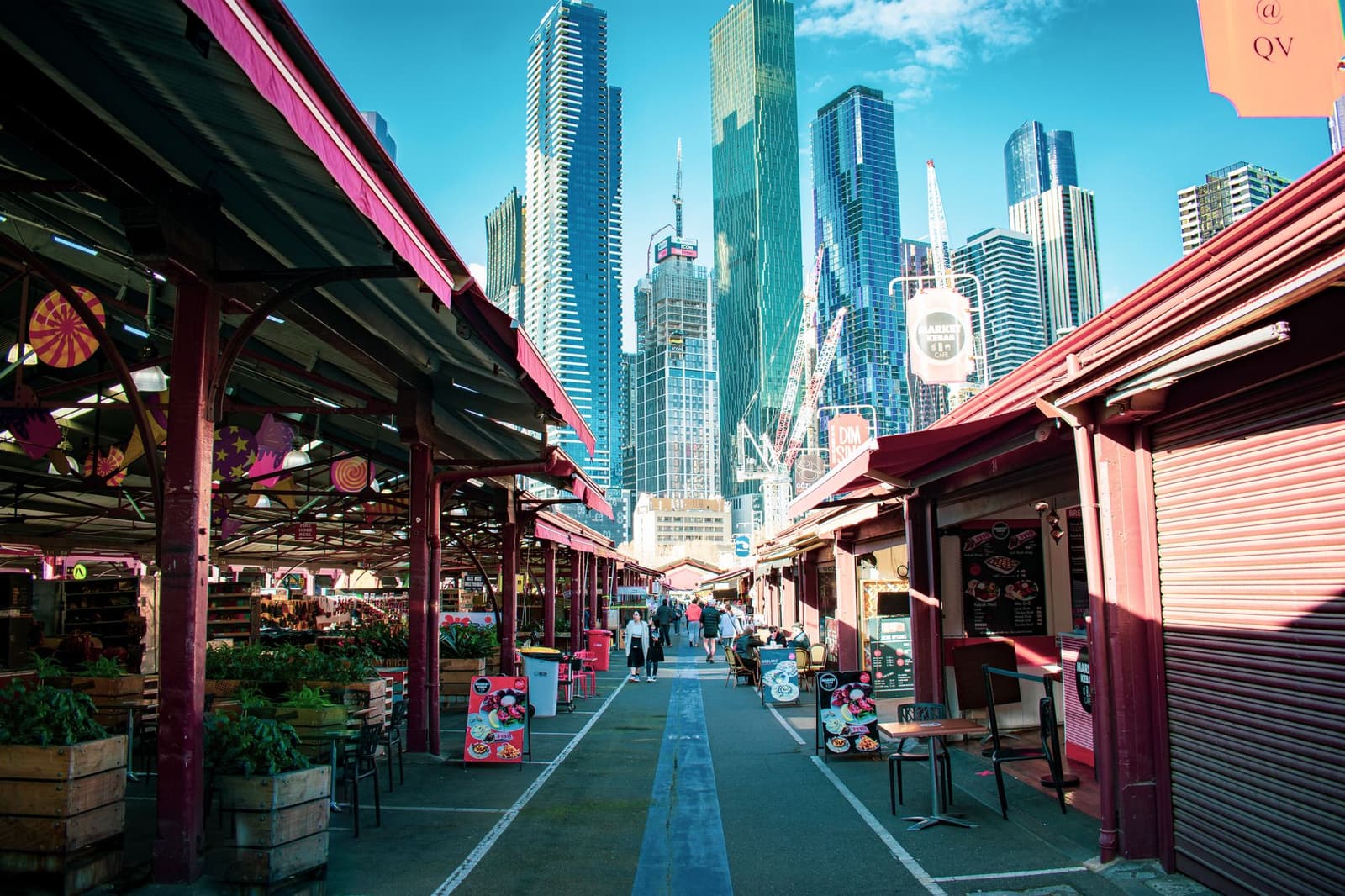
Market Lane roasts its own beans and runs a stall inside Queen Victoria Market alongside its cafes across the city. A flat white costs about $5. The market counter trades on the market's regular trading days on Elizabeth Street.
Kangaroo parma at The Napier Hotel, Fitzroy
The parma, a schnitzel under tomato sauce and cheese, is Australian pub food's default order. The Napier, on the same Fitzroy corner since 1866, swaps the usual ham for smoked kangaroo, a small change that made its parma one of the most talked-about in the city.
The kangaroo parma, served with chips and salad, costs about $25. The Napier Hotel is at 210 Napier Street, Fitzroy.
Native ingredients tasting menu at Attica, Ripponlea
Attica has spent nearly two decades building menus around ingredients Australian kitchens once ignored: bush tomato, saltbush, warrigal greens, native pepperberry. Chef Ben Shewry's degustation changes constantly; the point stays the same, dishes that could not come from anywhere else.
The tasting menu costs $425 per person, wine pairings extra. Attica is at 74 Glen Eira Road, Ripponlea, and books out weeks ahead.
Markets, neighbourhoods and when to go
- Queen Victoria Market: open Tuesday and Thursday to Sunday in the day; the Winter Night Market runs Wednesday evenings from June to August.
- South Melbourne Market: Wednesday, Friday, Saturday and Sunday, best before 11am for produce and dim sims.
- Chinatown, Little Bourke Street: busy and loud every night; go after 10pm for Supper Inn without a wait.
- Lygon Street, Carlton: Melbourne's original Italian strip, busiest for coffee and aperitivo from 5pm.
- Footscray: Vietnamese and East African kitchens along Hopkins and Barkly streets, best on a weekday lunch.
- Fitzroy and St Kilda: pubs and cake shops respectively, both busiest Thursday to Saturday nights.
Is Melbourne expensive to eat in?
Is Melbourne expensive to eat in? Not by default. A market lunch or a banh mi costs under $15, a pub parma or a souvlaki runs $20-$36, and only the top tier of restaurants, Attica among them, moves into the $200-plus bracket.
Do I need to book ahead? For Attica and MoVida, yes, often weeks out. Stalactites, Supper Inn, Nhu Lan and the market stalls run on walk-ins.
What is the best neighbourhood for a first visit? The CBD laneways cover coffee, tapas and Chinatown within a 15-minute walk; use that as a base before heading out to Fitzroy or Footscray.
Is Melbourne's food scene really that multicultural? Yes. Postwar migration from Greece, Italy, Vietnam and China shaped entire strips of the city, and newer arrivals keep adding to it; that mix, more than any single native cuisine, is what to eat in Melbourne.
Where to book first
Reserve these three first: Attica, 74 Glen Eira Road, Ripponlea, for the degustation that defines native-ingredient cooking in Australia; MoVida, 1 Hosier Lane, Melbourne CBD, for the tapas that started the laneway trend; and Stalactites, 177-183 Lonsdale Street, Melbourne CBD, for souvlaki that needs no booking outside a large group. Add the stalls at South Melbourne Market and Queen Victoria Market and that covers most of what to eat in Melbourne in one visit.
Sources
- Broadsheet Melbourne — Supper Inn ·
- Stalactites Restaurant — official site ·
- MoVida — official site ·
- Monarch Cakes — official site ·
- Attica — official menu ·
- South Melbourne Market Dim Sims — official site ·
- Time Out Melbourne — Nhu Lan Bakery ·
- Market Lane Coffee — official site ·
- Chin Chin Melbourne — official site ·
- Brunetti Classico — Carlton ·
- The Napier Hotel — official site ·
- Queen Victoria Market — official site ·