What to eat in Palma de Mallorca: 10 dishes and where to find them
From lard-laminated ensaïmada to black-pig sobrassada and a vermouth hour that structures the evening, here's where Palma's own kitchens actually eat.
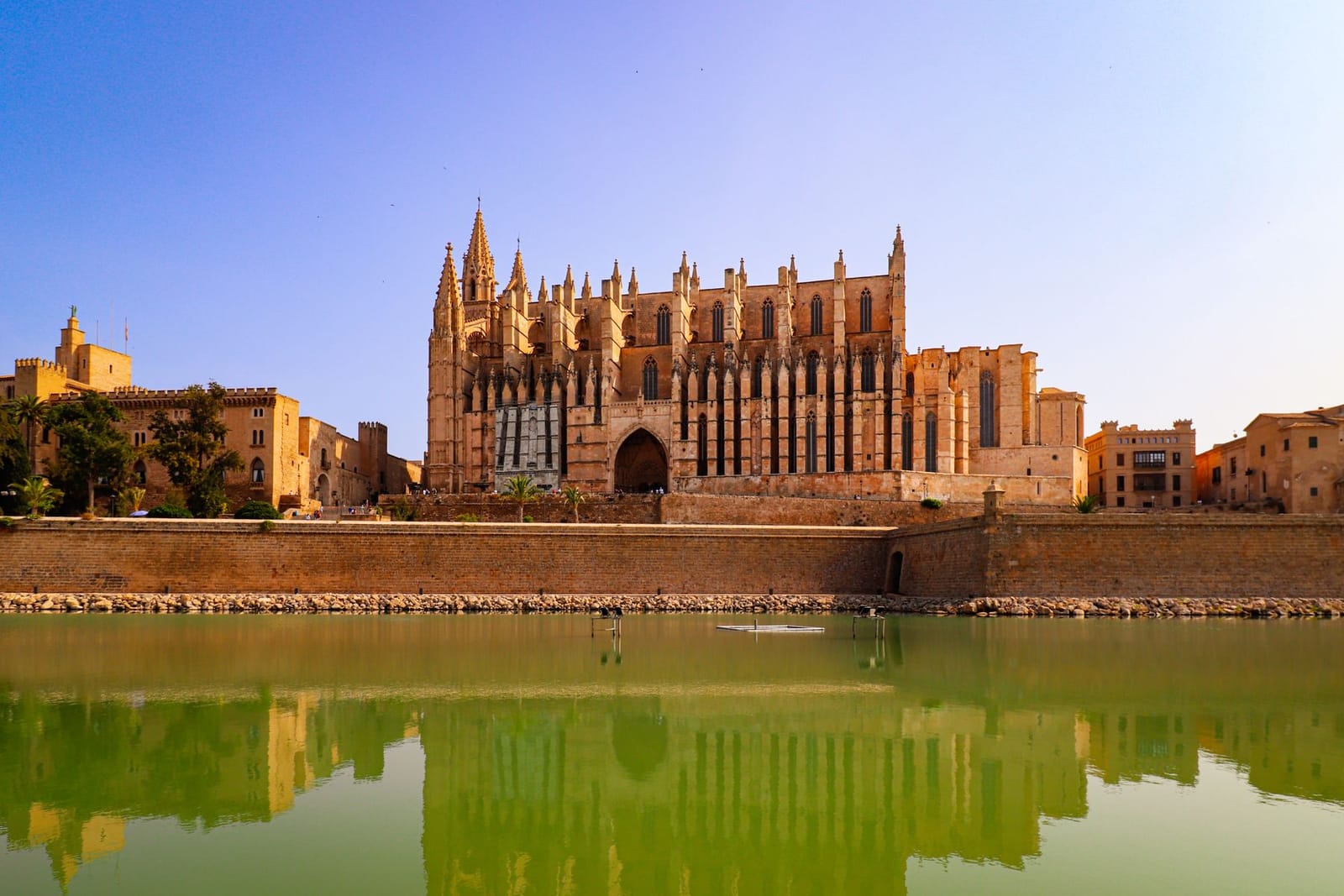
What to eat in Palma de Mallorca comes down to two instincts at once: a baking tradition built on lard-laminated pastry, and a harbour city's appetite for whatever the morning boats bring in. Start with an ensaïmada and a coffee, work through a market's fish counters by midday, and end at a bar built for standing with a vermouth in hand.
Palma's food identity sits apart from the rest of Spain: it answers to Catalan, mainland Spanish and North African influence at once, filtered through an island that grew its own pigs, almonds and citrus long before tourism arrived. The old town's cellers, the covered markets, and a new wave of counter-style bars all serve that same pantry in different registers, the same way a Basque burnt cheesecake or a Catalan pan con tomate signals a different Spanish region entirely.
Ensaïmada at Fornet de la Soca
A baking tradition built on lard-laminated pastry, and a harbour city's appetite for whatever the morning boats bring in.
The ensaïmada is Mallorca's signature pastry, a coiled, yeasted dough laminated with saïm, the local pork lard that gives it a shatter instead of a chew. Fornet de la Soca, at Plaça de Weyler 9 in the old town, has spent years reviving near-forgotten versions, including ones filled with pumpkin jam or apricot rather than the plain or cream-filled standards.
Go before midday: the savoury and filled versions tend to sell out by afternoon, and a fresh one eaten within the hour is a different pastry from a reheated one the next day.
Sobrassada de porc negre at Mercat de l'Olivar
Sobrassada, Mallorca's spreadable cured sausage, runs from everyday supermarket versions to sobrassada de porc negre, made with the island's black pig breed and prized for a richer, less fatty cure. The stalls at Mercat de l'Olivar, Plaça de l'Olivar 4, sell it by weight alongside the cheese and ham counters, and several vendors will let you taste before buying.
A log costs roughly €15–25 depending on cure and weight; ask for porc negre specifically, since it isn't always labelled apart from standard sobrassada.
Pa amb oli at Bar Bosch
Pa amb oli, bread rubbed with tomato and olive oil, is Mallorca's plainest dish and its most argued-over: islanders debate whether cheese, anchovy or ham belongs on top, or whether it needs anything at all. Bar Bosch, on Plaça Rei Joan Carles I, has served it since 1936 from a corner terrace that still fills with regulars at midday.
Order it alongside the bar's variados, small shared plates that function as a tasting menu of the counter rather than a formal starter course. Expect €10–15 for a light lunch for one.
Frit mallorquí at Bar Bosch
Frit mallorquí is an older dish than most of what's fashionable on the island: a fry of offal, potato, pepper and fennel, recorded as far back as the 14th-century Llibre de Sent Soví. Bar Bosch also serves it, usually in its milder lamb-and-vegetable form rather than the more assertive all-offal version found inland.
It's a dish that rewards asking what's in it before ordering, since versions vary more than almost anything else on a Mallorcan menu.
Arròs brut in the old town's cellers
Arròs brut, a loose, soupy rice with pork, chicken and whatever vegetables are in season, is a dish locals say is better inland than on the seafront, where restaurants lean toward lighter, more photogenic plates. The old cellers around Carrer de Sant Miquel and the Santa Eulàlia end of the old town still serve it from barrel-lined dining rooms built for exactly this kind of cooking.
Budget €15–20 for a generous bowl, usually served as a main rather than a starter.
Gató d'ametlla at Ca'n Joan de s'Aigo
Gató d'ametlla, a flourless almond cake, is usually served with almond ice cream rather than cream, a pairing that leans into the nuttiness instead of cutting it. Ca'n Joan de s'Aigo, Palma's oldest food business, has served it from its Carrer de Can Sanç address since the shop moved there in 1976, continuing a run that stretches back 325 years under the same family name.
The café opens from 8am to 9pm daily and also makes its own ice cream and horchata on site, so a slice of gató rarely arrives without a scoop alongside it.
Pinxos and a gilda at El Camino
El Camino, at Carrer de Can Brondo 4 near La Llotja, runs an open kitchen and a long counter rather than table service, built around small plates that change with what's good that day: courgette flower with goat cheese, mackerel adobo, a prawn tortilla. It is not strictly a pintxos bar, but the format rewards the same grazing approach.
It doesn't take walk-in reservations easily; arriving right at 13:00 on opening is the most reliable way in without a wait.
Vermut at La Rosa Vermutería
Vermouth hour is a fixture of Palma's week, and La Rosa Vermutería & Colmado, on Carrer de la Rosa near Plaça Weyler, pours more than fifty labels alongside its own house red vermouth. The bar's gilda, the skewered anchovy, olive and pickled pepper that originated in San Sebastián, is one of the more reliable orders alongside a glass poured over ice with a twist of orange.
Open daily from midday to midnight; weekend evenings draw a wait without a reservation.
Tasting menu at Marc Fosh
Marc Fosh, inside the Convent de la Missió hotel at Carrer de la Missió 7, is Palma's best-known fine-dining address, built around a single tasting menu rather than an à la carte choice. Dishes lean Mediterranean rather than overtly Mallorcan, though local ingredients, including the island's ensaïmada reworked as an ice cream, surface throughout, in a style closer to the technical cooking that took Etxebarri to the top of the World's 50 Best than to a seafront chiringuito.
The tasting menu runs from roughly €69 at lunch to around €139 in the evening, excluding wine pairing; the restaurant seats a small room, so book several days ahead.
Fusion tasting at De Tokio a Lima
De Tokio a Lima, overlooking Passeig del Born, runs a Japanese-Peruvian menu that's become one of Palma's more talked-about tables in the past few years: roasted octopus with a red mole, a 24-hour slow-cooked Iberian pork fillet. It's a newer kind of Palma dining, aimed more at residents and longer-stay visitors than at a single night in town.
Two people eating a full menu with wine should expect to spend from around €150.
Mallorcan kitchens keep their own version of the Spanish mainland's preserving habits, not far in spirit from a quince paste made the traditional way.
Markets, neighbourhoods and when to go
- Mercat de l'Olivar (Plaça de l'Olivar 4): the main working market, best for fish between 8am and 10am before the best catches sell out.
- Mercat de Santa Catalina: smaller and more geared to eating on the spot than shopping; good for a relaxed lunch rather than provisioning.
- Old town, around Plaça Santa Eulàlia: the traditional cellers and bodegas, cheapest plates in the centre.
- Sa Gerreria: neighbourhood bars and pinxos, mostly an evenings-only scene.
- La Llotja: sit-down tapas and seafood, busier and pricier on weekends.
- Portixol and Molinar: seafront fish restaurants, a short walk or bus ride east of the centre.
- Best months to go for market produce and mild weather: April–June and September–October, avoiding August's heat and peak crowds.
Frequently asked questions
Is Palma de Mallorca expensive to eat in? Not by Western European standards: a market lunch or bar plate runs €10–20, and even a tasting menu at a serious restaurant like Marc Fosh starts under €70 at lunch. Prices climb fast on the Passeig del Born, where tourist footfall is highest.
Is sobrassada eaten cooked or raw? Both. It's commonly spread raw on bread or toast, but it's also fried, stirred into sauces, or baked into pastries; the porc negre version is usually kept simple, spread thin to let the cure speak for itself.
What's the best time of day for an ensaïmada? Morning. Bakeries sell through their filled and savoury versions first, and a pastry bought fresh rarely matches one reheated later in the day.
Do I need to speak Spanish or Catalan to order well? No, but dish names are usually given in Catalan on menus even in Spanish-speaking service, so recognising a handful of terms, like pa amb oli or gató, helps more than fluency in either language.
Where to book first
For one meal that defines the island's cooking, book Marc Fosh, Carrer de la Missió 7, several days ahead for its tasting menu. For the market-to-counter version of the same food, go early to Mercat de l'Olivar, Plaça de l'Olivar 4, before the fish stalls thin out. And for the bar culture that frames both, end the day at La Rosa Vermutería, Carrer de la Rosa, for a vermouth and a gilda before dinner elsewhere.