Membrillo recipe: Spain's quince paste needs no pectin
Spain's autumn ritual turns quince and sugar into a firm, amber paste for the cheese board — no pectin, no gelatine, just patience at the stove.
Membrillo, Spain's quince paste, needs only two ingredients in equal weight and the better part of an hour at the stove to set firm, glossy and sliceable without a scrap of added pectin or gelatine.
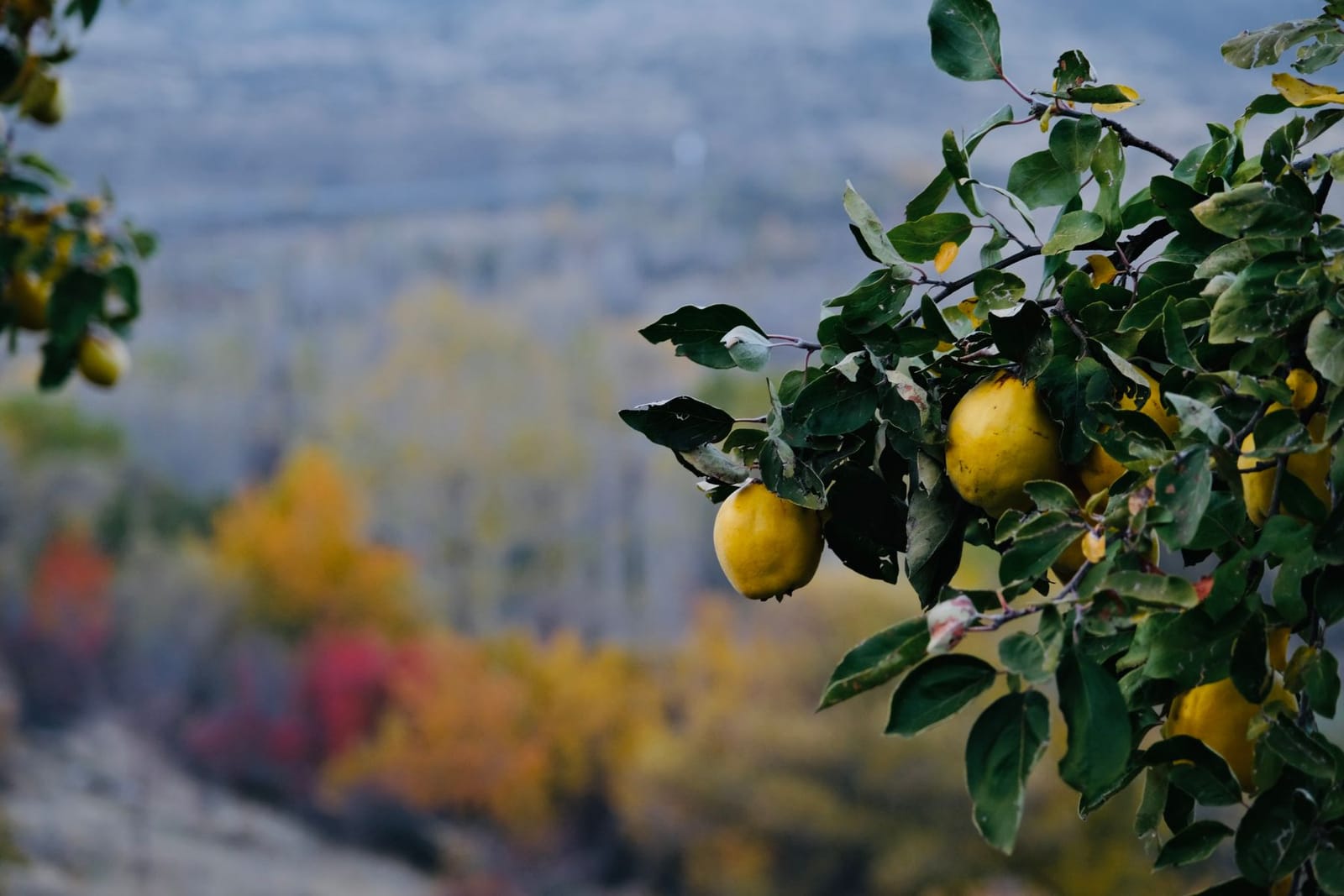
Quince ripens across Spain from October into November, filling markets with a fruit too hard and astringent to eat raw. Cooking is what transforms it: the flesh softens, the tannins mellow, and the pulp turns from pale cream to a deep amber-red. The paste that results, dulce de membrillo, has been made this way in Spanish kitchens for generations and is the standard partner to a wedge of Manchego.
Ingredients
The colour change, not the clock, is the real sign of progress.
- 1.5 kg quince (4-5 fruit), unpeeled
- About 900 g granulated sugar (see method for exact amount)
- Juice of 1 lemon
- A pinch of salt
Method
- Rub the grey down off the quinces under running water, then quarter them, cut out the cores and seeds, and roughly chop the rest, skin included. The skin and core area hold much of the fruit's natural pectin, which is what will set the paste later, so nothing gets peeled away.
- Put the chopped quince in a pot, cover with water, and simmer for 25-35 minutes until a knife slides in without resistance. Raw quince is too dense and tannic to purée straight away; cooking breaks down the cell walls and softens the texture enough to blend.
- Drain well and purée the quince until smooth. Weigh the purée, then measure out sugar equal to that weight, gram for gram. This 1:1 ratio is what makes the paste set firm and keeps it stable for months without any added setting agent.
- Return the purée to a wide, heavy-based pot with the sugar, lemon juice and salt. Cook over low-medium heat, stirring every minute or so. The mixture is thick enough to scorch on the bottom within seconds if left alone, so constant movement is not optional.
- Keep cooking for 45-75 minutes. The paste will darken steadily from pale gold to a deep amber-red as the fruit's tannins and sugars react under heat; that colour change, not the clock, is the real sign of progress. It is ready when a spoon dragged across the base leaves a clear trail before the paste slides back.
- Pour the hot paste into a lined tray or mould, spread it level, and leave it uncovered at room temperature for 24-48 hours until it is firm enough to hold a clean cut. Wrapped and refrigerated, it keeps for several months.
Serving membrillo
The classic pairing is a thin slice of membrillo laid over Manchego, the sweetness cutting through the cheese's salt and bite. It also sits well with other firm sheep's or goat's cheeses, on warm toast, or alongside cured ham. For a variation, cook a split vanilla pod or a strip of orange zest into the paste and remove it before pouring.
Why does membrillo need no pectin? Quince skin and core are naturally so rich in pectin that matching the pulp with sugar, gram for gram, is enough to set it firm on its own.