What to eat in Prague: 12 dishes and where to find them
From svíčková at a century-old pub to natural Moravian wine in Malá Strana, here is what actually belongs on a plate in the Czech capital.
What to eat in Prague starts with a plate of svíčková, not a trdelník. The Czech capital runs on dumplings, dark lager and slow-cooked sauces, with a newer wave of natural wine and small-plate bistros filling in around the pub classics.
Prague's kitchen is built on Bohemian farmhouse cooking: pork, beef and root vegetables, thickened sauces, and bread or potato dumplings that mop them up. It sits in the same Central European pub tradition as Vienna and Budapest, though the sauces lean more on caraway and allspice than paprika. Beer is not a side order here; pubs called hospody set the kitchen's pace, and a 2026 Michelin Bib Gourmand now sits a few streets from the Old Town tourist menus, on a dumpling and tankové-beer scene locals never stopped treating as serious food.
Svíčková at Lokál Dlouhááá, Old Town
Order the guláš where the dumpling count is one, not a side of rice.
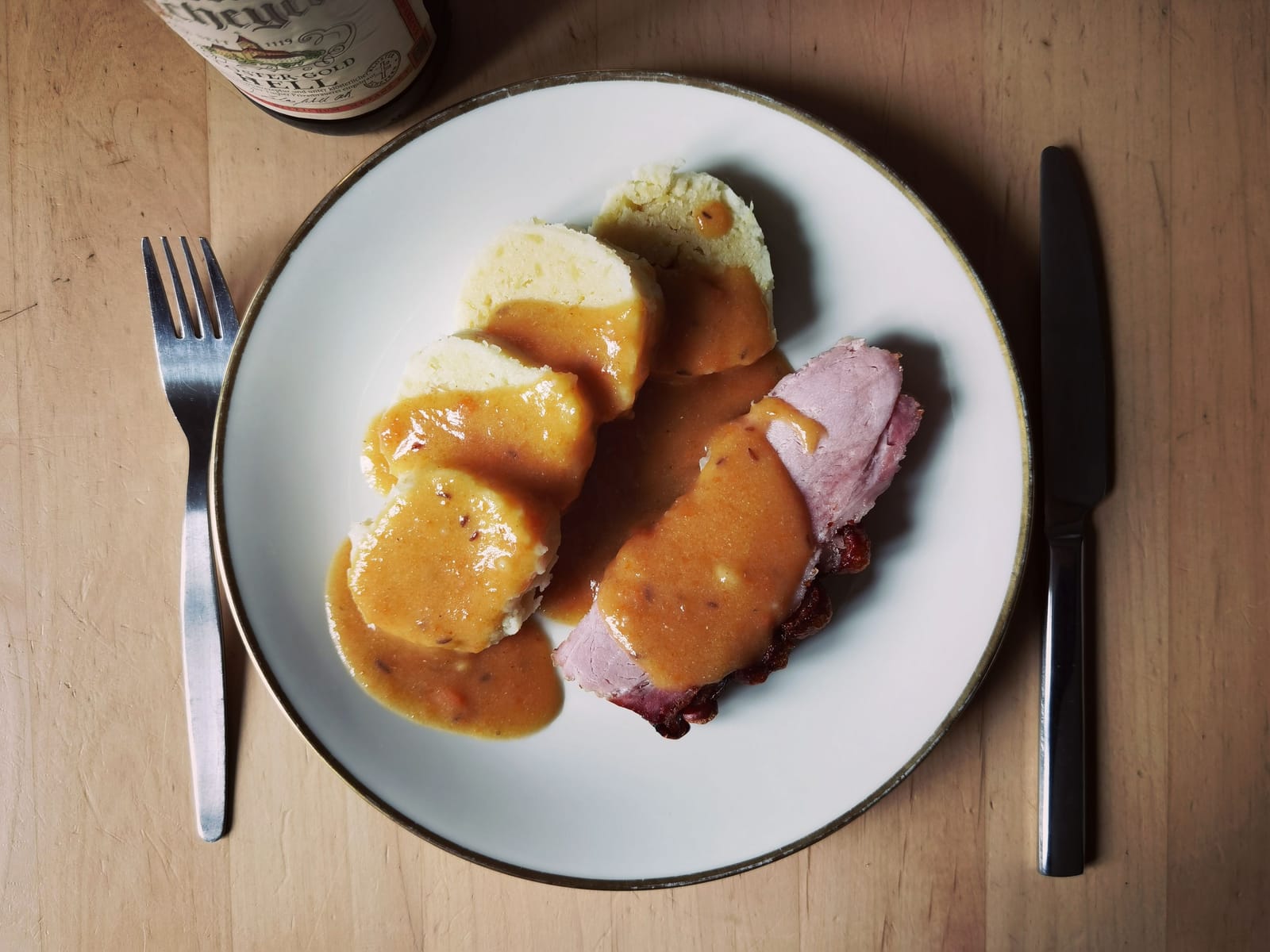
Svíčková na smetaně is sirloin braised with root vegetables, strained into a cream sauce the colour of pale caramel, then ladled over bread dumplings with a spoon of cranberry sauce and a slice of lemon on top. Done right, the sauce should taste of carrot and allspice before it tastes of cream.
Lokál Dlouhááá, the Ambiente group's pub at Dlouhá 33, pours its svíčková with unfiltered tankové Pilsner Urquell straight from the tank. A plate runs roughly 320–450 CZK (€13–19). Go on a weekday evening or book ahead; the dining room fills fast.
Guláš and tatarák at Výčep, Vinohrady
Czech guláš is drier and beefier than its Hungarian cousin, built on onions cooked down to a near-paste rather than a paprika-forward broth. At Výčep, a Vinohrady pub that has held a Michelin Bib Gourmand since 2021, the guláš comes with a single bread dumpling for scooping, not rice.
Start with tatarák instead if the kitchen still has it on the board: raw beef mixed tableside with egg yolk, garlic and seasoning, served with fried bread. It is standard pub fare here, not a delicacy to be nervous about.
Vepřo-knedlo-zelo, the everyday plate
Roast pork, bread or potato dumplings and braised sauerkraut is the dish most Czechs grew up on, and it is the one to order at a neighbourhood hospoda rather than a restaurant built for visitors. The pork is slow-roasted with caraway until the skin crisps, the sauerkraut is cooked down with a little sugar and fat rather than served raw, and the dumplings exist mainly to be dragged through the gravy.
Look for it on the chalkboard daily-menu boards (denní menu) that most pubs run at lunch, usually cheaper than the printed menu.
Nakládaný hermelín, the beer snack
Nakládaný hermelín is a wheel of Hermelín, the Czech take on Camembert, marinated for days in oil with garlic, onion, chilli flakes and whole peppercorns until it turns pliable and sharp. It is the standard order alongside a pint rather than a starter on its own, and Lokál Dlouhááá's version, served with dark bread, is one of the better-known in the centre.
Chlebíčky at Sisters Bistro, Old Town
Chlebíčky are open-faced sandwiches on a disc of baguette, dating to a Prague delicatessen tradition from the early 20th century: potato salad or egg mayonnaise as a base, then ham, salami, smoked salmon, pickles or hard-boiled egg arranged on top like a tiny still life. Sisters Bistro, at Dlouhá 39 in the gourmet arcade, changes its selection daily and is the reference point locals point visitors to first.
They are built to be eaten in two bites standing up, originally office lunch food, and still priced that way: most run 35–55 CZK (€1.50–2.30) each.
Smažený sýr, the fried-cheese plate
A thick slab of Edam or Hermelín, breaded and deep-fried until the crust shatters and the inside turns molten, served with boiled potatoes, tartare sauce and a wedge of lemon. It shows up on pub menus as a main course, not a snack, and in a bread roll from street vendors around Wenceslas Square for something faster. Either way, order it hot; it does not reheat.
Trdelník, with a caveat
Trdelník, the cinnamon-sugar chimney cake rolled over hot coals and sold warm from Old Town Square stands, is not actually a Prague dish. Its roots trace to Hungary and Slovakia, and it only became a fixture here in the past two decades, pushed by tourist-street vendors rather than Czech kitchens. It is worth trying once for the smell and the spectacle, less so as a stand-in for local food; a stall near Můstek metro station does a version filled with soft ice cream if you want the modern take rather than the traditional one.
Dark lager at U Fleků, since 1499
U Fleků, at Křemencova 11 in Nové Město, has brewed its own 13-degree dark lager on the same site since 1499, making it one of the oldest working breweries in the country. For most of that history it made a single beer; in 2026 it added a seasonal pale lager for the first time in over a century, though the dark stays the house pour. The beer hall seats hundreds under vaulted ceilings and murals, and it is as much a sightseeing stop as a drinking one, so expect tour groups alongside regulars.
Czech wine at Vinograf, Malá Strana
Prague's wine scene has grown quickly around small Czech and Moravian producers rather than imports, and Vinograf, open in Malá Strana near Charles Bridge since 2009, was one of the first bars to build a list entirely around them. It is a useful stop for anyone assuming Czech drinking starts and ends with beer: Moravian Riesling and Pálava alongside cheese and charcuterie boards, with staff who will talk through what is in the glass.
Markets, neighbourhoods and when to go
- Náplavka farmers' market, Rašínovo nábřeží, Prague 2 — Saturdays, roughly February to December, 8am–2pm; produce, cheese and street food stalls along the Vltava embankment, best early before the crowds.
- Havelské tržiště (Havel Market), Old Town — a daily fruit, vegetable and souvenir market that has run since the 13th century, useful for fresh produce rather than meals.
- Vinohrady — the neighbourhood locals point to for a quieter, less touristed version of the pub and wine-bar scene found in the centre.
- Žižkov — younger, cheaper, and where most of the newer Bib Gourmand-level pubs have opened.
- Avoid the restaurants directly on Old Town Square; menus there are priced and built for one-visit tourist traffic rather than repeat local custom.
Frequently asked questions
Is Prague expensive to eat in? Not by Western European standards. A pub main with a beer runs roughly 250–450 CZK (€10–19); a wine bar glass and snack adds another 150–250 CZK. Restaurants on Old Town Square charge well above both.
Do I need to book ahead? For Lokál Dlouhááá and Výčep, yes, especially for dinner; both fill with locals as much as visitors. Daily-menu lunch spots rarely take reservations and turn tables quickly instead.
Is there vegetarian Czech food? Less than in most Western European capitals, though most pubs now run at least one vegetarian version of a classic, and Maitrea near Old Town Square builds a full menu of plant-based takes on Czech staples, including a vegetarian svíčková.
Is tap water safe to drink? Yes; Prague's tap water meets EU standards, and asking for it in a pub is normal rather than unusual.
Where to book first
Lokál Dlouhááá, Dlouhá 33, Prague 1 — for svíčková and nakládaný hermelín with tank beer.
Výčep, Korunní 92, Vinohrady — for guláš and tatarák at a Bib Gourmand pub since 2021.
Sisters Bistro, Dlouhá 39, Prague 1 — for chlebíčky, best eaten standing up with a coffee before 10am.
For the full list of where to book, from the five starred dining rooms to the Bib Gourmand pubs, see our best restaurants in Prague.