Quince clafoutis recipe with chestnut ice cream
Daniel Southern of Melbourne's Comme Kitchen pairs a French batter with slow-poached quince and a custard-rich chestnut ice cream, built for either hemisphere's autumn.
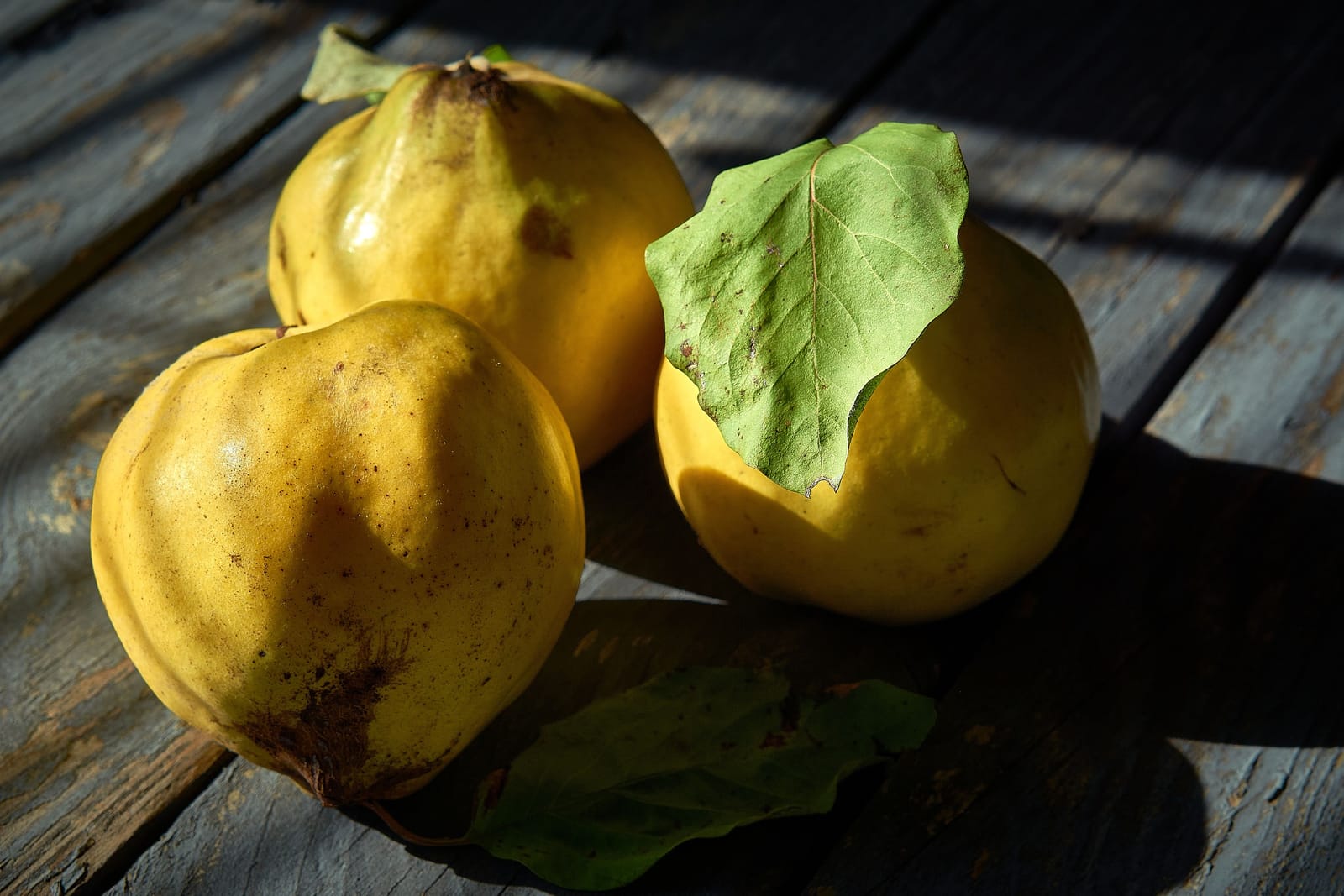
Quince clafoutis is Daniel Southern's way of putting a French batter to work on an Australian autumn fruit, and the whole dish hinges on patience: the quince spends four unhurried hours on the stove before it ever meets the oven.
Southern runs the kitchen at Comme Kitchen in Melbourne, and he keeps quince on the menu for as long as the season allows. He calls it one of the most overlooked fruits of the cooler months, mostly because it only turns up at specialist greengrocers and looks, raw, like nothing you'd want to eat. Cooked slowly, it turns a deep garnet and gives up a honeyed, floral flavour that apples and pears don't have.
The fruit's two growing windows work in AMUSE's favour: quince and fresh chestnuts are in season in the Southern Hemisphere's autumn and winter, and again right now across Europe and North America, as the Northern Hemisphere moves into November. Whichever side of the equator the kitchen is on, this is the moment to make it.
Quince is one of the unsung heroes of autumn and winter, and I always find room for it on the menu once it's in season.
Ingredients
- 2 large quince (about 400 g each), quartered, peel and cores reserved
- 650 g caster sugar, divided
- 1 vanilla bean, split and seeds scraped, divided
- 1 lemon, juiced, divided
- 1 litre water
- 1½ tbsp plain flour
- 40 g almond meal
- 2 large eggs
- 4 egg yolks
- 220 g mascarpone
- Butter, for the moulds
- 400 ml whole milk
- 240 ml thickened cream
- 20 ml brandy
- 8 egg yolks
- 80 g caster sugar
- 100 g sweetened chestnut purée
Method
- Put the quince quarters in a saucepan with their peel and cores (the pith holds pectin that deepens the colour and body of the syrup), 650 g sugar, half the vanilla seeds, half the lemon juice and the water. Bring to the boil, then cover with a disc of baking paper so the fruit stays submerged, and simmer on the lowest heat for 3-4 hours. A gentle, barely-moving simmer is what turns the quince a deep red without breaking it apart; boiled hard, it collapses into mush long before the colour develops. Cool in the liquid, then strain and chill.
- Warm the milk, cream and the rest of the vanilla until just below a simmer, then take it off the heat and stir in the brandy, which would burn off its aroma if added over direct heat. Infuse for 30 minutes.
- Whisk the 8 egg yolks with 80 g sugar until pale, then whisk in the chestnut purée and the warm milk. Return to a clean pan and stir constantly over low heat until the custard coats the back of a spoon; rushing this with higher heat scrambles the yolks instead of thickening them. Strain into a bowl set over ice to stop the cooking fast, then churn in an ice-cream machine once cold.
- Heat the oven to 230°C. Whisk the flour, almond meal, remaining sugar, eggs, extra yolks, mascarpone and remaining lemon juice until smooth, then pass through a sieve and rest for an hour at room temperature, which lets the flour hydrate so the batter rises evenly instead of in patches.
- Butter six 125 ml moulds, divide the batter between them and top with sliced poached quince. Bake for 7-9 minutes, until puffed, golden and springy in the centre. The high heat is what gives clafoutis its lift; rest the moulds for a minute or two before turning out, and serve warm with the chestnut ice cream.
What to drink, and what to save for later
Southern suggests a sweet, delicate muscat alongside it, something like a Beaumes-de-Venise, which has enough weight to stand up to the ice cream without fighting the quince's perfume.
Can pears stand in for quince? Yes, though they cook far faster — check a pear clafoutis after 5 minutes rather than waiting for the full 7-9, since pears soften and colour long before quince does.
Poach more quince than the recipe needs; it keeps in its syrup in the fridge for weeks, and leftover fruit, simmered down further with its liquid, sets into a firm paste worth keeping around for a cheeseboard. Our slow-poached quince tart uses the same base technique if the fruit is still going once the clafoutis is gone.