Armenian produce gets duty-free EU access after Russian ban
Brussels lifts duties on around 80% of Armenian exports for two years, after Moscow shut its market to the country's fruit, vegetables, brandy and mineral water.
Armenian produce will enter the European Union free of import duties for two years after the Council of the EU formally adopted temporary trade measures on 24 September. The package, a response to Russia's ban on Armenian fruit and vegetables, covers around 80% of what Armenia sells to the bloc.
The regulation still has to be signed and published in the EU's Official Journal; it takes effect the following day. Some agricultural lines are duty-free only within tariff quotas, and a safeguard clause allows Brussels to step in if Armenian imports hurt European growers. The European Parliament approved the text on 15 September with 583 votes in favour and no amendments.
Helen McEntee, Ireland's minister for foreign affairs and trade, said the EU was "stepping up our support for Armenia and its people, who have clearly chosen a pro-European path in spite of foreign pressures". The Council presents the move as support for an economy hit by the Russian restrictions and sits alongside the partnership agreement (CEPA) that already governs EU-Armenia trade.
Two years of open doors will test Armenian logistics as much as Armenian fruit.
Armenian produce loses its main buyer
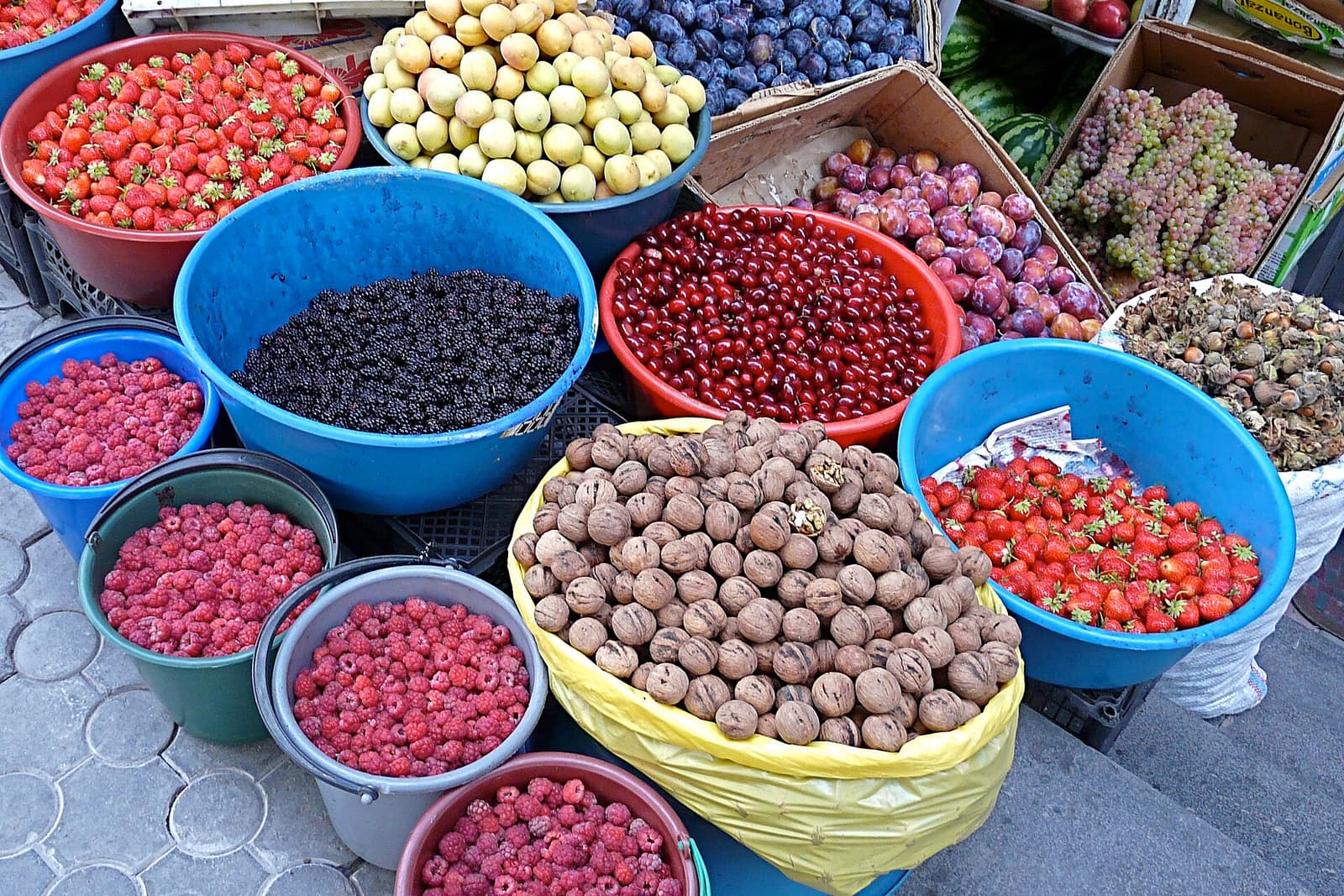
Russia's plant-health watchdog, Rosselkhoznadzor, restricted Armenian tomatoes, cucumbers, peppers, fresh herbs and strawberries from 30 May, citing a growing number of violations. Within days it added apricots, cherries, plums, grapes, apples, potatoes and dried fruit, and on 12 June it barred all Armenian plant products. The consumer regulator, Rospotrebnadzor, separately suspended sales from three wine and brandy producers and blocked Jermuk mineral water, weeks before Armenia's parliamentary elections.
The exposure was close to total. According to FreshPlaza, Russia took 95% of Armenia's fresh fruit and vegetable exports in 2025, worth roughly €133 million. Peppers were the growth story: shipments to Russia rose from €160,000 in 2016 to €24.5 million last year.
A tomato greenhouse at 2,000 metres
Some growers are already turning west. Green Solutions, founded in 2021 near Lake Sevan, runs 11 hectares of greenhouse tomatoes at almost 2,000 metres and plans to reach 50. Co-owner Hakob Azaryan told FreshPlaza that the closure of the Russian market was "a shock for such a young business". The company, which employs about 170 people, now targets Germany, France, Austria and Switzerland, as well as Georgia, Ukraine and the Gulf.
Transport links, cold-chain capacity and EU food-safety rules make Europe a harder market than Russia was, FreshPlaza notes, and Armenian tomatoes will meet established Mediterranean suppliers, including Moroccan growers already short of water in Souss-Massa.
The window is two years. For the apricot, whose botanical name, Prunus armeniaca, points to Armenia, next summer's harvest will be the first full test of whether the fruit can travel west as easily as it once went north.
Sources
- FreshPlaza — Armenian tomato grower targets Europe following Russian ban ·
- Armenpress — EU Council adopts temporary trade-liberalization measures for Armenia ·
- FreshPlaza — Russia shuts the door on Armenian fresh produce, EU comes to the rescue ·
- The Moscow Times — From cognac to apricots: these Armenian products are now off-limits in Russia ·