Bossche bol is now officially intangible heritage
The Dutch Centre for Intangible Heritage has added the chocolate bun from Den Bosch to the national inventory, next to vlaai and worstenbroodje. The society behind the bid now has UNESCO in mind.
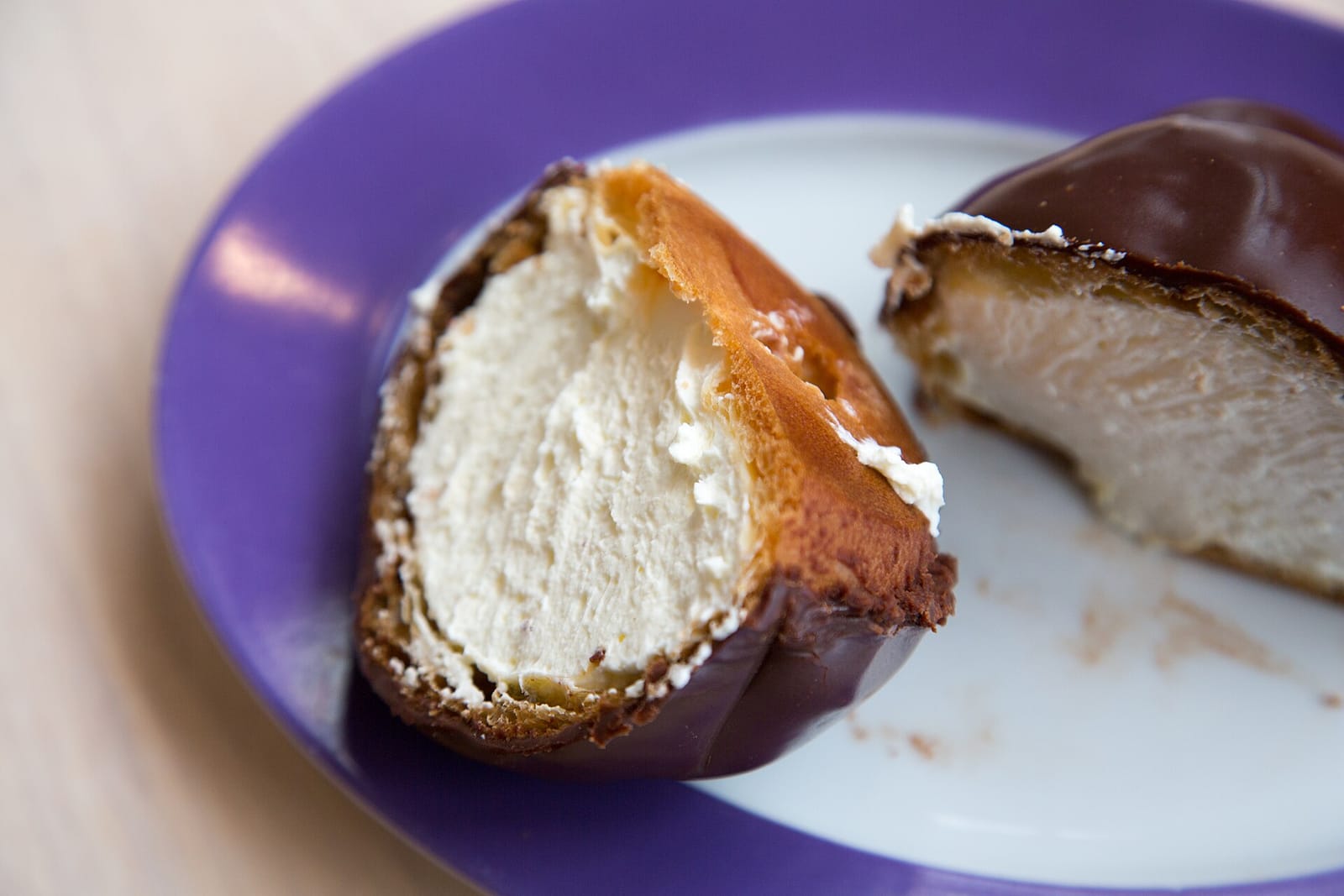
The Bossche bol has been on the Dutch Inventory of Intangible Cultural Heritage since 2 November. The Dutch Centre for Intangible Heritage (KIEN) approved an application from the Stichting Genotschap van de Bossche Chocoladebol, a society that now wants to take the pastry from 's-Hertogenbosch towards a UNESCO list.
The bol joins Limburg vlaai, the Groningen eierbal and the Brabant worstenbroodje. The application was filed early this year, partly on behalf of many locals, Dtv Nieuws reported on 31 October.
The foundation was set up on 23 February 2026 by five locals, among them Rob van de Laar and Jules Lauwerijssen, broadcaster De Bossche Omroep writes. Van de Laar researched the history of the bol; Lauwerijssen started the Bossche bol museum. ‘Wherever you go in the Netherlands, everyone knows the bol,’ he told the NOS in 2024.
Wherever you go in the Netherlands, everyone knows the bol.
How the Bossche bol began
The city heritage office names pastry baker Joseph Johannes Lambermont as its inventor. He was already advertising a chocolate bun in 1903, then filled with yellow pastry cream. On 22 February 1924 he announced in the Provinciale Noordbrabantsche en 's-Hertogenbossche Courant that from the next day he would also sell ‘chocolate buns with pure whipped-cream filling’, at twelve cents each according to the NOS. From 1934 he advertised only that version.
His shop on the Visstraat no longer exists. The basic recipe stayed: a choux bun filled with whipped cream and coated in fondant chocolate. In the city it is still called the sjeklaode bol; elsewhere it became the Bossche bol. Other bakers were also selling chocolate buns with whipped cream in 1924, Beleef.nl points out.
Where to eat a Bossche bol in Den Bosch
For most locals, Jan de Groot on the Stationsweg is the benchmark, according to Erfgoed 's-Hertogenbosch. The queue regularly runs out of the door. The shop has a lunchroom with high tea. Bakkerij Royal is on the Visstraat, close to where Lambermont started in 1924, and Tonnie de Groot bakes on the Van Noremborghstraat.
In a blind tasting by Omroep Brabant in October 2025, eleven tasters each got a quarter bol from Bakkerij Smaak, Korengoud De Echte Bakker, Royal and Jan de Groot. They judged the chocolate, the firmness of the cream and the pastry; Jan de Groot won on points. For another Dutch classic, read our recipe for the tall Amsterdam appeltaart.
According to Beleef.nl, the status covers the tradition around the Bossche bol: bakers passing on the craft, locals treating each other, and visitors ordering one with coffee. A place on a UNESCO list requires a separate procedure. Until then, the bol remains what it was in 1924: a choux bun with whipped cream, just no longer for twelve cents.