Vineyard resting: AWRI sets spring rules for Australian growers
A growth regulator sprayed at fruit set strips the crop from vines nobody will buy from, and South Australia pays A$40 a hectare towards it after the smallest crush since 2000.
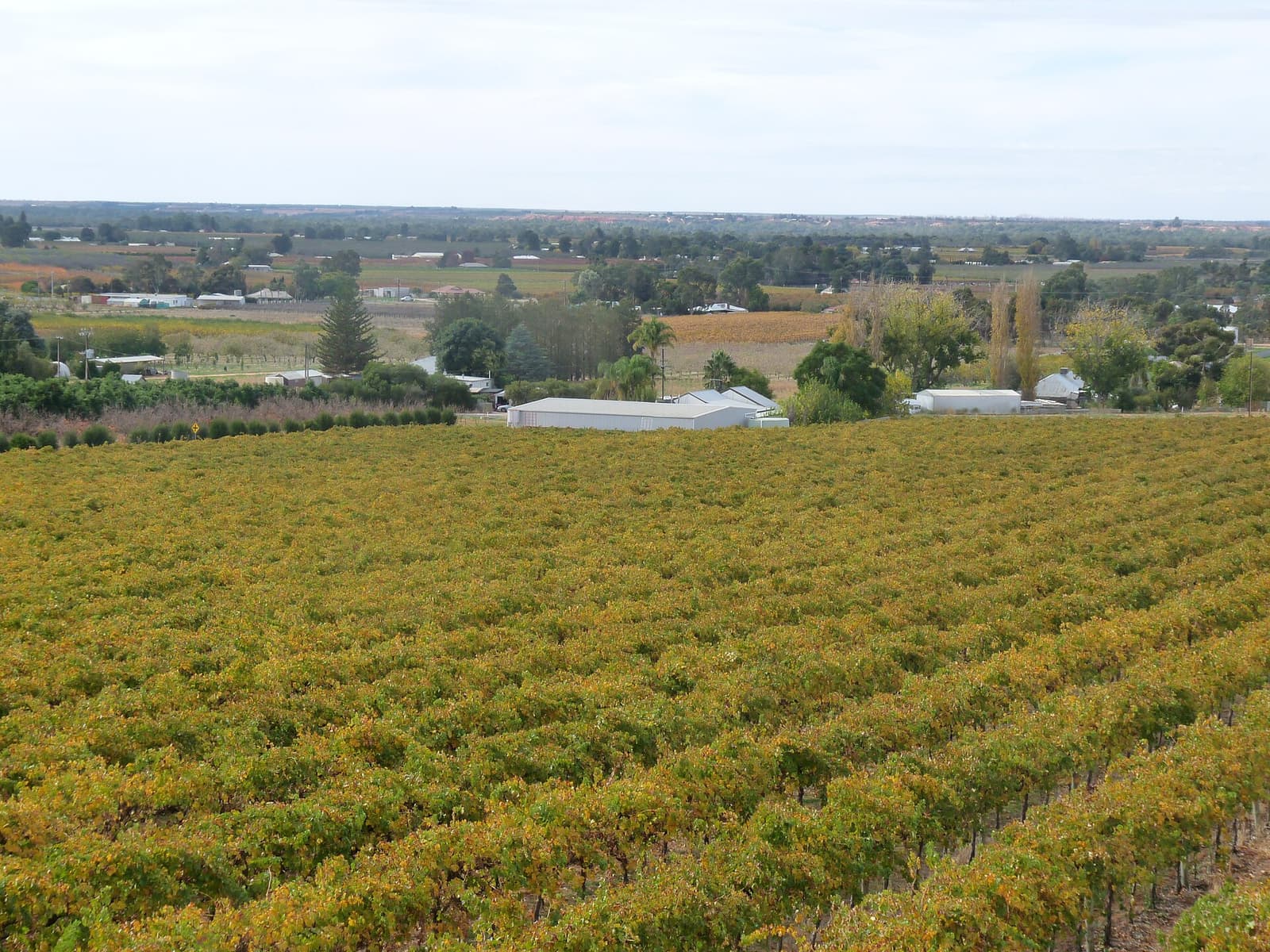
Australian growers have fresh rules for vineyard resting: on 28 September the Australian Wine Research Institute (AWRI) reissued its guidance on using ethephon to strip young berries from vines whose fruit nobody will buy this vintage.
The timing follows the smallest national crush since 2000, 1.27 million tonnes according to Wine Australia, and the A$109m rescue package for South Australia's wine industry announced on 18 September, most of it loans to pull out unprofitable vines. Resting is the cheaper, reversible option: the vine stays in the ground but carries no crop for a season.
How vineyard resting with ethephon works
A rested vine is a bet that red wine demand comes back before the grower gives up.
Ethephon is a plant growth regulator. Sprayed in spring, it makes undeveloped berries fall from the bunch stem, so growers can cut water, fertiliser and sprays and skip harvest costs. The AWRI places the window between E-L 25, when 80% of the flower caps have fallen, and E-L 27, fruit set with berries above 2 mm. Trials by the South Australian Research and Development Institute (SARDI) on Shiraz in the Riverland in 2023 and 2025 got the best results at E-L 27.
The rules are strict: one or two applications at least seven days apart, no alkaline water or copper fungicides in the tank, wind between 3 and 20 km/h, and no spraying if heavy rain is forecast within three days. Treated vines cannot be grazed or cut for stock feed. Use is authorised nationwide under permit PER94008 of the Australian Pesticides and Veterinary Medicines Authority, valid until 31 July 2030.
SARDI found minimal effect on yields the following year and, according to the state and federal governments, no detectable residues in harvested fruit. "Resting vines prevents waste of unharvested fruit in vineyards and mitigates risks with associated pest and disease pressures," South Australia's primary industries minister, Clare Scriven, said in August.
A rebate for growers without a buyer
South Australia pays A$40 a hectare, excluding GST, towards ethephon bought between 1 July 2026 and 31 January 2027, for up to 1,000 hectares per business. It is the fourth round of the Vineyard Resting Rebate. Growers who do not expect to sell their fruit can save up to A$2,000 a hectare in inputs, water and management, according to the programme.
The market explains the demand. Red grape intake fell 29% in 2026 and white 9%, and Chardonnay overtook Shiraz as the leading variety for the first time in 20 years, Wine Australia reported in July. South Australia alone has 1,440 hectares fewer vines than a year earlier.
Portugal runs the same arithmetic by paying Douro growers to leave grapes on the vine. In Australia the bet is that a rested vine costs less to keep than to replant once red wine demand returns, if it does.
Sources
- The Australian Wine Research Institute (AWRI) – Agrochemical update: how to rest vineyards with ethephon ·
- InDaily – Govt stumps up millions to help pull out SA vines ·
- Winetitles – Vineyard Resting Rebate to launch for a fourth time in South Australia ·
- ABC News – Wine Australia National Vintage Report 2026 ·