Olio nuovo bruschetta recipe: Tuscany's first-press toast
This olio nuovo bruschetta recipe holds only bread, garlic and the green, peppery first oil of the harvest — a dish built entirely around one ingredient tasting exactly like itself.
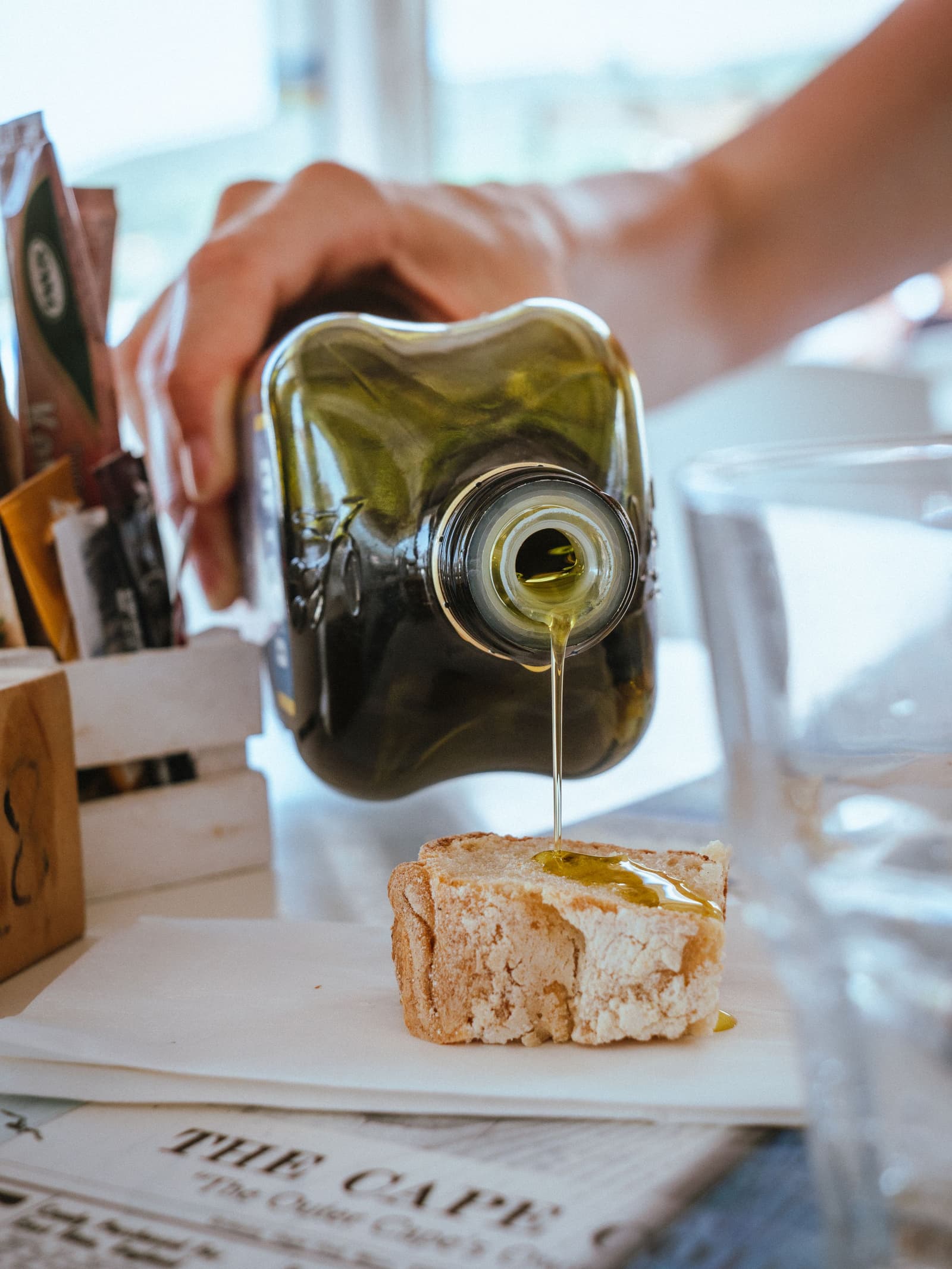
This olio nuovo bruschetta recipe is barely a recipe at all: toasted bread, a rubbed clove of garlic, salt, and as much freshly pressed olive oil as the crust will hold. In Tuscany and Umbria it is how growers have always judged the first oil of the season, poured cold and green straight from the frantoio.
The timing matters more than the technique. Olio nuovo is oil pressed within days of picking, before it has had time to settle or mellow, which is why it tastes sharper, grassier and more bitter than the bottle most people cook with. Italy's early-harvest numbers are already moving this year — national output is up 31% to 325,000 tonnes — which means more mills than usual will have new oil ready to pour by mid-October.
Ingredients
The oil is the point of the dish, not a finishing touch.
- 4 thick slices day-old rustic or sourdough bread
- 1 garlic clove, peeled and halved
- 120 ml freshly pressed extra virgin olive oil (olio nuovo)
- Flaky sea salt, to taste
- Freshly cracked black pepper, to taste
- Pinch of dried chilli flakes (optional)
Method
- Toast the bread over embers, on a ridged pan or under a hot grill until the crust blisters and the crumb dries out slightly — a drier crumb soaks up oil instead of turning soggy under it.
- While the toast is still warm, rub the cut side of the garlic firmly over one face of each slice. The warmth of the bread draws out the garlic's oils far more than rubbing it cold.
- Set the toasts on a plate and pour the olio nuovo on generously and unevenly, letting it pool in the low spots. The oil is the point of the dish, not a finishing touch, so resist measuring it out thinly.
- Finish with a pinch of flaky salt, a crack of pepper and the chilli if using, then eat at once, while the bread is still warm and the oil is cold from the mill — the contrast is half the tradition.
A dish with a two-month window
Olio nuovo is not meant to keep. Its aroma and peppery bite fade within weeks as the oil settles and the sediment that carries most of its flavour drops out, so growers and restaurants alike race to use it while it is loud rather than let it become simply good olive oil. Cannellini beans dressed the same way, or a plate of Castelmagno risotto finished with a final spoonful raw, follow the same logic.
Pour whatever is left over a young Sangiovese-based red rather than a bottle built for ageing; both are at their most expressive within the same few weeks.
Can regular olive oil replace olio nuovo here? It will still taste fine, but the dish loses its point — this recipe exists to showcase the harvest's first, sharpest pressing, not to dress bread with whatever is already in the pantry.