Quince tarte Tatin recipe, France's autumn upside-down tart
This quince tarte Tatin recipe poaches the fruit first, then reduces the syrup to caramel in the pan — the technique that turns hard, pale quince tender and rose-pink under puff pastry.
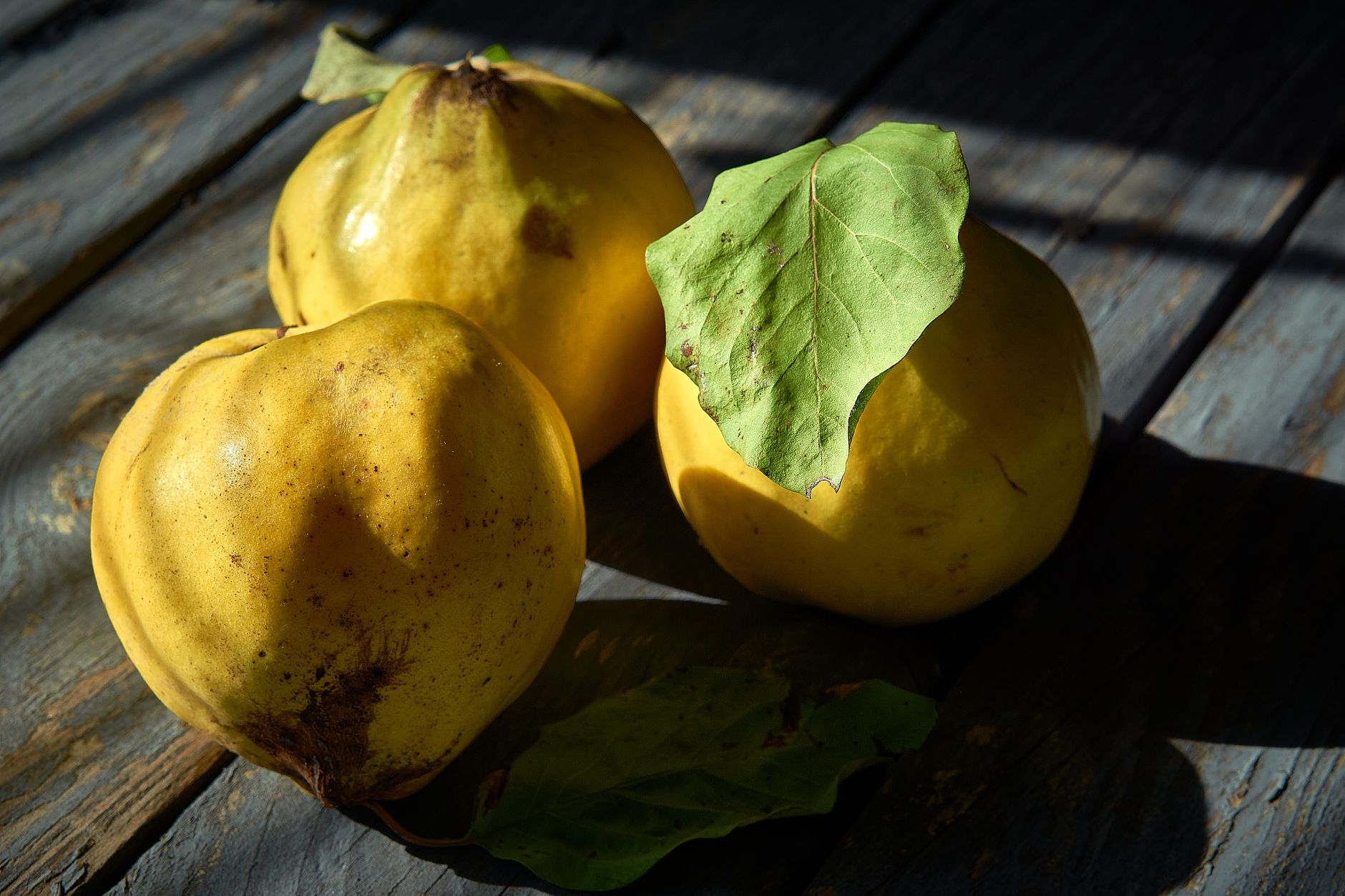
Tarte Tatin aux coings is the quince version of France's upside-down caramelized tart, invented by accident at the Hôtel Tatin in the Sologne — the technical point is that the fruit is poached first, since raw quince is rock-hard and needs long, gentle heat to turn tender and rose-pink before it ever meets the oven.
Pastry chef David Lebovitz, based in Paris, publishes a quince version built the same way as the original apple tatin: fruit and syrup reduced to caramel in the pan, then sealed under pastry and inverted. Unlike apple, quince cannot simply be sliced raw into a tatin — its dense flesh needs the poaching step to soften and develop the deep color that makes this dessert distinctive.
Ingredients
Raw quince is rock-hard; only a long, gentle poach turns it tender enough for caramel.
- 1 kg quince (about 4 medium), peeled, cored and quartered — peels and cores reserved
- 700 ml water
- 200 g sugar
- 1 vanilla pod, split, or 1 tsp vanilla extract
- Juice of 1/2 lemon
- 320 g all-butter puff pastry, chilled
- 20 g unsalted butter, for the pan
Method
- Tie the reserved quince peels and cores in a piece of muslin. Simmer them with the quartered quince, water, sugar, vanilla and lemon juice for 25-30 minutes, until a knife slides in easily. Quince is rock-hard and astringent raw; the peels add pectin and the slow simmer is what turns the flesh tender and rose-pink.
- Lift out the quince and discard the muslin bag. Strain the poaching liquid into a 24 cm ovenproof tatin pan or heavy skillet.
- Reduce the liquid over medium heat, uncovered, for 15-20 minutes, until syrupy and just turning amber. This concentrates the sugars into a light caramel that will lacquer the fruit and let the tart release cleanly once inverted.
- Off the heat, pack the quince quarters tightly into the caramel, rounded side down. Tight packing matters: any gaps will collapse once the tart is turned out.
- Roll the pastry into a circle 2 cm wider than the pan and drape it over the fruit, tucking the edges down inside the rim rather than crimping them. Tucked pastry can shrink slightly as it bakes without pulling away from the fruit.
- Bake at 200°C (180°C fan) for 30-35 minutes, until the pastry is deep golden and puffed. Rest 5 minutes, then invert onto a serving plate in one confident motion — the short rest lets the caramel set just enough to hold its shape without gluing to the pan.
Serving
Serve the tart warm, not hot, so the caramel firms slightly; crème fraîche cuts its sweetness better than cream. It keeps at room temperature the same day, though the pastry softens by the next.
Quince and pear share a season and, cooked, a texture, so this sits well on a menu beside a poached pear in Port for contrast — one dessert built on caramel, the other on wine.