Georgia wine harvest to fall just short of 2025's record
Grapes must now hit 17% sugar to qualify as standard quality, as the state tightens pricing rules on what could be Georgia's second-largest harvest on record.
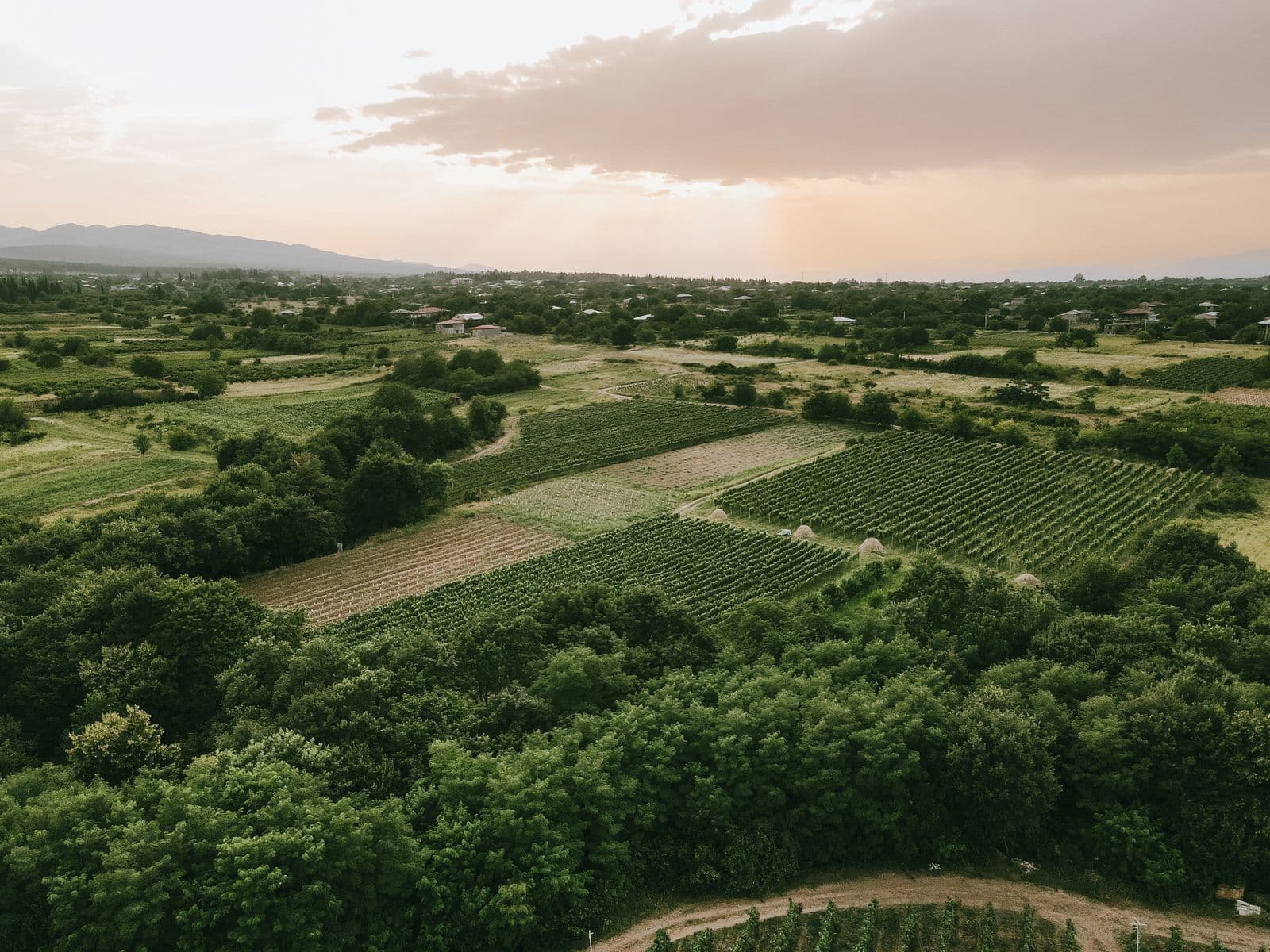
Georgia's wine harvest is set to pass 320,000 tonnes of grapes this year, short of 2025's record but still among the biggest since independence, as new minimum-quality rules take effect nationwide for the first time.
The forecast comes from Davit Songulashvili, Georgia's minister of environmental protection and agriculture, who called the volume “unprecedented” even as he urged caution on further vineyard expansion. Heavy autumn rain has delayed ripening in several zones, pushing some growers to wait longer for grapes to reach the sugar levels now required by law.
A wine harvest built on new rules
Georgia keeps growing more wine than the world is ready to drink — and finally has a price list for that problem.
Since this year's wine harvest, grapes must reach a minimum sugar content of 17% to qualify as standard quality, up from 14-15% previously — a threshold the National Wine Agency's chairman, Levan Mekhuzla, said was “barely suitable even for spirits production.” Grapes below that line are reclassified as low-quality and purchased, if at all, at a fraction of the price.
The state sets differentiated purchase prices by sugar content: standard varieties above 20% sugar fetch 1.30 GEL per kilogram, falling to 0.30 GEL below the 17% threshold. Saperavi, Georgia's signature red grape, commands up to 1.50 GEL per kilogram at the top grade. Mekhuzla said last year's pricing scheme “successfully encouraged most growers to meet higher standards.”
Kakheti, the country's dominant wine region, again accounts for the bulk of the crop, built mainly on Rkatsiteli and Saperavi. Last year's harvest — Georgia's largest since independence — brought in more than 330,000 tonnes and involved over 21,000 growers nationwide, a regional weight comparable to this year's Alsace wine harvest.
Why surplus grapes worry growers
Wine and grape spirits are Georgia's leading agricultural exports, and officials have flagged that international markets are proving difficult this year, raising the risk that storage could not keep pace with this year's wine harvest.
To manage the flow, the National Wine Agency is hiring up to 60 young operators for this year's Harvest Coordination Headquarters, recording each delivery of grapes through a digital registration programme meant to track volumes by quality grade in real time.
The quality push is also a competitiveness strategy. Mekhuzla has framed the 17% threshold as necessary for Georgian wine to hold its own against France, Italy, Spain and New World producers in export markets, where volume alone no longer wins shelf space — much as Douro growers in Portugal have had to weigh quality against unharvested surplus this year.
Smaller regions are watching the state's safety net closely: in Racha, where the Aleksandrouli and Mujuretuli grapes used for semi-sweet reds grow on steep, low-yield terraces, growers depend on it more than most. A record wine harvest is easy to celebrate; a surplus no one can sell is not.