Apple tarte Tatin recipe: the caramelized classic of Sologne
Late-season apples, a dry caramel and one sheet of pastry, flipped upside down: the technique behind the Hôtel Tatin's accidental classic, done properly at home.
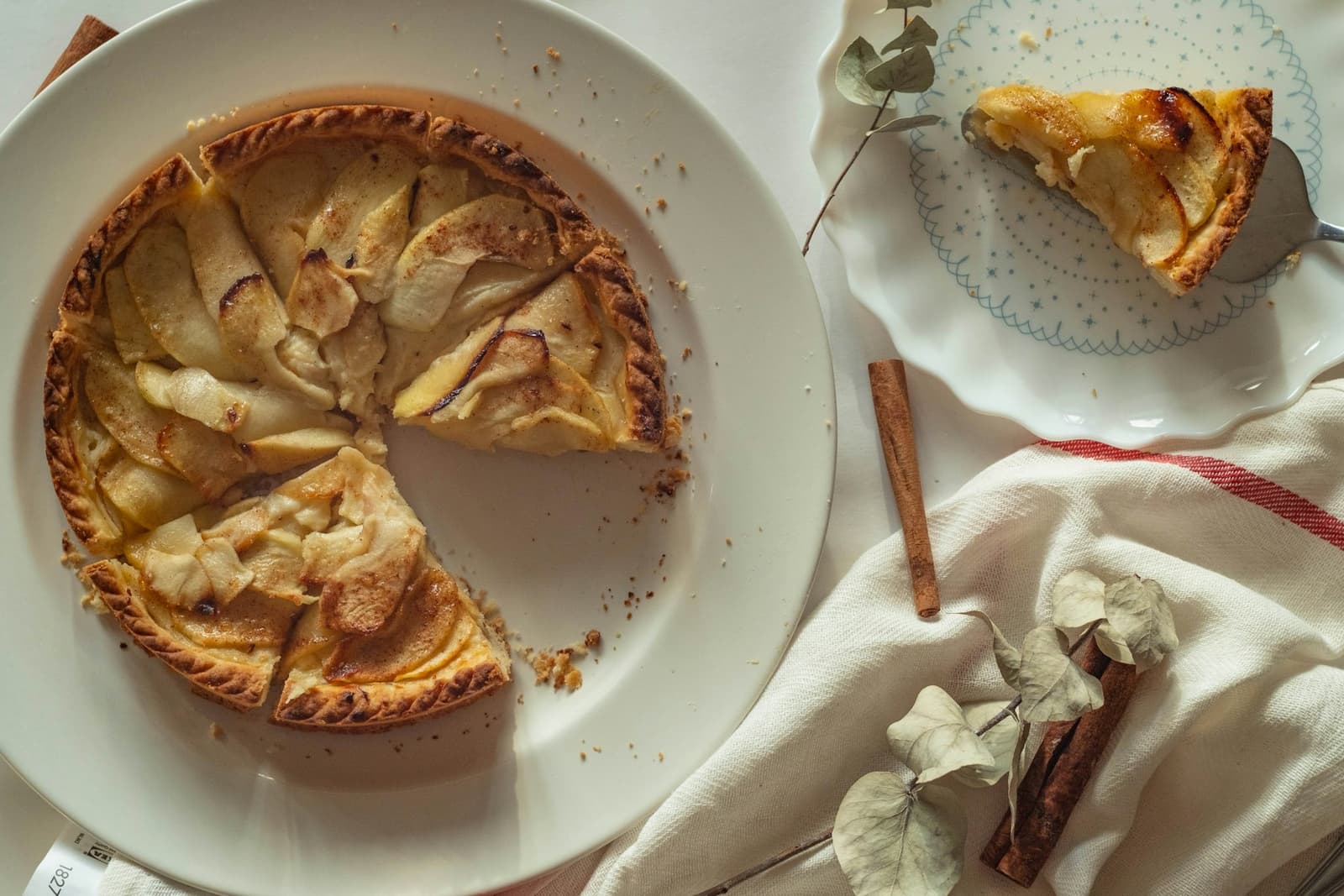
Apples peak across the Northern Hemisphere in late September and October, and nothing puts that harvest to better use than an apple tarte Tatin recipe built on real technique, not shortcuts.
This apple tarte Tatin recipe traces back to the Hôtel Tatin in Lamotte-Beuvron, Sologne, around 1898, where Stéphanie Tatin is said to have left apples cooking too long in butter and sugar, then saved the pan by laying pastry over it and flipping it out for her guests. It stuck, and decades later the critic Curnonsky championed it onto the menu at Maxim's in Paris. What makes it technique-driven, not a fruit-pie variant, is the order: caramel first, apples second, pastry last, baked upside down and flipped to serve - one step wrong and it shows, from burnt sugar to a crust gone soggy under wet fruit.
Ingredients
Get the caramel and the flip right, and the pastry underneath almost cooks itself.
- 6 firm apples (Braeburn, Golden Delicious or Reine des Reinettes), peeled, halved and cored
- 150 g caster sugar
- 80 g unsalted butter, cold and cubed
- 1 sheet all-butter shortcrust or puff pastry, about 3 mm thick, chilled
- 1 pinch fine sea salt
- 1 tsp lemon juice, to keep the cut apples from browning
Method
- Scatter the sugar over the base of a 24-26 cm ovenproof skillet and heat it undisturbed; stirring too early reintroduces grains that seize the batch into lumps.
- Once the sugar is an even amber, pull the pan off the heat and whisk in the cold butter and salt - the cold stops the cooking instantly and keeps the caramel glossy rather than split.
- Pack the apple halves cut-side up in a tight spiral; they shrink by nearly a third as they release water, and a loose arrangement bakes into gaps. Return to low heat for 8-10 minutes to soften the fruit and deepen the caramel before the oven.
- Lay the pastry over the apples and tuck the extra inside the rim, rather than crimping it like a pie; a single sheet, never blind-baked, lets steam escape instead of trapping it under a soggy base.
- Bake at 190-200°C (375-400°F) for 25-35 minutes, until the pastry is deep gold and the caramel at the rim looks thick, not watery - thin caramel means the apples still hold too much moisture.
- Rest in the pan for 5 minutes before flipping, long enough for the caramel to thicken and cling to the fruit rather than flood the plate, but not so long it cools and glues the apples down. Set a plate over the pan and invert both in one firm motion while still warm.
Serving this apple tarte Tatin recipe
Serve warm, not hot - straight from the pan the caramel still runs, and a few minutes lets it set into a glaze. Cold crème fraîche or vanilla ice cream both work, since the temperature contrast matters more than which one you pick; in the Sologne it's just as often poured with a local cider or a glass of Calvados. It's the same one-pan logic behind crêpes Suzette. Leftovers keep two days at room temperature under a cloth; reheat in a hot oven, never the microwave.
Can I use puff pastry instead of shortcrust? Yes - puff gives a lighter, more theatrical crust and is what most restaurants use, while shortcrust holds its structure longer once sliced; either works as long as it goes on raw, in a single sheet, tucked rather than crimped.