Baked Figs with Feta and Honey, the Greek Way
A Greek starter for early autumn: figs baked hot and fast until they blister, stuffed with feta that keeps its shape, then finished with honey and pistachios.
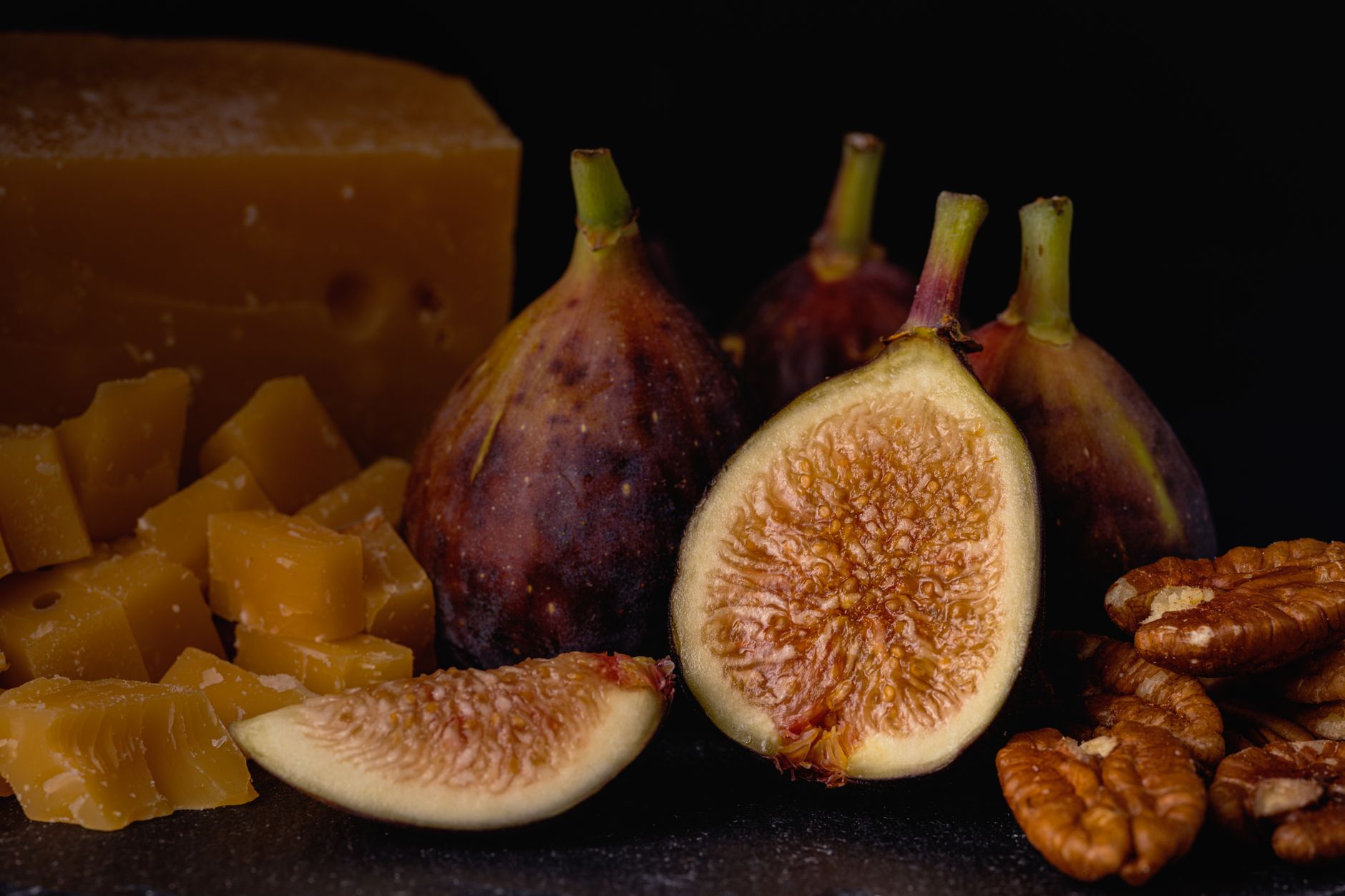
Baked figs with feta is a five-ingredient starter built on one trick: fast, high heat that caramelizes the fruit's surface sugar before it collapses into syrup, paired with a cheese dense enough to survive the oven whole. It follows a recipe Athens-based cookbook author and My Greek Table host Diane Kochilas serves at the tail end of the Greek fig season, when Attica's black figs peak.
Fresh figs turn from firm to jammy within days of picking, which is why the fruit rarely travels far from where it grows. In Greece, packing feta into the split halves and running the tray briefly under high heat is a standard way cooks meet the late-summer glut: the cheese's low moisture and sharp acidity let it hold its block shape while the fruit around it turns soft and glassy.
This baked figs with feta starter keeps Kochilas's ratio of roughly one fig to a stick of cheese, shortens her bake, and adds pistachios for crunch — a plate that needs about twenty minutes end to end.
Fast, high heat is what lets the feta warm through without ever melting into the tray.
Ingredients
- 12 ripe black figs (about 500 g), halved lengthways
- 150 g Greek feta, cut into 12 small batons
- 2 tbsp extra-virgin olive oil
- 2 tbsp Greek thyme or pine honey
- 30 g shelled pistachios, roughly chopped
- 1 tsp fresh thyme leaves, plus extra to finish
- Flaky sea salt and black pepper
Method
- Heat the oven to 200°C fan (220°C conventional). A hot oven caramelizes the figs' surface sugar in under ten minutes, before the fruit has time to break down into syrup.
- Line a tray with baking paper and arrange the fig halves cut-side up, packed close enough to lean on each other so they hold upright without foil or a dish.
- Press a feta baton into each fig half and grind over black pepper; hold off on salt, since feta is salty enough. Its low moisture, versus a fresh cheese like burrata, means it warms and glazes rather than turning liquid.
- Drizzle the figs and cheese with olive oil, then bake for 8-10 minutes, until the fig edges blister slightly and the feta turns glossy but still holds its shape.
- Pull the tray out and drizzle the honey over immediately, while everything is still hot — the heat thins the honey so it runs into the fruit instead of sitting on top.
- Scatter over the pistachios, thyme leaves and a pinch of flaky salt, then move straight to a warm plate; the figs keep cooking slightly from retained heat, so serve within a few minutes.
Serving baked figs with feta
Kochilas pairs the dish with a dry, mineral Greek white; an Assyrtiko from Santorini or a cold glass of retsina both cut through the honey without competing with it. Walnuts stand in well for pistachios, and a firm, tangy goat's cheese works if feta isn't available — avoid anything that melts fully, or this baked figs with feta starter loses the contrast that makes it work. Keep this baked figs with feta recipe on repeat while the fruit lasts — it reads longer than it takes to cook. For a version built around cured meat instead of honey, see our roasted fig, burrata and prosciutto recipe.