Croissant recipe: a lamination technique explained
Dominique Ansel's approach turns cold butter and dough into eighty shattering layers, built through folding and chilling, not any single shortcut.
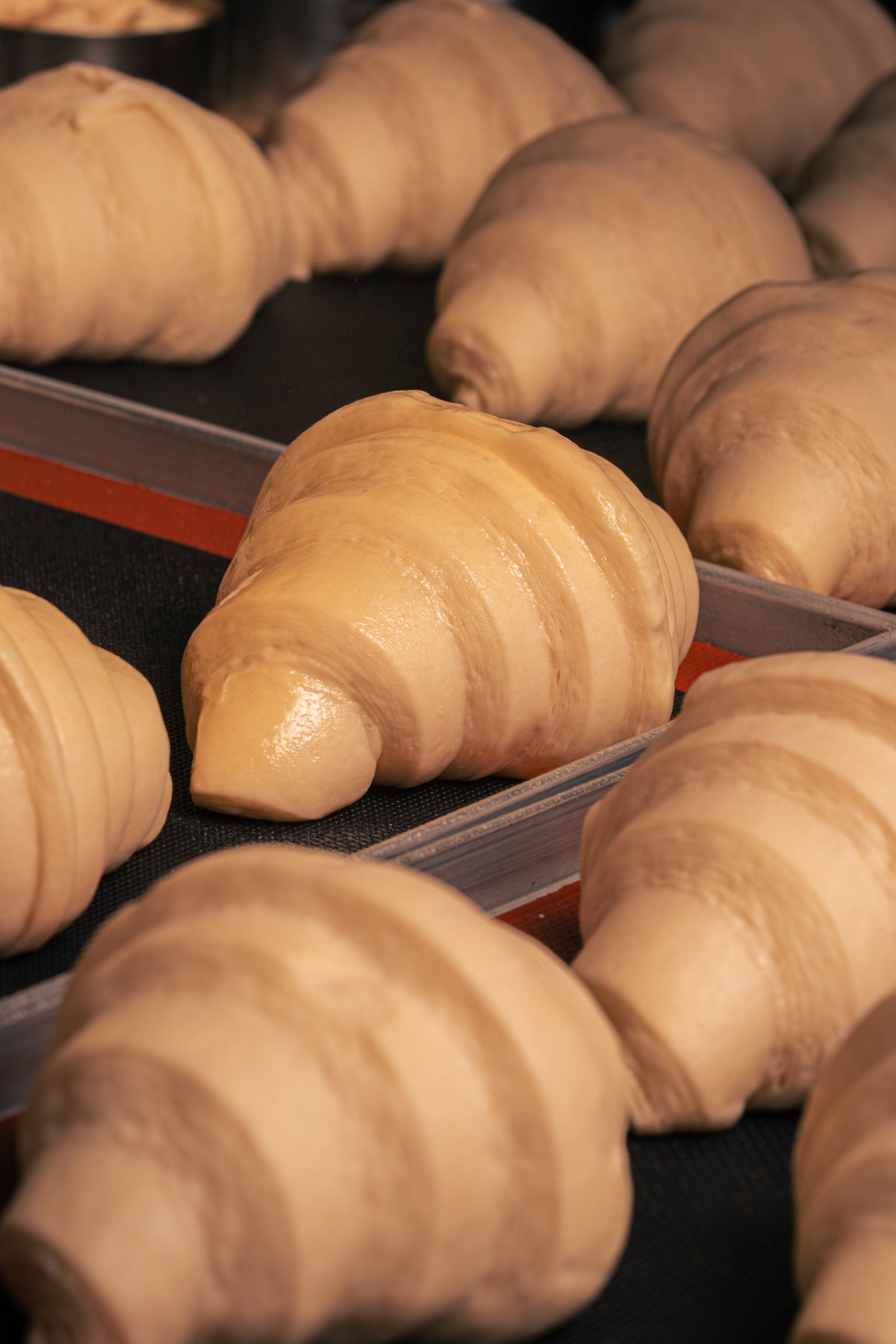
This croissant recipe rests on one thing: distinct, unbroken layers of butter and dough, built by folding rather than by any trick. Get the lamination right and the oven does the rest, puffing each layer apart with steam.
Pastry chef Dominique Ansel, who trained at Fauchon in Paris before opening his own bakery in New York, teaches the method as a discipline of temperature as much as technique: keep the butter pliable but cold, and the dough follows.
Ingredients
Cold butter, patient folding, no shortcuts: eighty layers built one chill at a time.
- 500 g strong white bread flour
- 55 g caster sugar
- 10 g fine salt
- 10 g instant dried yeast
- 300 ml cold whole milk
- 40 g unsalted butter, softened
- 250 g cold unsalted butter (82% fat or higher), for the butter block
- 1 egg, beaten with a splash of milk, for the wash
Method
- Mix the flour, sugar, salt and yeast, then add the milk and softened butter. Knead briefly, just until smooth. Overworking builds gluten you don't need yet; it will fight the lamination later. Wrap and chill for one hour.
- Beat the cold block butter between baking paper into a 20 cm square, about 1.5 cm thick, cold but not stiff. That balance keeps it in distinct sheets instead of melting into the dough.
- Roll the chilled dough into a rectangle twice the width of the butter square. Set the butter on one half, fold the dough over to enclose it, and pinch the edges shut.
- Roll into a long rectangle and fold in thirds, like a letter. This is the first turn. Wrap and chill for 30–45 minutes.
- Repeat the roll-and-fold twice more, chilling between each turn, always rolling the same direction. Three turns give roughly 80 alternating layers; chilling keeps the butter firm enough to shear into sheets, not tear.
- Roll the dough into a large rectangle about 4 mm thick. Cut into long triangles, notch the base, and roll from base to tip into a crescent, curving the ends in.
- Proof uncovered at 24–26°C until doubled and jiggly, 2–3 hours. Too cool and the layers stay tight; too warm and the butter melts out before the oven can set them.
- Brush with egg wash and bake at 220°C for 5 minutes, then 180°C for 12–15 minutes, until deep gold. The initial high heat drives steam through the layers before they collapse.
Storage and a simple variation
Croissants are best within hours of baking, while the layers still shatter. To serve the next day, split and toast rather than reheat whole, which turns the crumb chewy. For an almond version, split day-old croissants, soak briefly in sugar syrup, fill with almond cream and rebake until the topping sets.
The same dough, cut into rectangles instead of triangles, makes pain au chocolat; the lamination does the same work whichever shape follows. It belongs to the same French repertoire now back on the menu at Lucas Carton's Paris reopening, a technique worth learning once, properly, alongside our tajarin al tartufo bianco recipe.
Sources
- MasterClass · 2026-01-15
- Dominique Ansel Bakery · 2026-01-15