Hungarian goulash recipe: the herdsmen's paprika pot
Beef and onions stewed in their own juices, paprika stirred in off the heat and egg noodles pinched into the pot: the house method for the dish of Hungary's cattle herders.
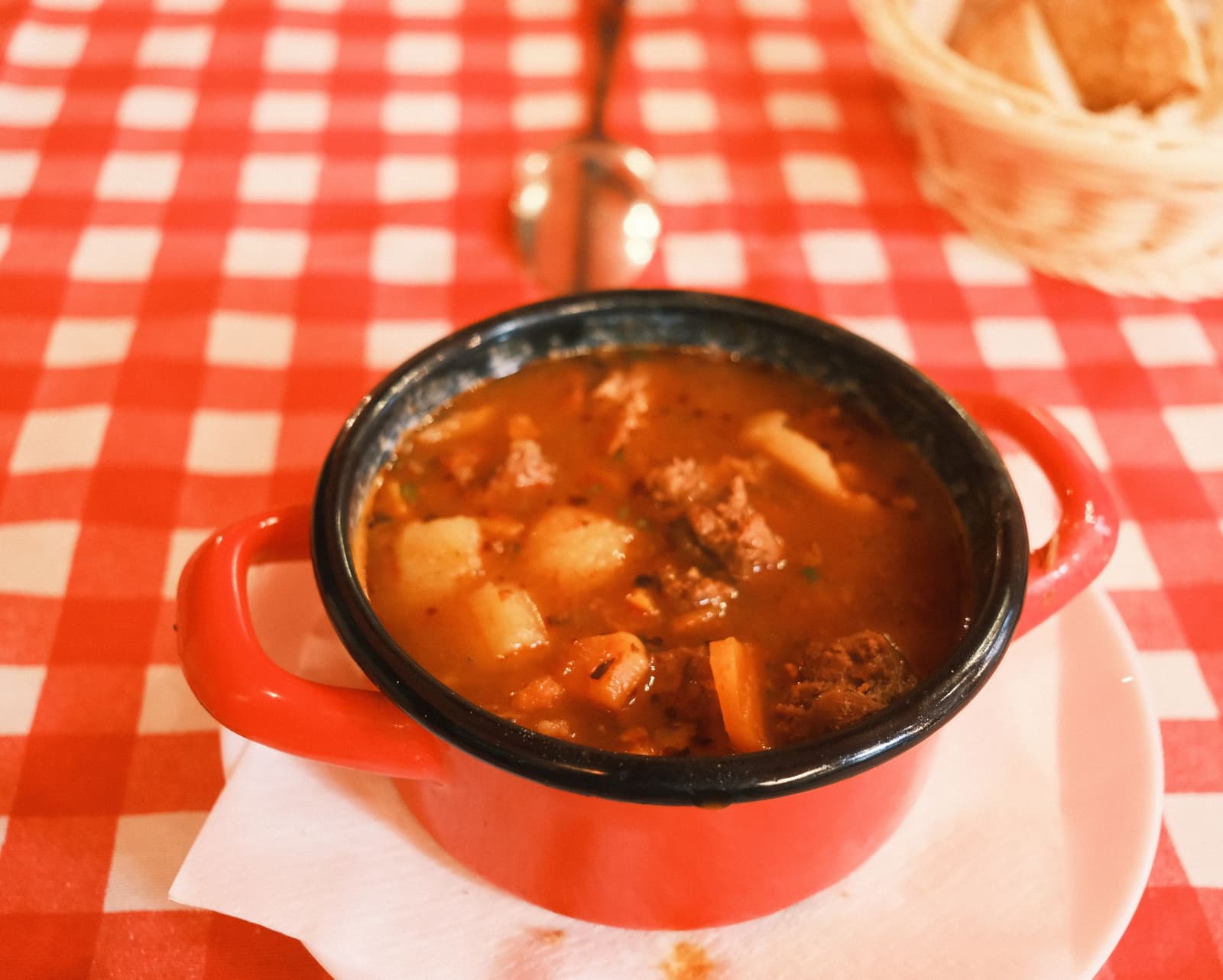
This Hungarian goulash recipe follows gulyás as Hungarians cook it: beef and onions stewed in their own juices, sweet paprika stirred in off the heat, then potatoes, root vegetables and pinched egg noodles simmered in a deep red broth. The key is patience before the water goes in.
Gulya means a herd of cattle in Hungarian and gulyás the man who drove it across the Great Plain to markets as far away as Vienna and Venice, cooking meat with onions in a kettle over an open fire. Paprika reached Europe only in the 16th century, and the potatoes are a later addition too. In Hungary gulyás is eaten as a soup, yet it is a one-pot main course: no flour, very little tomato, with the body coming from onions that melt into the broth. It suits the first cold evenings of autumn.
Ingredients
Paprika goes in off the heat: a few seconds over a flame and the whole pot turns bitter.
- 1 kg beef shin or chuck, in 3 cm cubes
- 2 tbsp lard or sunflower oil
- 3 onions (about 400 g), finely chopped
- 2 garlic cloves, crushed
- 3 tbsp sweet Hungarian paprika
- ½ tsp hot paprika (optional)
- 1 tsp caraway seeds, lightly crushed
- 1 ripe tomato, chopped
- 1 pale green pepper, sliced
- 1.5 litres water or light beef stock
- 2 carrots, diced
- 1 parsley root or small parsnip, diced
- 500 g waxy potatoes, in 2 cm cubes
- Salt and black pepper
- For the csipetke: 1 egg, 100 g plain flour and a pinch of salt
Method
- Melt the lard in a heavy pot and soften the onions over medium-low heat for 10 minutes. They dissolve during the long cook and thicken the broth, which is why no flour is needed.
- Add the beef, raise the heat and turn it for about 8 minutes until it loses its raw colour. Salt it now: salt draws out the juices the meat will stew in.
- Take the pot off the heat and stir in both paprikas, the caraway and the garlic. Paprika burns within seconds over a flame and turns bitter.
- Back on a low heat, add 200 ml of water, the tomato and the pepper, cover and braise gently for 1 hour, adding a splash of water if it dries. Little liquid concentrates the flavour.
- Pour in the rest of the water, add the carrots and parsley root and simmer for 30 minutes. Add the potatoes and cook for 20 to 25 minutes more; their starch gives the broth its final body.
- For the csipetke, knead the egg, flour and salt into a stiff dough and pinch fingernail-sized pieces straight into the simmering pot. They cook in about 5 minutes.
- Rest the goulash for 10 minutes off the heat, check the salt and serve with bread and sliced fresh chilli.
Cut, kettle and wine
Choose shin or chuck: cuts with connective tissue turn soft and gelatinous in two hours, while lean steak dries out. Hungarian cooks vary the base rather than the method: babgulyás adds beans, birkagulyás uses mutton as the herdsmen once did. Pour a Hungarian red such as Kékfrankos and finish with our apple strudel recipe, a dessert the old Austro-Hungarian kitchen shared.
Hungarian goulash recipe: your questions
Is goulash a soup or a stew? In Hungary it is a soup served as a main course. The thick paprika stew without potatoes that other countries call goulash is closer to Hungarian pörkölt.
Can I make it ahead? Yes, and it tastes better the next day. It keeps for three days in the fridge; freeze it without the potatoes and csipetke, which turn grainy.
Which paprika should I use? Fresh, bright red sweet Hungarian paprika. Smoked Spanish pimentón makes a different dish, and a tin opened months ago tastes of dust.