Pappardelle al cinghiale recipe: Tuscany's wild boar ragù
A red-wine marinade and a slow, three-hour braise turn tough wild boar into the ragù that defines cucina rustica across the Tuscan hills.
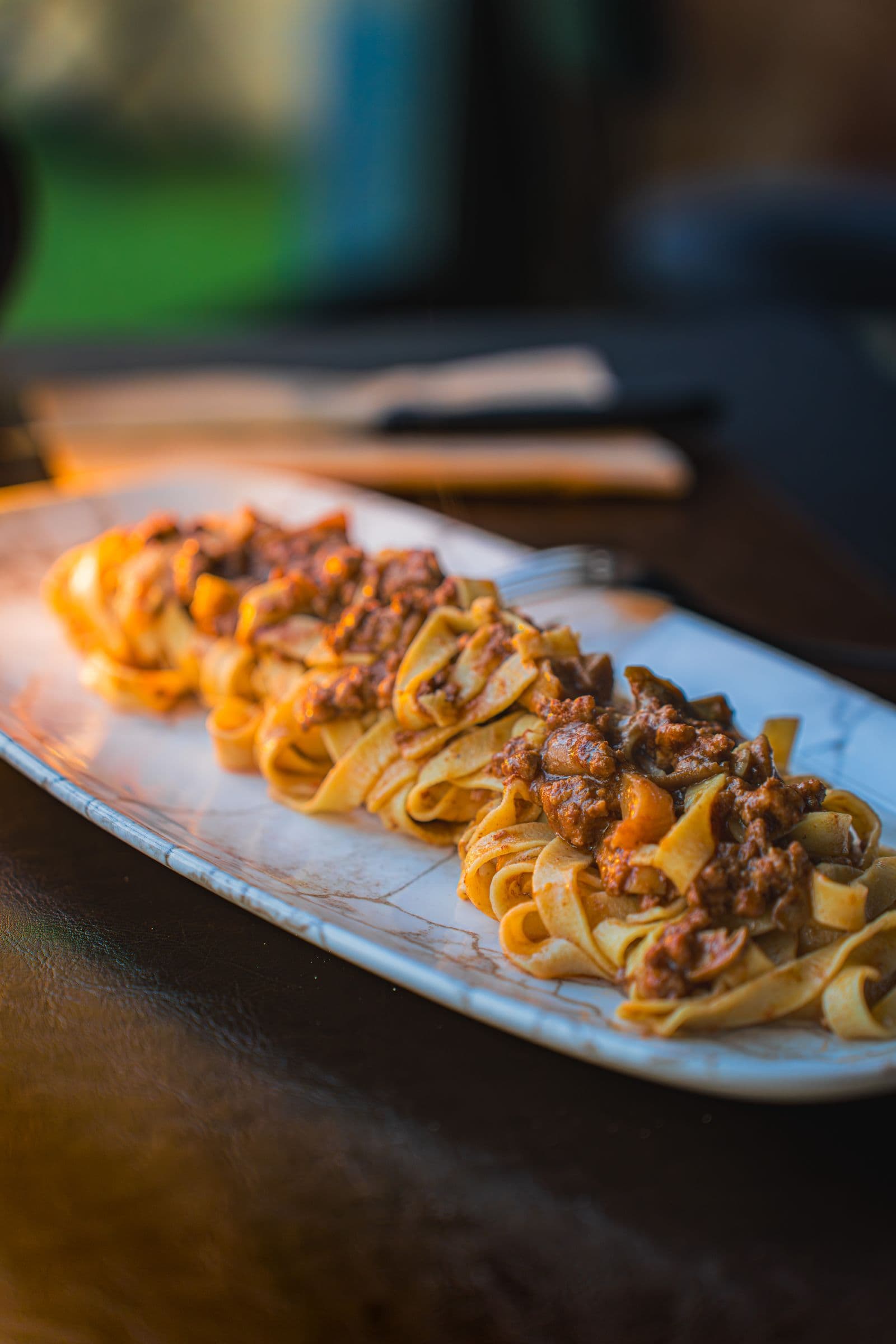
Pappardelle al cinghiale is Tuscany's autumn dish for the hunting season: wide ribbons of pasta under a ragù of wild boar, slow-braised in red wine until it falls apart under a fork.
Wild boar is leaner and gamier than farmed pork, which is why the Tuscan method marinates it overnight before it ever meets a pan. The wine draws out blood and tempers the stronger notes of an older animal, and the long braise that follows does the rest: three to four hours at a bare simmer, long enough to break down connective tissue without drying the meat out.
Ingredients
A tough cut and a patient fire are the whole recipe; everything else is seasoning.
- 800g wild boar shoulder, diced
- 750ml robust red wine, such as Chianti
- 1 onion, finely chopped
- 1 carrot, finely chopped
- 1 celery stalk, finely chopped
- 2 bay leaves
- 4 juniper berries
- 3 tbsp olive oil
- 2 tbsp tomato paste
- 400g crushed tomatoes
- 500ml stock, meat or vegetable
- 500g fresh pappardelle
- Grated pecorino, to serve
- Salt and black pepper
Method
- Marinate the boar overnight in the wine with the bay leaves and juniper berries, covered, in the fridge. This softens the meat's gamey edge and starts the cure before any heat is applied.
- Drain the boar, reserving the wine, and pat it dry. Brown it hard in the olive oil in batches, without crowding the pot; a dry, well-seared surface builds the base flavour of the whole ragù.
- Set the meat aside and soften the onion, carrot and celery in the same pot, scraping up the browned bits left behind, the fond that carries most of the flavour.
- Return the meat, stir in the tomato paste and cook for two minutes to deepen its flavour before any liquid goes back in.
- Pour in the reserved wine and simmer until reduced by half, which cooks off the raw alcohol and concentrates the marinade into the sauce.
- Add the crushed tomatoes and stock, partially cover, and simmer gently for three to four hours, topping up the liquid as needed. Low, patient heat is what turns a tough cut tender.
- Season to taste and break the meat apart gently with a spoon; it should shred with almost no resistance.
- Cook the pappardelle in well-salted boiling water, drain, and toss it through the ragù with a splash of pasta water, which helps the sauce cling to wide ribbons the way it would to Bologna's tagliatelle al ragù.
A glass of the same wine
Serve what is left of the marinating wine alongside the dish; a sturdy Tuscan red is built for a sauce this rich. A Cabernet Franc from Bolgheri, such as the limited Barinca bottling released this season, works for the same reason: enough structure to stand up to the gaminess, enough fruit to soften it.
Leftover ragù freezes well for up to three months and, like most braises, tastes better on the second day, once the sauce has had time to settle into the meat.
Can I use pork instead of wild boar? Yes. Farmed pork shoulder is more tender and milder, so cut the braise to around two hours and skip the overnight marinade if you are short on time.