Muhammara recipe: Aleppo's red pepper and walnut dip
Charred red peppers, toasted walnuts, breadcrumbs and pomegranate molasses: the Aleppo mezze that turns the last peppers of the season into a thick, sweet-sour spread.
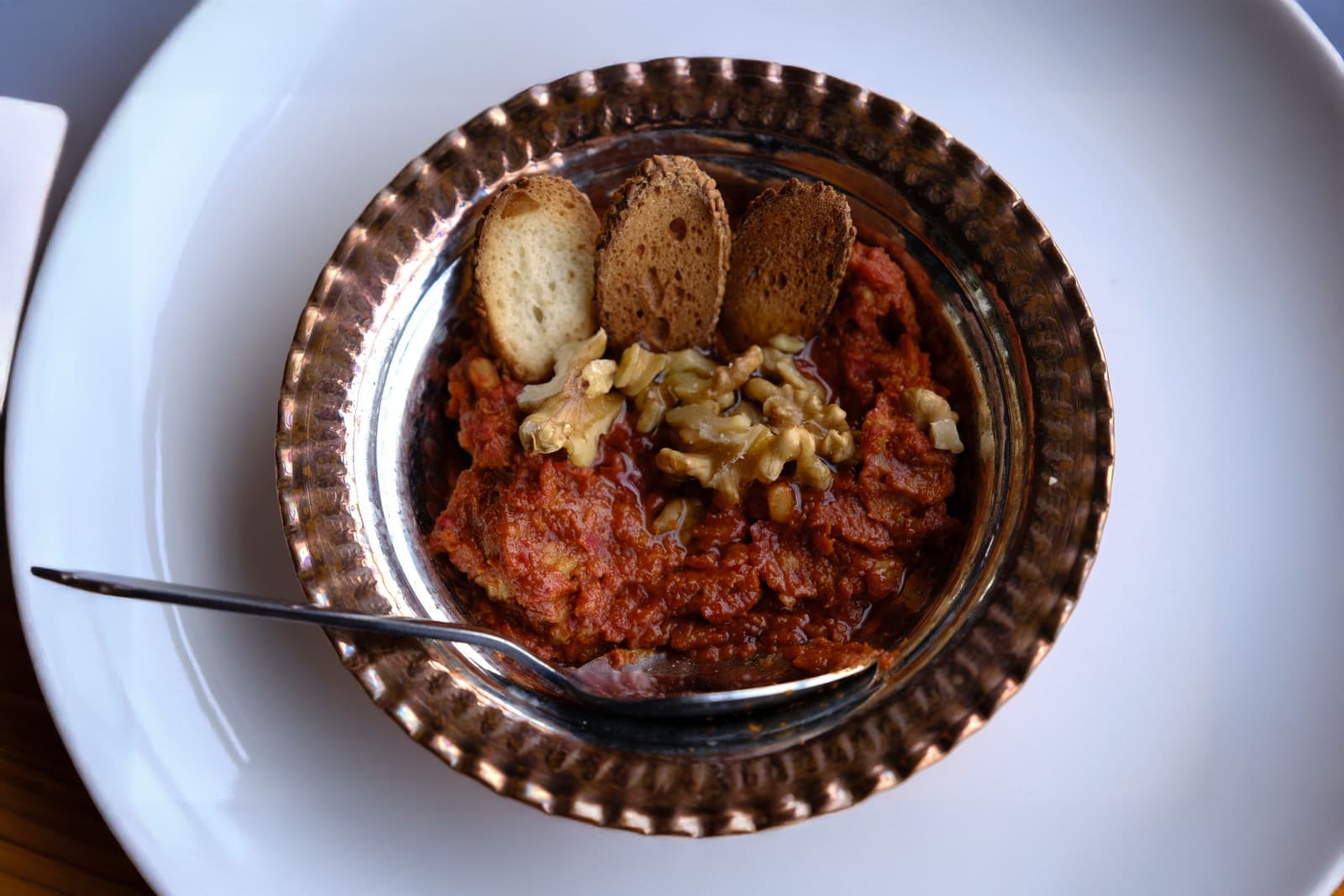
This muhammara recipe comes from Aleppo, in northern Syria: roasted red peppers, toasted walnuts, breadcrumbs and pomegranate molasses, worked into a coarse, brick-red spread. The technical key is water. Peppers charred until black, peeled and then drained in a sieve give a dip that holds its shape and tastes of smoke; wet peppers give a loose, split sauce.
The name comes from the Arabic for "reddened". In Aleppo it was pounded in a mortar and served cold as mezze with flatbread, spread on manakish or spooned next to kebabs and grilled fish. Many Syrian home cooks, like the family of the writer Omayah Atassi, skip the roasting and start from red pepper paste; others still use crumbled ka'ak bread instead of breadcrumbs. Early autumn is the moment for it: the last fleshy red peppers of the year meet the new pomegranate harvest. It sits on the same table as our baba ganoush recipe with charred aubergine.
Ingredients
Drain the peppers well: water is what turns muhammara from a spread into a sauce.
- 3 large red peppers (about 600 g)
- 100 g walnut halves, plus a few for the top
- 40 g dried breadcrumbs
- 1 small garlic clove
- 2 tbsp pomegranate molasses
- 1 tbsp lemon juice
- 1 to 2 tsp Aleppo pepper flakes
- 1/2 tsp ground cumin
- 1/2 tsp fine salt
- 4 tbsp extra virgin olive oil, plus extra to serve
- 1 tbsp pomegranate seeds, to serve
Method
- Roast the whole peppers under a very hot grill or directly over a gas flame, turning them, for 20 to 25 minutes, until the skin is black and blistered all over. The char gives the smoky note and loosens the skin.
- Put them in a bowl, cover with a plate and leave for 15 minutes. The trapped steam lifts the skin, so it slips off without rinsing, which would wash away flavour.
- Peel, remove the seeds and stalks, tear the flesh into strips and press it gently in a sieve for 10 minutes. Excess juice makes the dip runny and stops the oil from binding.
- Toast the walnuts in a dry pan over a medium heat for 5 to 6 minutes, shaking often, and let them cool. Heat deepens their flavour and softens the bitterness of the skins.
- Pulse the walnuts, breadcrumbs, garlic, cumin and Aleppo pepper in a food processor to a coarse crumb. Grinding the dry ingredients first keeps the nuts from turning into a paste once the peppers go in.
- Add the peppers, pomegranate molasses, lemon juice and salt and pulse in short bursts, pouring in the olive oil, until thick but still textured. Muhammara should look pounded, not puréed.
- Taste and balance: more molasses for sweet-sour, more lemon for sharpness, more Aleppo pepper for heat. Rest it for at least 1 hour, so the breadcrumbs absorb the juices and the flavours settle.
- Spread it in a shallow dish, make a well with the back of a spoon, fill it with olive oil and finish with walnuts and pomegranate seeds.
How to serve muhammara
Serve it at room temperature with warm flatbread, beside grilled lamb or chicken, or as a sauce for grilled fish. In a mezze spread it pairs with something smoky and something fresh: baba ganoush, a plate of herbs and radishes, pickles. For a taste of the Aleppo way in London, it is on the table at Imad Alarnab's Syrian Kitchen in Shoreditch.
Muhammara recipe FAQ
Can I use jarred roasted peppers? Yes. Use about 350 g drained weight and press them in a sieve as in step 3; you lose some smokiness, which a pinch of smoked paprika partly replaces.
What can I use instead of pomegranate molasses? Mix 1 tablespoon of lemon juice with 1 teaspoon of honey. It gives the sweet-sour balance but not the depth, so buy the molasses if you can.
How long does muhammara keep? Up to five days in the fridge, covered with a thin layer of olive oil. Take it out 30 minutes before serving: cold dulls the walnuts and the pepper.