Shio ramen recipe: Ivan Orkin's clear Tokyo broth
The shio ramen recipe that made Ivan Orkin's name rests on a pale chintan broth and a salt tare, not the murky tonkotsu most home cooks reach for first.
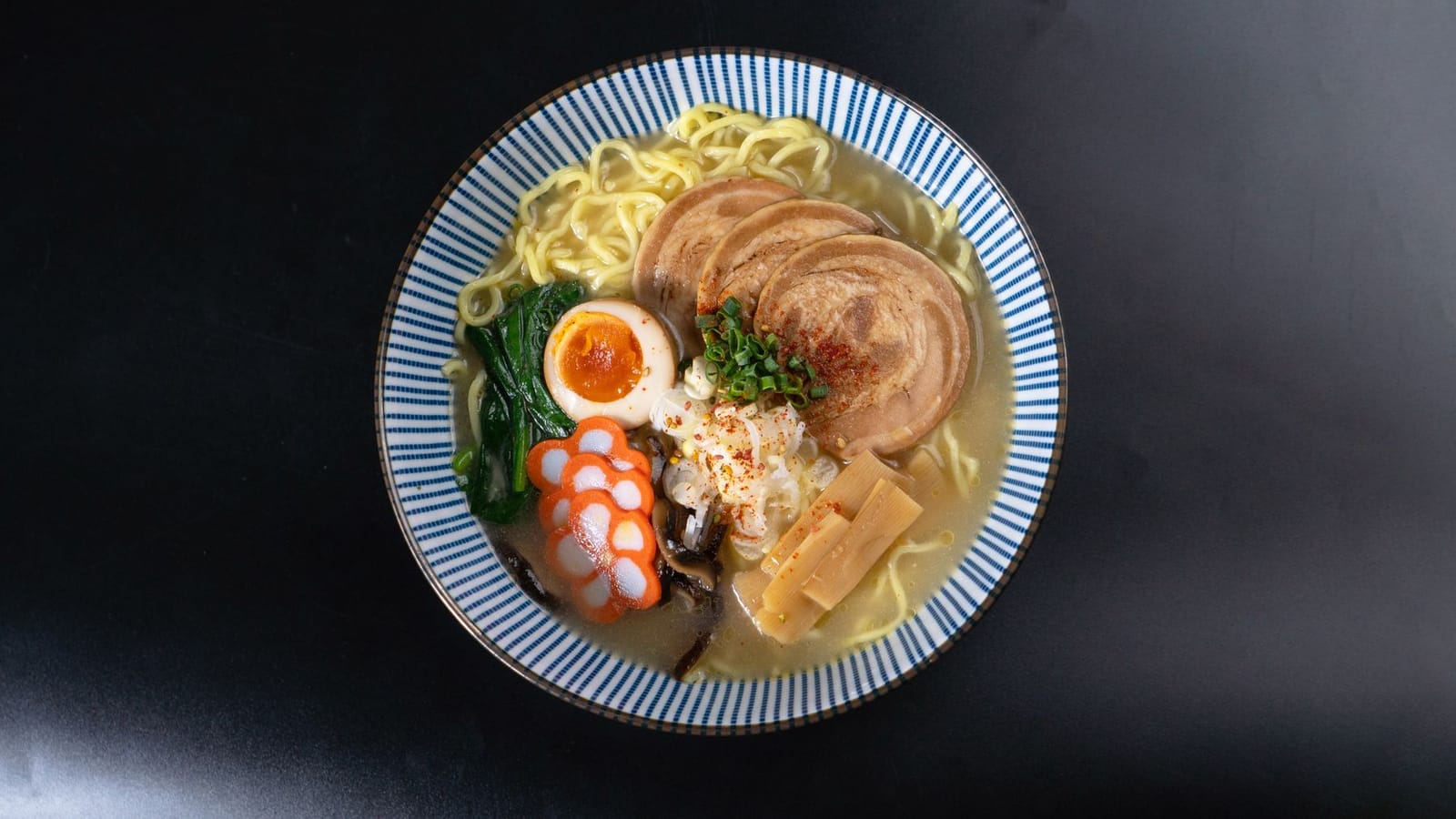
This shio ramen recipe builds the clear, pale-gold broth that New York-born chef Ivan Orkin used to win over Tokyo, now the house style at his restaurants, including the one opening this month on Askew Road in London. Shio means salt, and here the seasoning comes from a separate tare rather than being boiled into the stock, which keeps the broth transparent instead of cloudy.
The technique behind that clarity is control: the broth, called chintan, is simmered gently rather than at a rolling boil, so the fat and impurities that cloud a tonkotsu broth never get a chance to emulsify into the liquid.
Ingredients
Shio ramen rewards patience with the broth and restraint with the salt.
- 1.5 kg chicken carcasses and wings
- 15 g dried kombu
- 15 g niboshi (dried sardines)
- 2.5 litres cold water
- 120 ml sake
- 60 g sea salt
- 2 cloves garlic, 1 finely grated
- 60 ml neutral oil, for the mayu
- 200 g pork belly, rolled and tied, for chashu
- 2 eggs
- 300 g fresh ramen noodles
- 4 spring onions, sliced
- Menma (fermented bamboo shoots), to serve
Method
- Soak the kombu in the cold water for at least 4 hours, then add the niboshi and leave 30 minutes more; this slow steep draws out umami without the bitterness a hard boil would release.
- Add the chicken carcasses and wings, bring to a bare simmer, and skim constantly for the first 20 minutes; a gentle heat is what keeps the broth clear rather than emulsified.
- Simmer uncovered for 3 hours, topping up water as needed, then strain through muslin. This is the chintan.
- Meanwhile, simmer the pork belly in water to cover for 90 minutes, then roll in a little soy sauce and sugar to glaze; slice thinly once cool for chashu.
- Soft-boil the eggs for 6.5 minutes, cool in iced water, peel, and steep in a mix of soy sauce, mirin and water overnight for ajitama.
- Warm the oil with the grated garlic until lightly browned, to make the fragrant mayu that finishes each bowl.
- For the tare, whisk the sake and sea salt until dissolved; this goes into the bowl first, not the pot, so the seasoning stays adjustable per serving.
- Cook the noodles, drain well, and build each bowl: tare and a spoon of mayu first, broth poured over, noodles, then chashu, egg, menma and spring onions on top.
Why the tare stays separate
Keeping the salt tare apart from the broth is what lets a ramen-ya adjust seasoning bowl by bowl rather than batch by batch, and it is the detail most home versions skip in favour of salting the stock directly.
The same logic applies to the menu at Ivan Ramen's new Askew Road restaurant, where shoyu, spicy miso and tonkotsu bowls are built on their own tares over a shared base broth, rather than four separate stocks.
Can I make this without niboshi? Yes — a handful of bonito flakes stirred in near the end of simmering gives a similar savoury depth, though the broth will taste a touch less briny.