Arabica coffee prices fall 10% in a month as Brazil catches up
The contract closed at 292.9 cents a pound on 4 September, down more than a tenth in thirty days, with a record global crop forecast for the coming season.
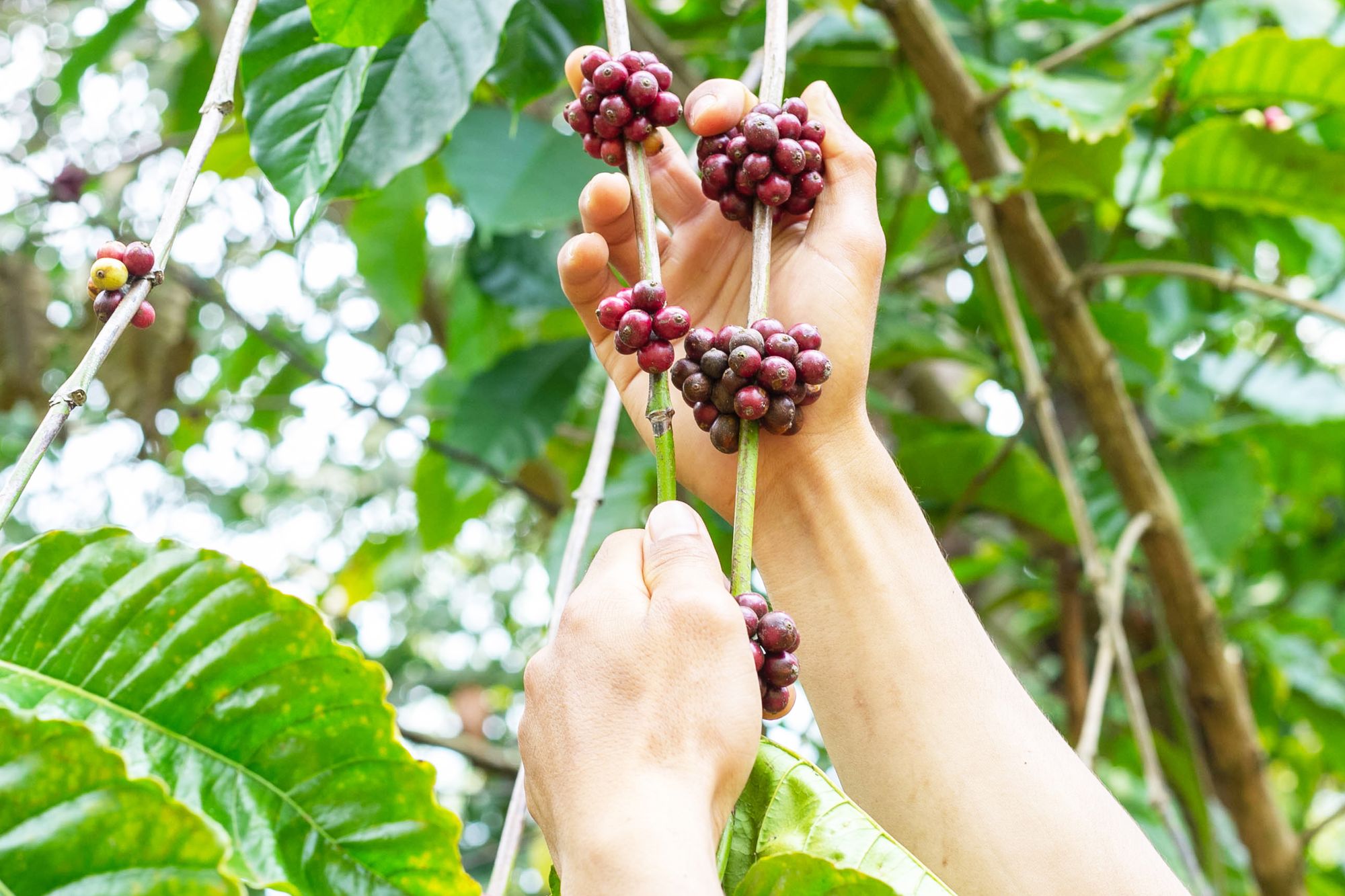
The arabica coffee price closed at 292.9 US cents a pound on ICE on 4 September, down 10.4% over thirty days.
The immediate driver is Brazilian harvest pace. As of 12 August the country's 2026/27 crop was 90% picked, behind 97% at the same point last year and behind the five-year average of 94%. Arabica specifically was 86% in, against 95% a year earlier.
A late harvest keeps supply tight in the short term and has been holding the market up. What it has not done is change the season's arithmetic, and the market has started to read the second number instead of the first.
A ten per cent move on the screen does not reach an espresso price in September.
What the arabica coffee price is pricing in
A record crop. The USDA forecasts global output in 2026/27 at 189.7 million bags, up 6% or 10.8 million bags, driven mainly by better growing conditions in Brazil. Global arabica production is forecast up 12% year on year, while robusta slips 0.7%.
That is a large number arriving after two years in which coffee behaved like a scarce commodity. Prices reached historic highs in February 2025, and some analysts were already arguing in March that arabica futures could fall below two dollars a pound before the end of this year.
What a roaster does with that
Very little, quickly. Specialty buyers contract months ahead and often at fixed differentials, so a 10% move on the screen does not reach a espresso price in September. It reaches next spring's green coffee contracts, which is where the argument about pass-through usually stops being theoretical.
There is a second variable nobody controls. Frost risk in Brazil runs through the southern winter, and a single cold night in the growing regions has repriced this market before. Until that window closes, a record forecast is a forecast and nothing more, which is why the curve has not fallen further than it has.
The pattern is familiar from the other side of the pastry section, where cocoa forecasts have just been cut across West Africa. One crop is heading for a record and one is heading down; both are being sold to kitchens at prices set a season ago.
Sources
- Trading Economics · 2026-09-04
- Barchart · 2026-08-18
- Comunicaffe · 2026-03-19