Cognac sales fall by 90 million bottles since 2023
Tariffs from Washington and Beijing have hit France's cognac houses hard, and growers are now paid to pull up vines as exports keep sliding.
Cognac sales have fallen by 90 million bottles since 2023, as US and Chinese tariffs squeeze France's signature spirit and growers begin pulling up vines to cut their losses.
Global shipments dropped from about 230 million bottles in 2023 to roughly 140 million, a 39% fall, according to industry figures reported by Vinetur in September. Cognac sends 98% of its output outside the EU, leaving the category almost entirely exposed to trade disputes it cannot control. The slide adds to a hard year across France's vineyards: this year's wine harvest fell to its lowest level in years.
The United States takes about half of all exports and China roughly a quarter, making the two the industry's biggest and most volatile markets. The four largest houses — Rémy Martin, Hennessy, Martell and Courvoisier — have cut purchases from winegrowers after customers cancelled contracts.
Cognac is collateral damage in a trade war it did not start.
Caught between Washington and Beijing
Tariffs first hit Cognac during Donald Trump's first term, in the Boeing-Airbus dispute, before being suspended under Joe Biden. They returned after Trump's 2025 return to office, and a July agreement between the EU and the US in Turnberry, Scotland, set a 15% tariff on most European exports, Cognac included. The UK had its whisky tariffs lifted in May and Ireland's whiskey followed in September; Cognac has had no such relief.
China added its own pressure in 2024 with provisional duties of up to 34.8% on European brandy, imposed days after the EU taxed Chinese electric vehicles. Beijing later confirmed the measures but exempted producers willing to sell above an undisclosed minimum price.
"Cognac is collateral damage" in a trade war it did not start, Raphaël Delpech, director of the National Interprofessional Cognac Bureau (BNIC), has said. Eric Sargiacomo, a French member of the European Parliament, calls the spirit "a test case for Europe."
Growers start pulling up vines
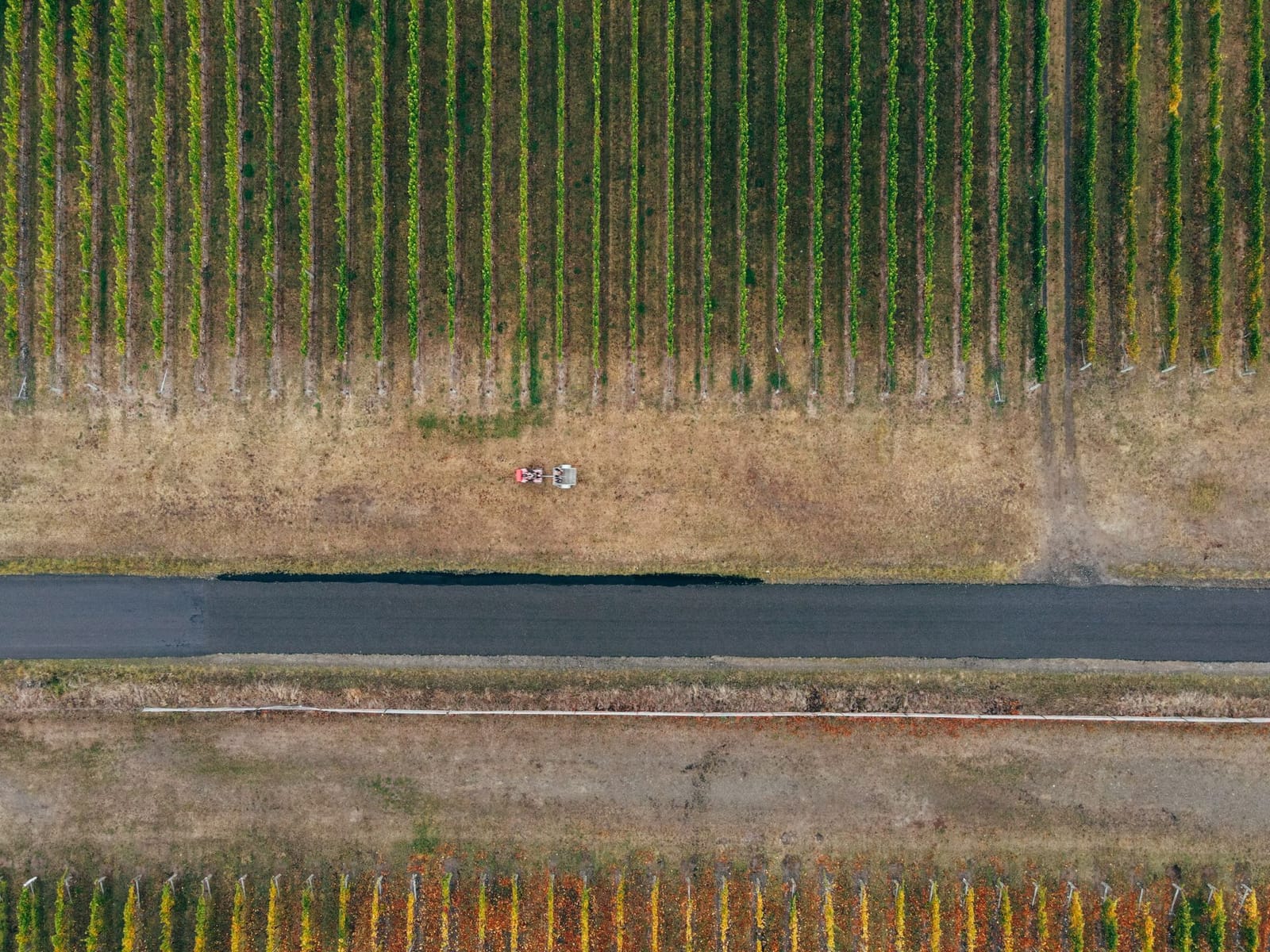
The region supports about 70,000 jobs, direct and indirect, across its roughly 96,000 hectares of vines. A permanent vine-removal scheme, which pays growers to pull up vines for good, has drawn applications covering 560 hectares so far; a temporary version bars replanting for five years while keeping the land in the system.
Matthieu Augier, a winegrower in Gondeville, expects his 2026 harvest to bring in 30% to 40% less than in a normal year, a strain that echoes Champagne's own 48% harvest drop after frost and drought this year. President Emmanuel Macron has visited the region more than once and promised compensation, which growers say has yet to arrive.
The BNIC sought €40 million in EU funds in February to help uproot 3,500 to 4,000 hectares, on top of a separate €130 million national scheme covering vine removal across France's wine regions at €4,000 a hectare. For a spirit built almost entirely on exports, the next relief is as likely to come from Brussels or Washington as from this year's harvest.
Sources
- Vinetur ·
- Vinetur ·
- ESM Magazine ·