Mendoza's 2026 harvest comes in cool, wet and uneven
Catena Zapata's harvest report describes a season closer to 2019 than to recent dry years, with yields down sharply at altitude and up in parts of the Uco Valley.
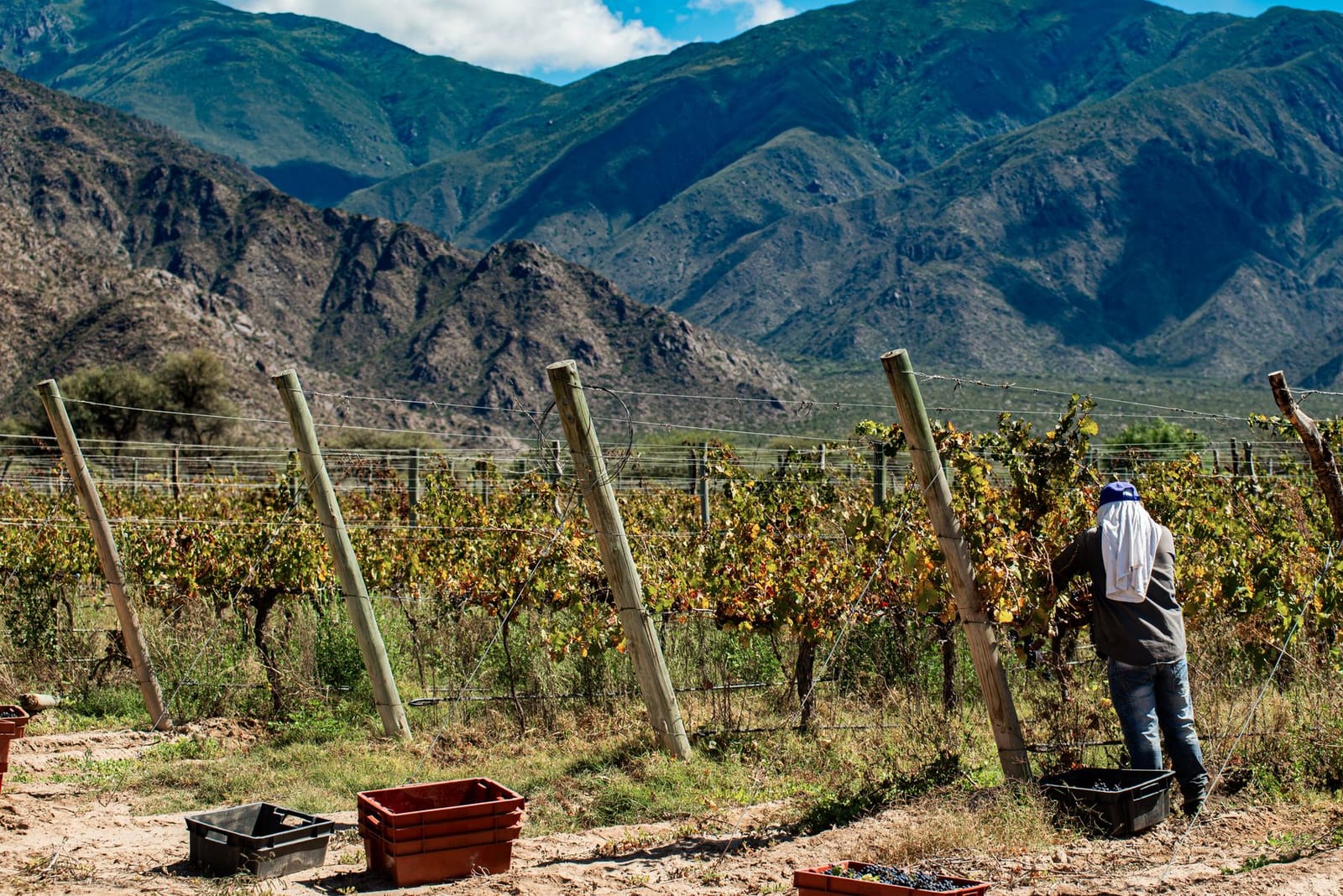
Mendoza's 2026 grape harvest closes as the coolest and wettest in years, with Catena Zapata's own vineyard data showing yields moving in opposite directions within a few kilometres of each other.
The estate's harvest report, published in early October, describes average temperatures well below historical norms and rainfall significantly above normal across every region it farms. Uco Valley vineyards received between 30% and 110% more rain than average this season.
That water arrived in short, fast-draining bursts rather than long soakings, according to the report. The pattern kept disease pressure low and let several blocks skip irrigation altogether, including the Nicasia vineyard in Paraje Altamira, where some parcels needed none at all.
A vintage this uneven gets argued over barrel by barrel, not by region.
Altitude told a different story. A spring frost and an October 28 snowstorm cut yields hard at the highest sites in Gualtallary, in the Uco Valley's Tupungato department. The Adrianna vineyard's GY Alto block, planted at over 1,500 metres, came in at 15% to 20% of its normal yield after the snowfall.
Yields split by altitude and rain
Lower down, the picture reversed. Angélica Sur, in Pampa El Cepillo, finished 40% above its 2025 yield despite four mild spring frosts, which vineyard crews mitigated with wind towers. El Cepillo, in the same district, came in 23% above average after 798 mm of rain, more than double the norm, with no irrigation needed.
Angélica, the estate's oldest Malbec block in Lunlunta, dropped 22% after its 102-year-old vines rested through the coolest season in four years. Domingo, in Villa Bastías, finished 15% below 2025.
The spread between regions was wide enough that Chardonnay, Malbec and Cabernet Sauvignon had to be picked at the same time from different parts of Mendoza this year, collapsing a calendar that usually unfolds over weeks.
A vertical, high-acid style emerges
Early reads describe wines with a more austere, vertical profile than recent vintages: defined structure, natural acidity and phenolic maturity reached under cool conditions rather than heat. The report calls the vintage's potential “historically significant,” language Mendoza producers use sparingly. Wine Industry Advisor's September round-up of growers across South America struck a similar note of cautious optimism for cooler sites this year.
None of that settles anything on its own. A vintage this uneven will be argued over barrel by barrel, and the real verdict on 2026 Mendoza arrives only once the wines are in bottle. For now, the altar wine made further north in Maipú, Mendoza, is a reminder of how much else the region makes beside its reds.