Argentina's 2026 wine harvest falls to a near-decade low
The national wine institute's final report shows grape volume down 6.5% and wine output down almost 10%, with reds hit hardest and whites the only category to grow.
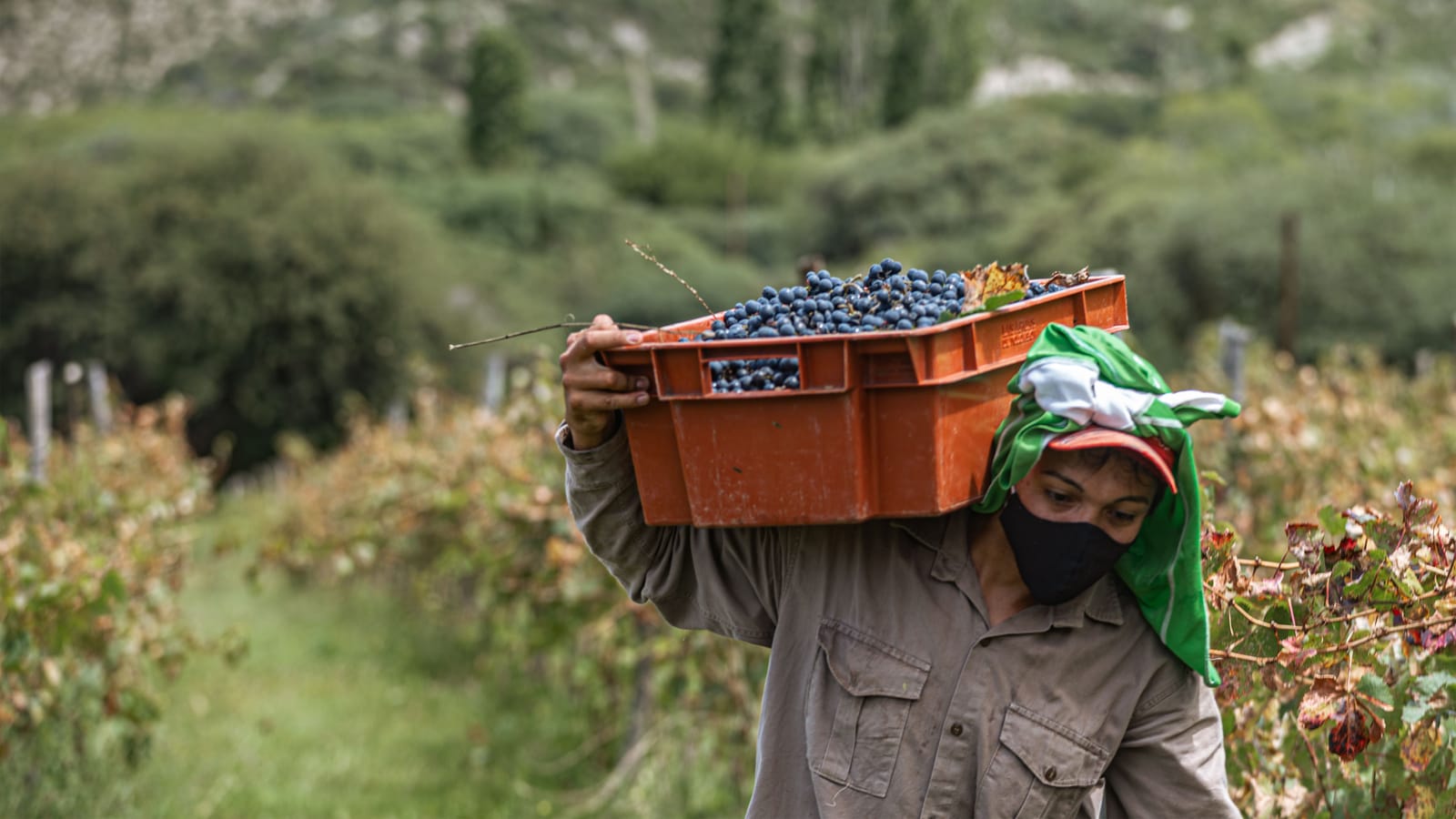
Argentina's 2026 wine harvest has closed at its second-lowest level in a decade, according to the final annual report from the Instituto Nacional de Vitivinicultura (INV). Growers brought in 18,613,527 quintals of grapes nationwide, down 6.5% on 2025 and 9.2% below the ten-year average.
The drop carried through to the cellar. Total wine production fell from 10,771,719 hectoliters in 2025 to 9,700,421 hectoliters this year, a decline of 9.9%. Only 2023, when drought cut deep into the country's vineyards, produced a smaller harvest in the INV's recent records.
Mendoza remains the backbone of the industry, supplying 70.7% of the national crop, with San Juan contributing 23.1% and the remaining 15 wine-producing provinces splitting the final 6.2%. A total of 871 wineries and must plants took in grapes this year, 25 fewer than in 2025. Growers in the province had already flagged an uneven season back in Mendoza's cool, wet 2026 harvest, before the full numbers were in.
A near-decade-low harvest, carried almost entirely by a shrinking red and rosé crop.
The pain was not spread evenly across colors. Red grape deliveries fell 13.2% and rosé grapes 2.7%, while white grapes rose 6.7%. That shift shows up clearly in the finished wine: red wine output dropped 14.8% to 6.68 million hectoliters, rosé collapsed 60.7%, and white wine climbed 13.1% to 2.87 million hectoliters.
Malbec still dominates what reaches the presses, accounting for 20.4% of grapes delivered to wineries and must producers. Cereza follows at 18.7%, Bonarda at 8.6% and Criolla Grande at 8.5% — together, the four varieties make up more than 57% of the national intake.
Organic and mechanized output grows
Two corners of the industry bucked the overall decline. Organic grape production reached 703,227 quintals, or 3.9% of the national total, spread across 12 provinces. Chubut led the way with organic grapes making up 54.9% of its harvest, ahead of San Luis (50%), La Rioja (23.9%) and Neuquén (10.6%).
Mechanical harvesting also kept expanding, covering 22% of the grapes destined for wine and must — just under 4 million quintals. La Pampa harvested almost entirely by machine, at 94.1%, followed by Neuquén (87.1%) and Salta (40.9%); Mendoza and San Juan, the two largest provinces, still rely mostly on hand-picking, with mechanized shares of 23.1% and 16% respectively.
Raisins and table grapes diverge
Outside the wine industry, the two figures moved in opposite directions. Deliveries of fresh grapes to table-grape distributors kept sliding, reaching just 30,809 quintals, led by Red Globe, Superior Seedless and Cereza varieties. Raisin production, by contrast, rose 21.8% to 448,437 quintals, with Flame Seedless accounting for more than half the total.
The final figures confirm an earlier, less complete INV estimate from May, which had put the harvest closer to an 8% decline before grapes destined for raisins, fresh-market sale and other uses were fully tallied. Argentina remains one of the world's largest wine producers, and this year's smaller red and rosé volumes could tighten availability for buyers in some export categories into 2027, even as white wine output gives the sector more room to grow.