Boerenkaas: what the EU raw-milk rule actually protects
A protected name that fixes neither a place nor a recipe, only where the milk came from and the fact that nobody heated it. On a trolley, that is the whole point.
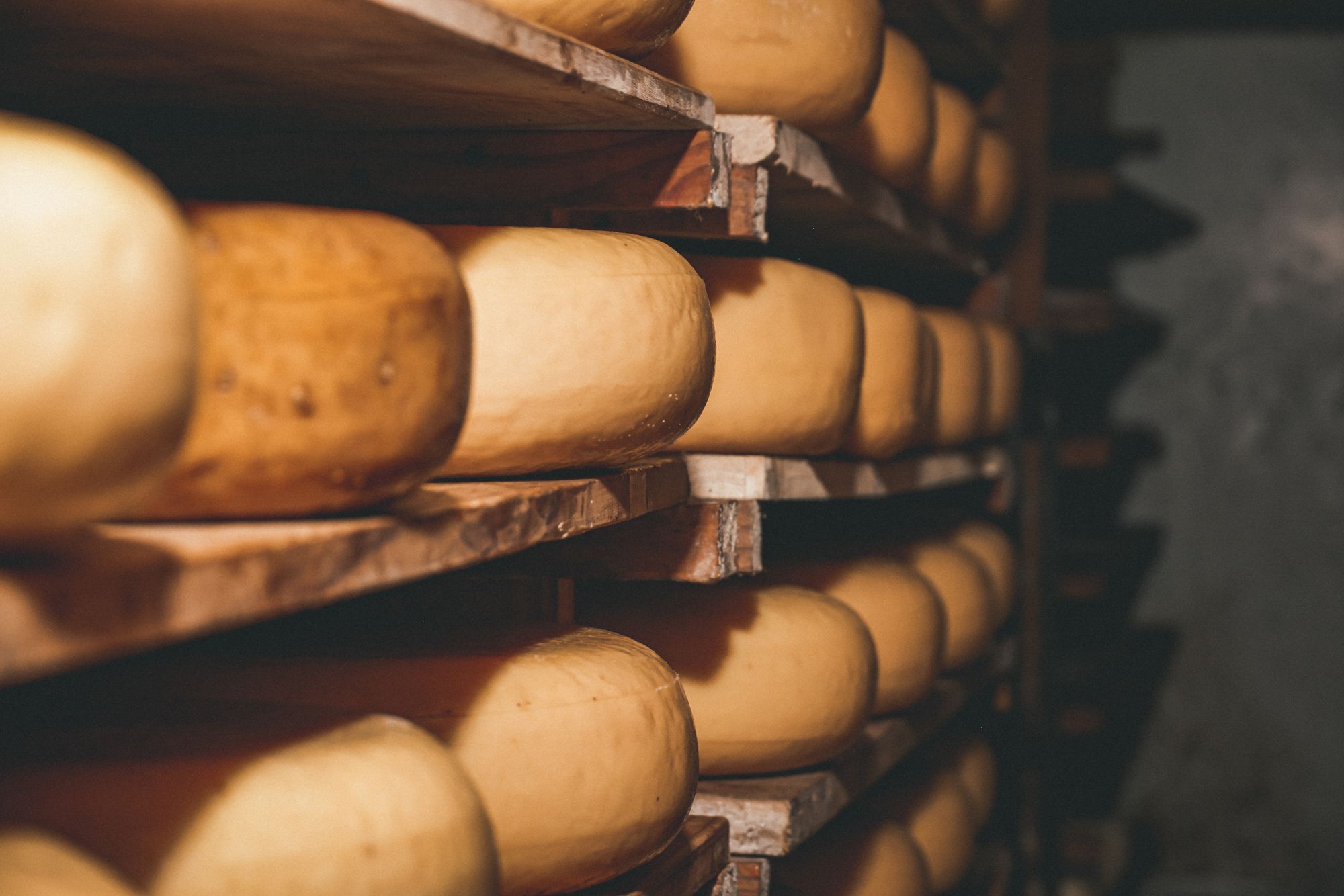
Boerenkaas has been a protected name across the European Union since 2007, and the thing it protects is unusual: not a place, not a shape and not a recipe, but raw milk and where that milk came from.
The rule is short. The cheese must be made from milk that has not been heat-treated, and at least half of it must come from the farm on which the cheese is made. Cow, goat, sheep and buffalo all qualify. The recognised variants are Goudse, Leidse and Edammer boerenkaas from cow's milk, plus the goat, sheep and buffalo versions.
Most protected names in Europe draw a line on a map. This one draws a line through a process, which is why a boerenkaas can be excellent or ordinary and still be boerenkaas. The label is a guarantee about the raw material, not about the maker.
The cheese course is the one thing on a tasting menu the kitchen cannot cook its way out of.
What the boerenkaas rule requires
Raw milk carries the bacterial flora of the herd and the season, and that flora is what makes one summer wheel taste unlike the next. Pasteurisation removes it and the maker adds cultures back, which is safer and more predictable and produces a narrower cheese.
The half-from-the-farm clause is the harder one to meet. It rules out a factory buying tankers from wherever the milk is cheapest that week, and it ties the cheese to a herd whose feed changes with the grass. At Remeker in the Gelderse Vallei, the wheels come from a Jersey herd and the rind is built with ghee rather than plastic coating; specialist retailers sell it at roughly €35 to €60 a kilo.
What a trolley tells you
A restaurant cannot cook a cheese course. It can only buy well, store it properly and serve it at the right temperature, which makes the trolley the most legible part of a tasting menu.
Uniform wheels at identical firmness mean everything arrived the same week from the same wholesaler and nobody is turning them. Farmhouse producers are small and inconvenient to buy from, so their presence is a decision somebody made rather than a delivery somebody accepted.
Order it anyway. It carries a supplement almost everywhere, and it is the fastest read available on how a kitchen sources. Entries for this year's World Cheese Awards close on 15 September, which is when the Dutch farmhouse names usually turn up on a list next to the industrial ones.
Sources
- European Commission — eAmbrosia, Boerenkaas (TSG) · 2007-11-01
- The Cheese Professor — Beyond Gouda · 2025-06-12
- Remeker · 2026-09-10