Elche pomegranate harvest opens at 50,000 tonnes
Growers in Elche expect 50,000 tonnes of Mollar pomegranates this season, but sunscald from repeated heatwaves will write off 15% of the crop before it reaches a crate.
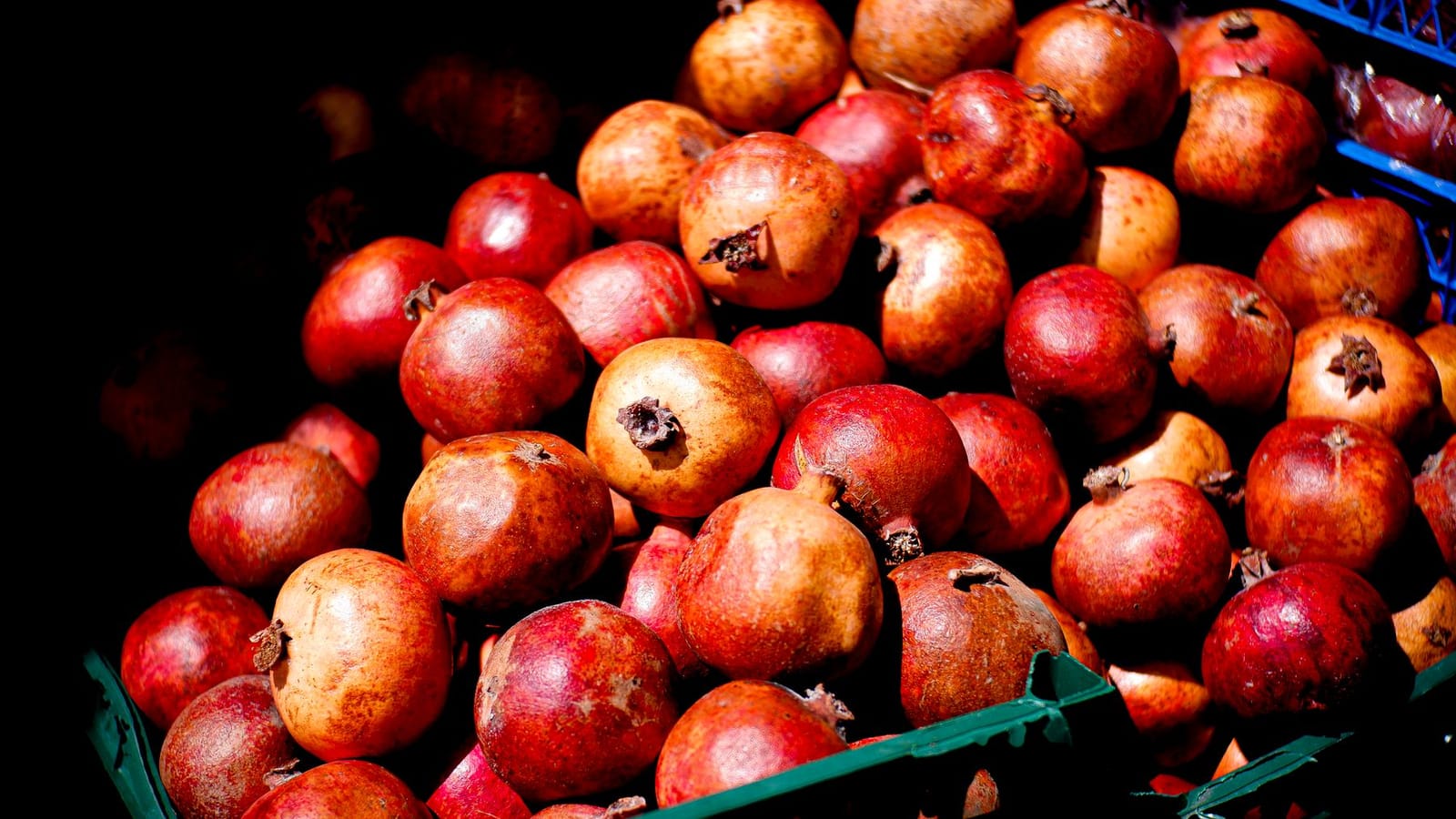
Elche’s pomegranate harvest opened this month with growers forecasting 50,000 tonnes for the 2026/27 campaign, even as sunscald writes off an estimated 15% of the crop before it reaches a crate.
Chef Ferran Adrià cut the season’s first fruit on 17 October at the Casa Gran d’Asprella farm in Las Bayas, opening the campaign for the Denominación de Origen Protegida Granada Mollar de Elche. The protected zone spans 40 municipalities across L’Alacantí, Baix Vinalopó and Vega Baja, in Spain’s Alicante province.
Sunscald cuts into the crop
Mientras otros compiten en cantidad, nosotros lo hacemos en valor — while others compete on quantity, we compete on value
Francisco Oliva, president of the PDO’s regulatory council, put this year’s volume at around 50,000 tonnes, though roughly 15% will be unmarketable due to skin blemishes caused by sun exposure during repeated summer heatwaves. He described the fruit arriving as good-sized and high quality, with “a great deal of optimism” behind the season’s start.
Adrià called the Mollar de Elche “extraordinary” during the opening, and Oliva framed the variety as the region’s signature crop. It remains the only pomegranate among more than 500 global varieties to hold a PDO designation. Cooks reach for it in dishes such as this pomegranate and walnut stew.
Elche pomegranate harvest turns ten
The season also marks ten years since the designation was granted, in January 2016. In that time, the council has pushed the variety away from commodity competition: “Mientras otros compiten en cantidad, nosotros lo hacemos en valor,” Oliva said earlier this year — while others compete on quantity, the PDO competes on value.
That shift followed the loss of Russia as an export market after a veto imposed more than a decade ago, when Russian buyers once took close to 30% of shipments. Roughly half of current output now stays in Spain, with the rest exported mainly to France, the Netherlands, Belgium and the United Kingdom, against competition from Peru, Turkey and Egypt.
Domestic consumption has risen by around 40% over the past decade, the council says, a trend it credits to growing demand for traceable, origin-labelled fruit. The council is now working to open markets in Asia, North America and the Middle East.
Fruit is picked from October into January. This year’s crates carry a heavier share of sun-marked skins than the council would like — a reminder that a decade of chasing value counts for little if the trees keep burning.