Ireland's fishing quotas still squeeze coastal fleets
Mackerel landings fell sharply and Dublin Bay prawn catches shrank under 2026's EU quota cuts; now Ireland chairs the talks that will set 2027's limits.
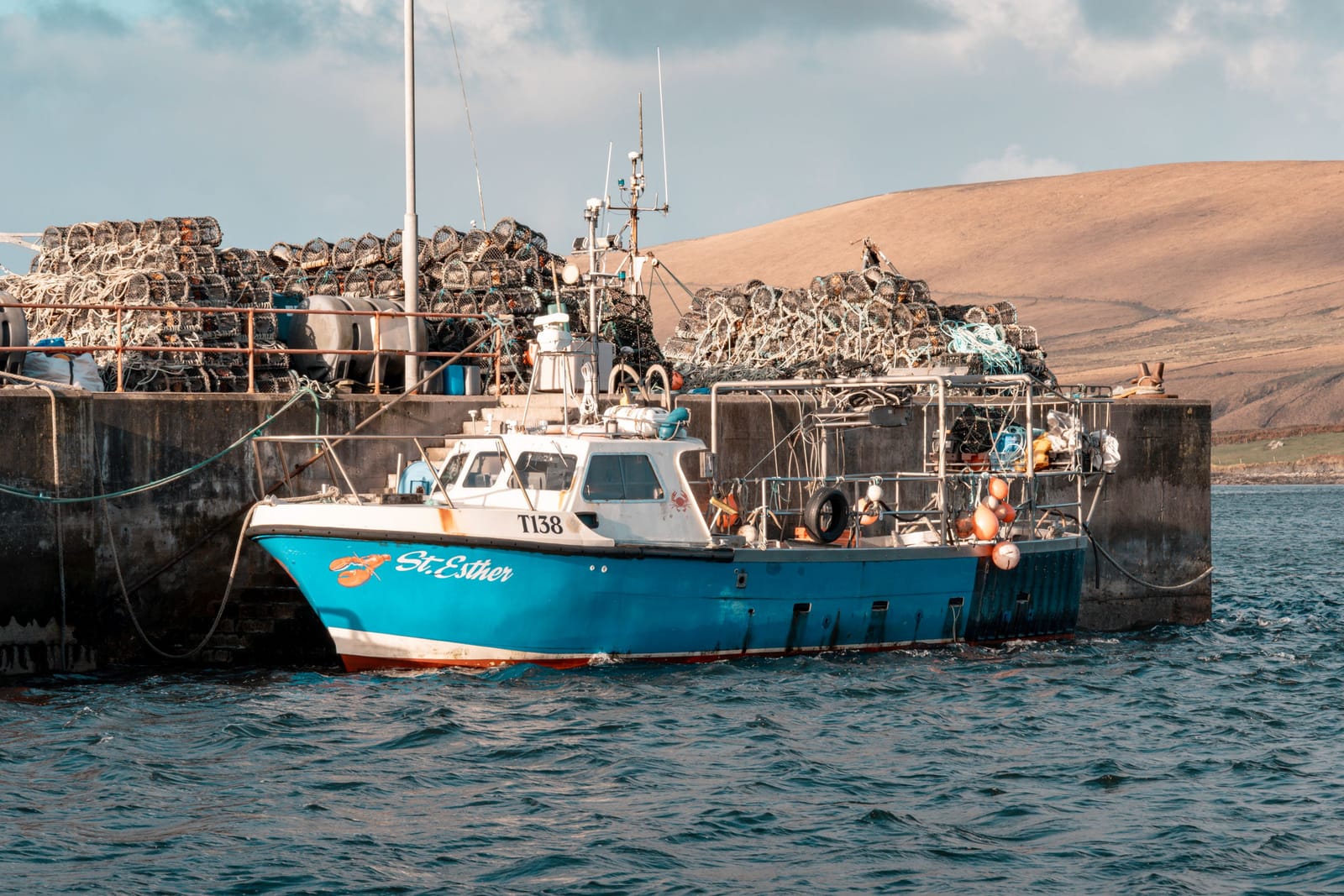
Ireland's fishing quotas for 2026 landed well below what the industry said was survivable: mackerel catch cut by 48%, Dublin Bay prawns and langoustines reduced too, after the EU tightened Atlantic catch limits.
The final numbers came after months of warning. Minister for Agriculture, Food and the Marine Martin Heydon had called proposed reductions, 70% for mackerel and 20% for Dublin Bay prawns and langoustines, "deeply concerning" for two of Ireland's most valuable species.
A March 2026 deal among the EU, UK, Norway and the Faroe Islands softened the mackerel cut to 48%, down from the 70% first proposed. Ireland's mackerel quota fell from roughly 39,000 tonnes in 2025 to about 18,800 tonnes in 2026, a squeeze worth an estimated €32 million and mirrored in Norway, where its own mackerel season slowed under a reduced quota.
A smaller catch does not feel smaller to the boats still tied up at the quay.
Irish fishing quotas fall hardest on mackerel
Aodh O'Donnell of the Irish Fish Producers Organisation called the revised deal "major progress," while noting Ireland still had 20,000 tonnes less mackerel to catch than before the cuts. Patrick Murphy of the Irish South and West Fish Producers Organisation credited cooperation between coastal states for what he called "a more balanced quota."
The Seafood Ireland Alliance, representing processors as well as boat owners, called the mackerel deal a source of stability even while warning the fleet still faces losing more than half its 2025 quota once every cut is tallied. Dublin Bay prawns and langoustines, landed mainly from the Irish Sea and Celtic Sea, took a smaller but still significant reduction.
Brussels points to healthier stocks
The European Commission framed the wider deal differently. Agreeing catch limits for 24 Atlantic and North Sea stocks in December 2025, it said 81% of fishing opportunities were set at sustainable levels under its maximum sustainable yield advice. Some stocks moved the other way: Bay of Biscay Norway lobster rose 49% while Skagerrak-Kattegat sole fell 44%, a split echoed further south, where 2027 Mediterranean trawler limits were proposed unchanged.
No full mackerel catch limit was agreed at EU level at all; the stock stayed a matter for coastal-state talks outside the bloc's own framework, with several member states pressing Brussels over continued overfishing by non-EU parties.
Dublin's response was a Food Vision Seafood Sector Group, chaired by former IFA chief executive Michael Berkey, tasked with designing support measures for boats, processors and coastal communities within EU state aid rules.
Ireland now holds the EU Council presidency for the second half of 2026, putting Heydon in the chair for talks opening on 2027's fishing opportunities. The stock that defined this year's argument, mackerel, still has no agreed EU catch limit to show for it.
Sources
- Department of Agriculture, Food and the Marine (gov.ie) - Minister Heydon highlights concern on 2026 fishing quotas ·
- European Commission - Oceans and Fisheries: Fisheries ministers agree fishing opportunities 2026 ·
- RTE News - EU mackerel deal ·
- Donegal Live - fishing industry welcomes EU32 million EU mackerel deal ·